
Mindfulness vs Meditation: Two Practices Worth Telling Apart

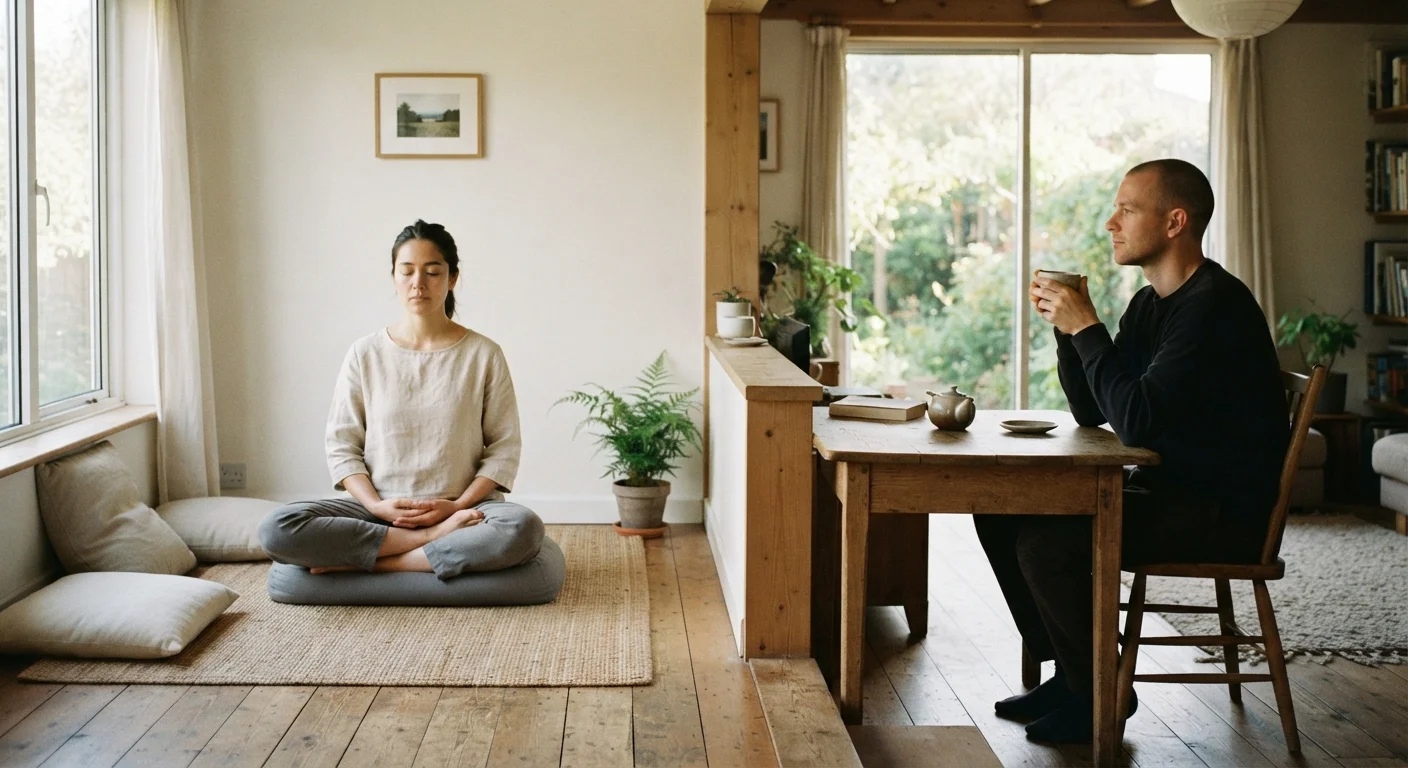
Mindfulness and meditation are often used interchangeably, but they describe different things. Here's a clear-headed look at what sets them apart.
Option A
Mindfulness
The quality of present-moment awareness you can bring to any activity.
Best for: People who want to reduce mental overload throughout the day without setting aside dedicated practice time.
Option B
Meditation
A structured, intentional practice used to train attention and awareness.
Best for: People who want a consistent, time-set routine to build focus, emotional regulation, or relaxation skills.
Key takeaways
- Mindfulness is a mental quality; meditation is a formal practice that often cultivates it.
- You can be mindful without meditating, and not every meditation style targets mindfulness.
- Research links both to reduced stress and improved emotional regulation, though evidence varies by study.
- Neither approach replaces professional mental health care when that care is needed.
- The two work well together and do not compete with each other.
What each term actually means
Mindfulness is a state of awareness: paying attention to what is happening right now, in your thoughts, body, and surroundings, without judgment. It is not a session you schedule; it is a quality you can bring to any moment. Washing dishes, listening to a colleague, noticing tension in your shoulders while reading this: all of these can be done mindfully.
Meditation is a deliberate practice. You set aside time, adopt a particular method, and train your attention according to that method's instructions. Some meditation styles use a repeated phrase, some focus on breathing, and some use visualization or movement. Mindfulness is one of many possible targets, but not the only one.
The confusion between the two is understandable because mindfulness-based meditation is currently the most widely studied and discussed form in Western health contexts. That overlap has blurred the boundary in everyday conversation. For a broader look at how stress-management tools fit together, see our complete overview of evidence-informed mind and stress approaches.
How the research treats them
Studies on mindfulness-based stress reduction (MBSR), a structured eight-week program developed at the University of Massachusetts Medical School, have found associations with reduced anxiety, lower perceived stress, and improved sleep quality. Because MBSR combines both formal meditation sessions and mindfulness applied to daily life, researchers sometimes measure them together, which makes clean comparisons difficult.
Meditation styles that do not emphasize mindfulness, such as transcendental meditation or loving-kindness meditation, have their own research bases. Those bodies of evidence focus on different outcomes: concentration, self-compassion, blood pressure. The takeaway is that research does not support a simple ranking of one practice over the other. Effects depend on the specific technique, how consistently it is practiced, and the individual.
| Criterion | Mindfulness | Meditation |
|---|---|---|
| What it is | A quality of awareness | A structured practice |
| Time required | Any moment, any duration | Dedicated session, typically 10-20 minutes |
| Location | Anywhere, during any activity | Usually a quiet, set space |
| Learning curve | Low barrier to start | Benefits from instruction or guidance |
| Relationship to the other | Can exist without formal meditation | May or may not cultivate mindfulness |
| Research base | Often studied within MBSR programs | Studied across multiple distinct styles |
This article is for general informational purposes only and is not a substitute for professional medical or mental health advice. If you are managing a mental health condition, speak with a qualified healthcare provider before starting any new practice.
Practical differences in daily life
Meditation asks you to stop and sit (or lie down, or move deliberately). Most guides suggest starting with sessions of around ten to twenty minutes, though duration is less important than regularity. Apps, audio guides, and in-person classes can all support a formal practice.
Mindfulness asks nothing about your schedule. A mindful pause can last thirty seconds. The challenge is not time; it is remembering to do it. Many people use a simple cue, such as a specific daily task, to prompt a brief check-in with their present-moment experience. Over time, these small pauses can shift how you respond to stress rather than just how you feel during a scheduled session.
The two approaches complement each other. Formal meditation can make informal mindfulness easier because regular practice trains the attention muscle. Casual mindfulness throughout the day can reinforce what a meditation session builds. You do not need to choose between them, and starting with one does not lock you out of the other.
When to talk to a professional
Both mindfulness and meditation are general wellness tools. They are not treatments for depression, anxiety disorders, trauma, or other mental health conditions, even though some therapeutic programs incorporate them. If you find that attempts at either practice bring up distressing thoughts or feelings that are hard to manage, that is a signal to speak with a mental health professional rather than push through alone.
For anyone in a special population, including people who are pregnant, older adults managing chronic illness, or children and adolescents, a healthcare provider can advise on whether and how these practices fit into an existing care plan. Understanding how to balance individual needs within relationships can also matter when introducing a new personal habit that affects shared time and routines.
The content on this site is for informational purposes only and is not a substitute for professional advice. Always consult a qualified professional for guidance specific to your situation.