
What Hydration Actually Means and Why Water Is More Than a Side Thought

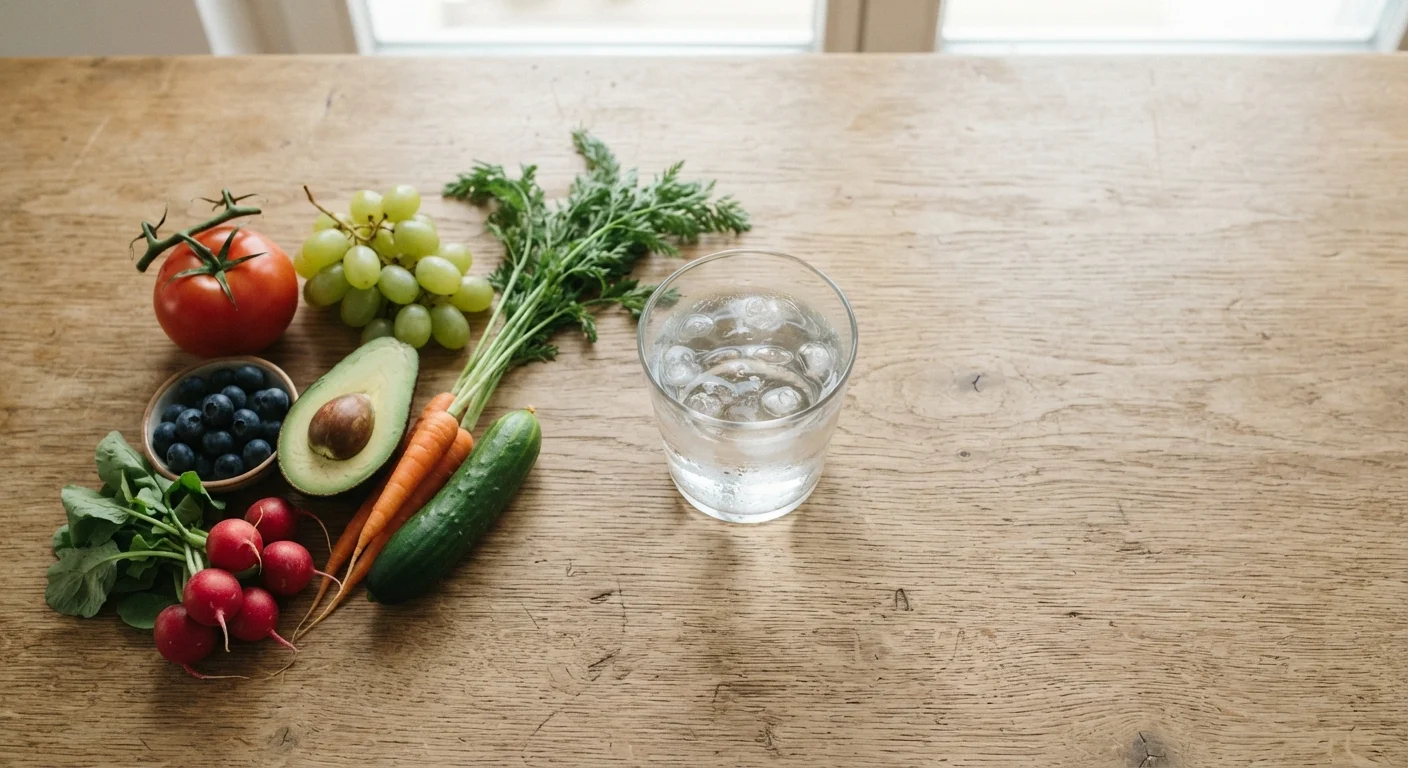
Beyond the eight-glasses rule, here is what adequate hydration does for your body and how to assess your own intake.
Key takeaways
- The eight-glasses-a-day rule is a rough guideline, not a universal prescription.
- Urine color is one of the most practical ways to gauge daily hydration status.
- Food contributes roughly 20 percent of daily fluid intake for most adults.
- Thirst is a reliable signal in healthy adults but lags slightly behind actual need.
- Electrolyte balance matters as much as total fluid volume for proper hydration.
Why the eight-glasses rule oversimplifies things
The "eight glasses a day" figure has circulated for decades, but it has no firm scientific basis as a universal target. It became popular partly because it is easy to remember, not because research confirmed it applies to every body. Fluid needs vary considerably based on body weight, physical activity, the climate you live in, and whether you have conditions that affect fluid balance.
What that figure also misses is that water comes from more than your drinking glass. Most adults get roughly 20 percent of their daily fluid from food, particularly from fruits, vegetables, soups, and dairy. A person eating a diet heavy in watermelon, cucumber, and leafy greens absorbs meaningfully more fluid than someone whose diet centers on dry, processed foods, even if both drink the same amount of liquid.
The more useful question is not "how many glasses" but whether your body has enough fluid to function well. Hydration fits into a broader picture of daily physical habits that compound over time, and treating it as a fixed number to hit can distract from paying attention to your body's actual signals.
What water actually does inside your body
Water is present in blood, lymph, saliva, joint fluid, and every cell in your body. It carries nutrients to cells and removes waste products. It regulates body temperature through sweat. It supports digestion by dissolving nutrients so they can be absorbed. Without sufficient fluid, these processes slow or become less efficient.
Cognitive function is one of the areas most sensitive to mild fluid loss. Some research suggests that even a 1 to 2 percent drop in body water can affect concentration, short-term memory, and mood, though individual responses vary. The brain is roughly 75 percent water, and it does not take dramatic dehydration to notice a difference in mental clarity.
Kidney function depends heavily on adequate fluid to filter waste and produce urine. Chronic low intake is associated with a higher risk of kidney stones, though many factors influence stone formation. Electrolytes like sodium and potassium work alongside water to maintain this balance, which is why fluid volume alone does not tell the whole story.
Electrolytes and water work together
Hydration is not only about how much water you drink. Sodium, potassium, and magnesium help regulate how water moves into and out of cells. A diet very low in these minerals, or one that includes very high plain water intake without replacing lost electrolytes, can disrupt this balance. For most people eating a varied diet, this is not a daily concern, but it becomes relevant during illness, heat, or intense physical activity.
How to assess your own hydration
Urine color is one of the simplest self-checks available. Pale yellow generally indicates adequate hydration. Dark yellow or amber suggests you need more fluid. Clear urine can sometimes signal overhydration, though for most people occasional clear urine is not a concern.
Thirst is a useful signal but not a perfect one. In healthy adults, thirst is a reasonably reliable indicator, though it lags slightly behind actual fluid need. In older adults, the thirst mechanism can be less sensitive, which makes habitual fluid intake throughout the day more important than waiting to feel thirsty.
~60%
Water as a share of adult body weight
The U.S. Geological Survey estimates that water makes up roughly 60 percent of adult body weight, though this varies with age, sex, and body composition.
20%
Daily fluid from food sources
The National Academies of Sciences estimates that approximately 20 percent of daily water intake for most adults comes from food rather than beverages.
1-2%
Body water loss linked to cognitive effects
Some research indicates that a body water deficit of 1 to 2 percent may affect concentration and mood, though individual responses differ.
Practical ways to build consistent intake include keeping water accessible throughout the day, eating water-rich foods at meals, and paying attention to how activity and heat affect your needs. On a hot day or after a vigorous workout, your baseline goes up. Medications, illness with fever or vomiting, and pregnancy or breastfeeding also change fluid requirements. A healthcare provider can give guidance specific to those situations.
This article is for general informational purposes only and is not medical advice. Consult a qualified healthcare professional for guidance specific to your health needs.
Frequently Asked Questions
The content on this site is for informational purposes only and is not a substitute for professional advice. Always consult a qualified professional for guidance specific to your situation.