
Signs a Community Is Becoming Toxic Before It Gets Too Late

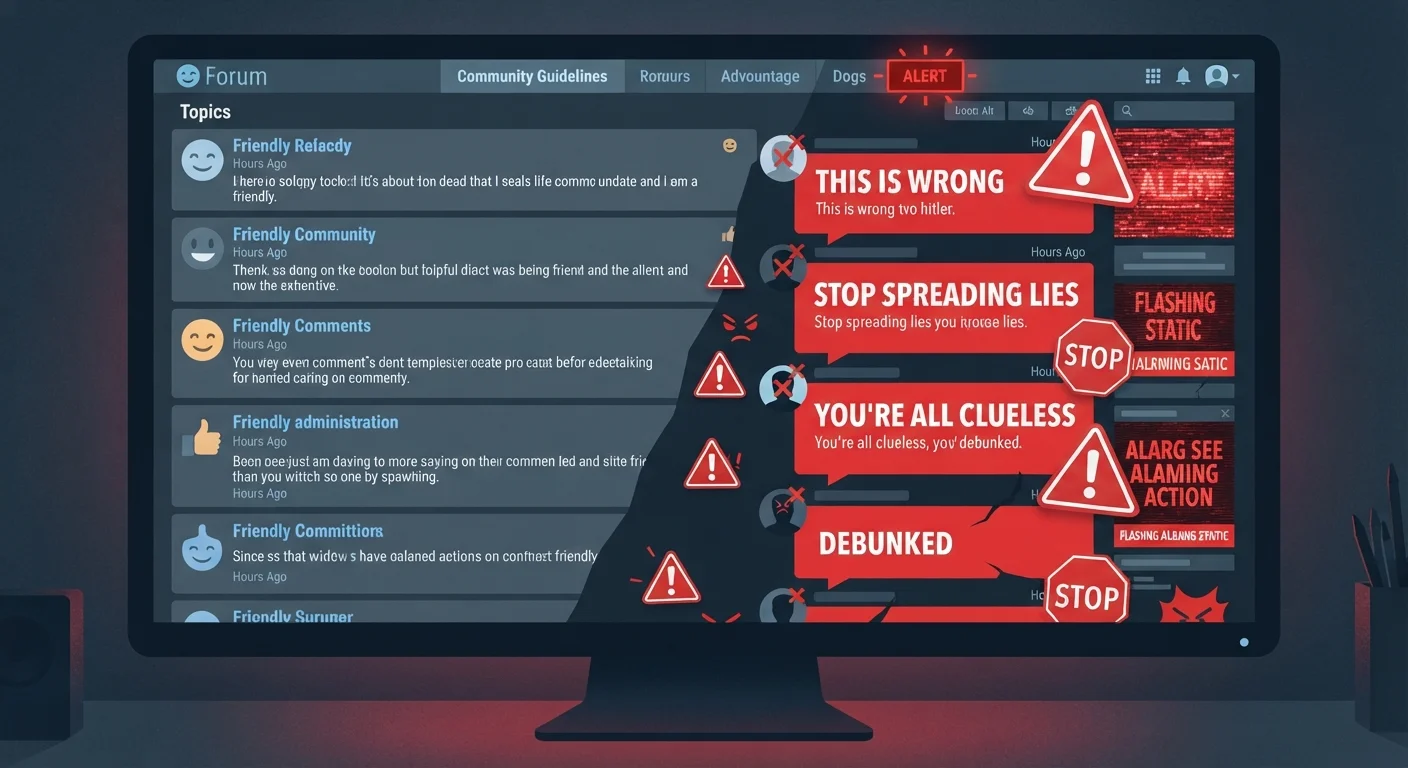
Toxicity rarely appears overnight. Learn the early warning patterns, from shifting norms to scapegoating, that signal a community is heading in the wrong direction.
Summary
18 items · 10 to 20 minutes
Key takeaways
- Toxicity builds gradually through small norm shifts, not sudden blowups.
- Scapegoating new or dissenting members is one of the clearest early warning signs.
- Moderator behavior is a reliable proxy for the community's overall health.
- You can audit a community's direction before deciding whether to stay or leave.
- Recognizing these patterns early gives you more options and less emotional cost.
Why toxic communities rarely look toxic at first
Most people who end up hurt by an online community did not walk into an obviously hostile space. They joined something that felt warm, purposeful, and real. The toxicity came later, piece by piece, until the place they once loved felt unrecognizable.
This gradual drift is what makes early detection so useful. By the time a community openly implodes, most members have already absorbed months of low-grade harm: the subtle pressure to agree with the loudest voices, the exhaustion of watching recurring conflicts, the creeping sense that something is wrong but no one is naming it.
The checklist below is designed to help you read the signs before that point. Whether you are a member, a moderator, or someone deciding whether to join, these patterns are observable. None of them alone guarantees a community is failing, but several appearing together warrant real attention. For a broader look at evaluating spaces before you commit, see how to locate communities worth joining.
Norm and culture shifts
Moderation and leadership behavior
Scapegoating and exclusion
Your own experience as a signal
What these patterns tell you and what to do next
No community is perfectly healthy all the time. Conflict happens, moderation lapses, and members have bad weeks. The difference between a rough patch and a toxic trajectory is whether the community course-corrects or doubles down.
Pay attention to the response when problems are raised. A community that can acknowledge friction, apply consistent standards, and welcome honest feedback is different from one that punishes the person who speaks up. That distinction matters more than any single incident. Moderation choices, in particular, set the tone for everything else. How moderation styles shape community health goes deeper on what those choices signal long-term.
If you recognize several of the warning signs in your current community, consider your options honestly. You can raise concerns directly, reduce how much of yourself you invest there, or leave without guilt. Staying in a deteriorating space because of history or sunk time rarely serves you. The same instincts that help you spot relationship red flags that are easy to rationalize apply here: patterns that feel uncomfortable but explainable deserve a second look, not dismissal.
Communities that lose members to toxicity often do so quietly. New people stop engaging or disappear after a short time. If you notice that pattern repeating, it is worth reading about why new members ghost online communities to understand what early drop-off usually signals.
Leaving does not require a dramatic exit
You do not owe a community a formal goodbye, a public explanation, or an attempt to fix what is broken before you go. If a space has become harmful to you, quietly stepping back is a legitimate choice. Announcing your departure in a community already showing these warning signs can itself become a target for the behavior you are trying to escape.
The content on this site is for informational purposes only and is not a substitute for professional advice. Always consult a qualified professional for guidance specific to your situation.