
Portfolio Rebalancing: What It Is and When It Makes Sense

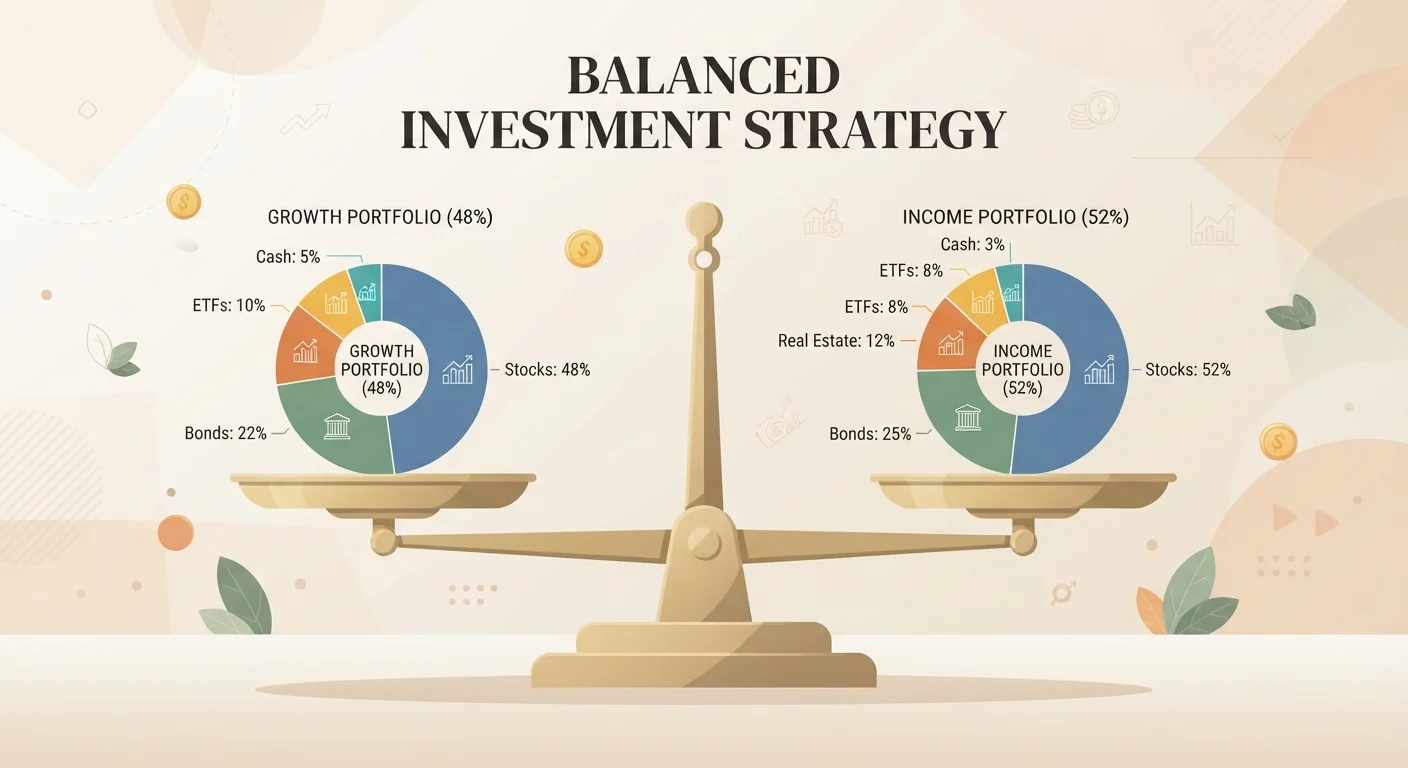
Rebalancing keeps your portfolio aligned with your goals. Learn what it means, how it works, and when it's worth doing.
Key takeaways
- Markets naturally shift your portfolio away from its original allocation over time.
- Rebalancing restores your intended risk level, not just your investment mix.
- You can rebalance on a calendar schedule or when allocations drift past a set threshold.
- Tax implications matter more in taxable accounts than in retirement accounts like 401(k)s or IRAs.
- Rebalancing does not guarantee better returns; it manages risk.
Why your portfolio drifts in the first place
When you set up an investment portfolio, you typically choose a mix of assets: stocks, bonds, and sometimes others like real estate funds or cash equivalents. That mix reflects how much risk you are comfortable with and how long you have until you need the money.
The problem is that different assets grow at different rates. If stocks outperform bonds for a few years, stocks end up representing a larger share of your portfolio than you originally planned. A portfolio you designed to be 60% stocks and 40% bonds might drift to 75% stocks and 25% bonds without you making a single deliberate change. That shift means you are now carrying more risk than you chose to accept when you started.
This drift is not a sign that something went wrong. It is simply how markets work. Rebalancing is the corrective action you take in response.
How rebalancing actually works
The mechanics are straightforward. You compare your current allocation to your target allocation, identify which asset classes are overweight (too large a share) and which are underweight (too small a share), then buy or sell to close the gap.
Say your target is 60% stocks and 40% bonds. After a strong stock market run, your portfolio is now 72% stocks and 28% bonds. To rebalance, you would sell some of the stock holdings and use the proceeds to buy more bonds until the ratio returns to 60/40.
There is another method that avoids selling entirely: directing new contributions toward whichever asset class is underweight. If you add money to your portfolio regularly, this approach can gradually correct the imbalance without triggering sales. It works best when the drift is modest and your contributions are large enough relative to the portfolio size.
Start rebalancing inside tax-advantaged accounts
If you have both a 401(k) or IRA and a taxable brokerage account, rebalance inside the tax-advantaged account first. Buying and selling there does not trigger a tax bill, so you can correct your allocation without worrying about capital gains. Only move to the taxable account if needed.
For a broader picture of how investment choices fit together, see shares vs. funds to understand the building blocks before deciding how to allocate them.
Calendar-based vs. threshold-based rebalancing
There are two common approaches to deciding when to rebalance.
Calendar-based rebalancing means you check your portfolio on a fixed schedule, such as every six months or once a year, and rebalance at that point regardless of how much drift has occurred. It is simple to remember and requires no ongoing monitoring.
Threshold-based rebalancing means you only act when an asset class drifts past a set boundary, often 5 percentage points from its target. This approach trades less frequently, which can reduce transaction costs and, in taxable accounts, capital gains taxes. The trade-off is that it requires more regular monitoring to catch when a threshold has been crossed.
Some investors combine both: they check on a calendar schedule but only rebalance if the drift exceeds their threshold. This limits unnecessary trades while keeping the process manageable.
Tax considerations you should not overlook
Inside a 401(k), IRA, or similar tax-advantaged account, rebalancing has no immediate tax consequences. You can buy and sell freely without generating a tax bill that year. This makes tax-advantaged accounts the natural starting point for any rebalancing activity.
In a taxable brokerage account, selling appreciated assets creates a capital gain, which is taxable. Short-term gains (assets held less than a year) are taxed at your ordinary income rate, which is typically higher than the long-term capital gains rate that applies to assets held longer. If you must rebalance in a taxable account, selling assets you have held for more than a year is generally more tax-efficient.
These are general principles. Your specific tax situation depends on your income, account types, and other factors. A licensed tax professional or financial adviser can help you work through the details for your circumstances.
When rebalancing makes practical sense
Rebalancing matters most when your portfolio has drifted far from its target and the gap is large enough to meaningfully change your risk exposure. Small drifts of a percentage point or two rarely justify the costs and effort involved.
It also matters more as you approach a goal. If you are nearing retirement, a large unplanned shift toward stocks could expose you to a market downturn at exactly the wrong time. Investors with longer time horizons have more room to let drift persist before acting.
The emotional side of investing is worth considering here too. Rebalancing by definition means selling what has done well and buying what has lagged, which can feel counterintuitive. Having a written policy for when and how you rebalance helps remove that emotional friction from the decision.
This article is for general informational purposes only and does not constitute personalized financial, investment, or tax advice. Consult a qualified financial adviser or tax professional before making decisions about your own investments.
Frequently Asked Questions
The content on this site is for informational purposes only and is not a substitute for professional advice. Always consult a qualified professional for guidance specific to your situation.