
Foods Often Labelled Healthy That Deserve a Closer Look

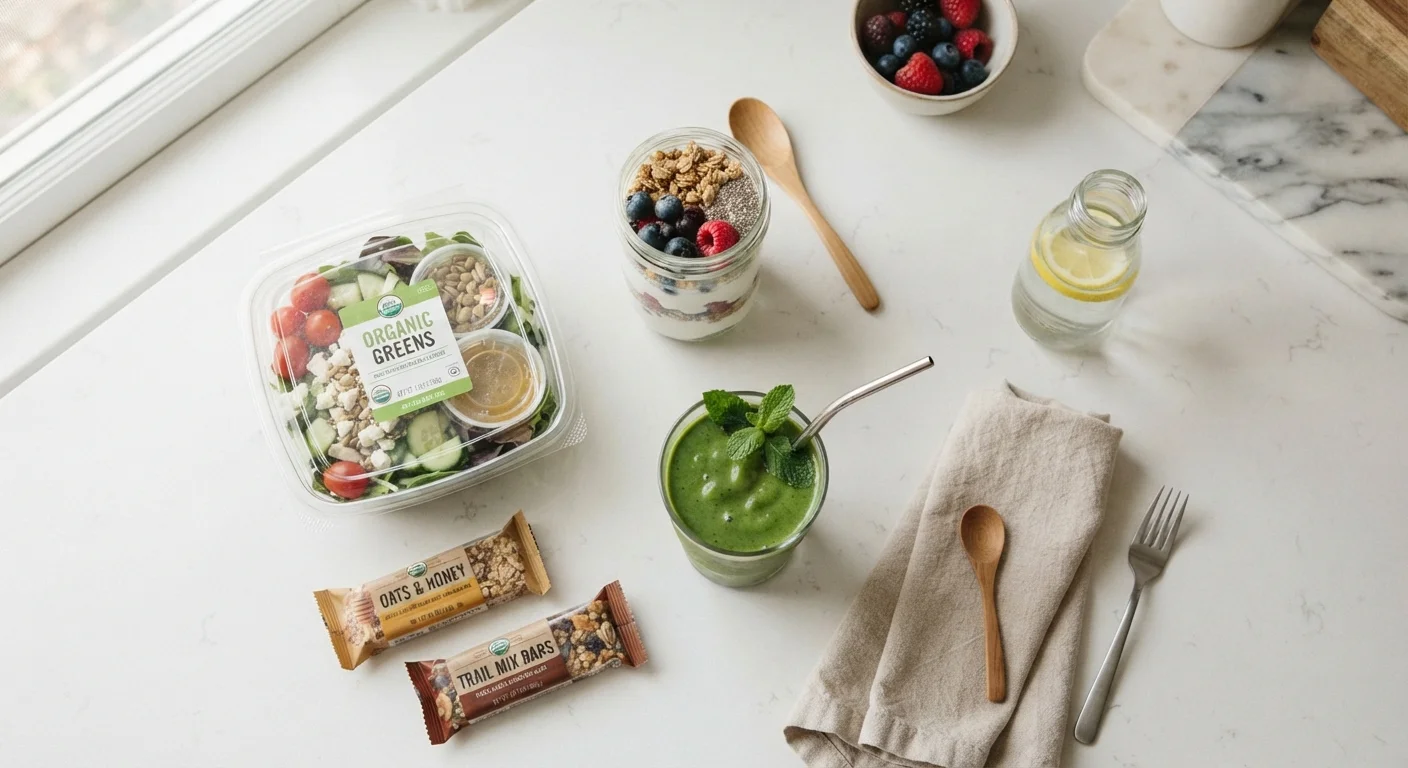
Granola bars, smoothies, and low-fat snacks carry a healthy halo. Here is what the nutrition actually looks like.
Key takeaways
- Foods marketed as healthy can still carry high amounts of added sugar, sodium, or refined carbohydrates.
- Reading the nutrition facts panel and ingredient list gives a clearer picture than front-of-package claims.
- Portion sizes listed on labels are often smaller than what most people actually eat in one sitting.
- No single food is inherently good or bad; context, frequency, and overall diet pattern matter most.
- A qualified dietitian can help translate nutrition information into choices that fit your personal health goals.
Why the 'healthy' label can mislead
Food packaging is designed to sell. Terms like 'natural,' 'wholesome,' and 'clean' are largely unregulated marketing language in the United States, which means manufacturers can use them freely regardless of what the product actually contains. The result is a category of foods that feel virtuous to buy but may deliver more sugar, sodium, or calories than expected.
This is not about fear or restriction. It is about reading past the front of the package to the nutrition facts panel, where the actual numbers live. The foods below are not bad choices by definition, but each one benefits from a second look before becoming a daily staple. If you want broader context on how nutrition research gets misrepresented, our piece on nutrition myths the science has settled is a good companion read.
Granola and granola bars
Granola has a strong health reputation, partly because oats, nuts, and seeds are genuinely nutritious ingredients. The problem is the binding agent. Most commercial granolas use honey, brown sugar, maple syrup, or corn syrup to hold the clusters together, and the amounts add up quickly. A single half-cup serving of many popular granolas contains 12 to 15 grams of added sugar, and half a cup is a small portion by most people's standards.
Granola bars compress those ingredients further and often add chocolate chips, yogurt coatings, or dried fruit, each of which contributes more sugar. The fiber and protein content varies widely between brands, so checking the nutrition facts panel for at least 3 grams of fiber and 4 or more grams of protein per bar gives a more useful picture than the word 'wholesome' on the wrapper. Added sugar hides under many names on ingredient lists, and granola packaging is a common place to find them.
Half a cup of granola can contain as much added sugar as a small cookie.
Fruit smoothies and smoothie bowls
Blending whole fruit into a drink preserves the fiber, which is an advantage over juice. However, most commercial smoothies and smoothie bowls combine multiple servings of fruit with added sweeteners, flavored yogurt, or sweetened nut butters, pushing total sugar well above what someone would eat if they sat down with the same fruit in whole form. A 16-ounce commercial smoothie can contain 50 or more grams of sugar, most of it from fruit and juice concentrate rather than added sweeteners, but the body processes concentrated liquid sugar quickly regardless of its origin.
Blending at home gives you direct control over ingredients and portions. Prioritizing vegetables alongside fruit, and adding a source of protein such as plain Greek yogurt or a small portion of nuts, helps slow how quickly the drink affects blood glucose. That said, if you have specific questions about blood sugar management, your healthcare provider is the right person to consult.
A large commercial smoothie can carry more sugar than many desserts, even when it contains only fruit.
Low-fat and fat-free products
The low-fat trend that dominated food marketing for decades left a lasting imprint on grocery shelves. Products labeled 'low-fat' or 'fat-free' often replace the removed fat with sugar, modified starches, or sodium to maintain flavor and texture. Low-fat flavored yogurt is one common example: the reduction in fat is frequently offset by a significant increase in added sugar compared to the full-fat plain version.
Fat itself is not the enemy. Dietary fat from sources like nuts, seeds, avocado, and olive oil contributes to satiety and supports the absorption of fat-soluble vitamins. Removing fat and adding sugar to a product does not automatically make it a better nutritional choice. Comparing the full nutrition labels of a low-fat and a regular version of the same product often reveals the trade-off clearly.
Low-fat labels frequently signal a swap from fat to added sugar, not a net nutritional gain.
Flavored nut butters
Plain almond butter or peanut butter with one or two ingredients (nuts, and sometimes salt) is a straightforward source of healthy fats, protein, and magnesium. Flavored versions, including chocolate varieties, honey-roasted spreads, and 'natural' options with added sweeteners, often contain oil, palm oil, and sugar in quantities that alter the nutritional profile considerably.
The word 'natural' on nut butter packaging has no regulated definition in the US. Checking that the only ingredients are nuts (and possibly salt) is a more reliable standard than the front label. A two-tablespoon serving of plain nut butter is the reference amount on nutrition labels; many people use more, so the calories and fat scale proportionally.
Plain nut butter with one or two ingredients is nutritionally different from flavored varieties, regardless of what the front label says.
Packaged salad kits
A bagged salad kit makes vegetable-eating faster, which is a real convenience. The issue is the included dressing and toppings: croutons, dried cranberries, tortilla strips, and creamy dressings can turn a salad that looks like a light meal into one with 500 to 700 calories and high sodium before any protein is added. The nutrition information on salad kits is typically calculated for the full kit, and most people do not share one kit between the number of servings listed.
Using half the included dressing, or swapping it for olive oil and vinegar, is a simple adjustment. The vegetables themselves are the nutritional strength of the product. The add-ons are where the numbers shift.
The vegetables in a salad kit are nutritious; the included dressing and toppings are where the calorie and sodium counts rise sharply.
Veggie chips and vegetable crisps
Products marketed as veggie chips often include spinach, beet, or kale powder in the ingredient list, which is enough to justify a green-leaning package design. In most cases, however, the base ingredient is still potato starch or potato flour, and the vegetable content is small enough that the final product is nutritionally close to a conventional potato chip. Sodium levels are comparable, fiber content is low, and the 'vegetable' claim primarily refers to coloring rather than meaningful nutrient density.
This does not mean veggie chips are harmful. It means they are a chip, not a vegetable serving. If the goal is adding more vegetables to a diet, whole or minimally processed vegetables deliver more fiber, water content, and micronutrients per calorie. For more on how gut health research connects to dietary fiber and food choices, the current evidence on gut health and food is worth reading.
Veggie chips are nutritionally close to standard potato chips; the vegetable content is mostly colorant, not meaningful fiber or nutrients.
How to use this information day to day
The goal is not to eliminate any of these foods but to fit them into your overall eating pattern with clear eyes. A granola bar eaten as a treat alongside a balanced meal is different from one consumed as a daily breakfast replacement. Checking serving size first, then total sugar and sodium, takes about 30 seconds and changes how you interpret the rest of the label.
Grocery habits shape what you eat more reliably than occasional willpower. Small, consistent shopping routines make it easier to stock a kitchen with foods that match your actual nutrition priorities rather than their packaging promises. For questions specific to your health history, a registered dietitian is the right resource, not a label claim.
A practical two-step label check
Before buying a food with a health claim on the front, flip to the nutrition facts panel and check two things: the serving size (compare it to how much you actually eat) and the added sugars line (now a required item on US labels). Those two numbers quickly cut through most front-of-package marketing. If the ingredient list runs more than five or six items long, scanning the first three ingredients tells you what the product is mostly made of.
This article is for general informational purposes only and is not medical or dietary advice. Consult a registered dietitian or qualified healthcare professional before making significant changes to your diet.
The content on this site is for informational purposes only and is not a substitute for professional advice. Always consult a qualified professional for guidance specific to your situation.