
Weekly Grocery Habits That Support a More Nutritious Kitchen

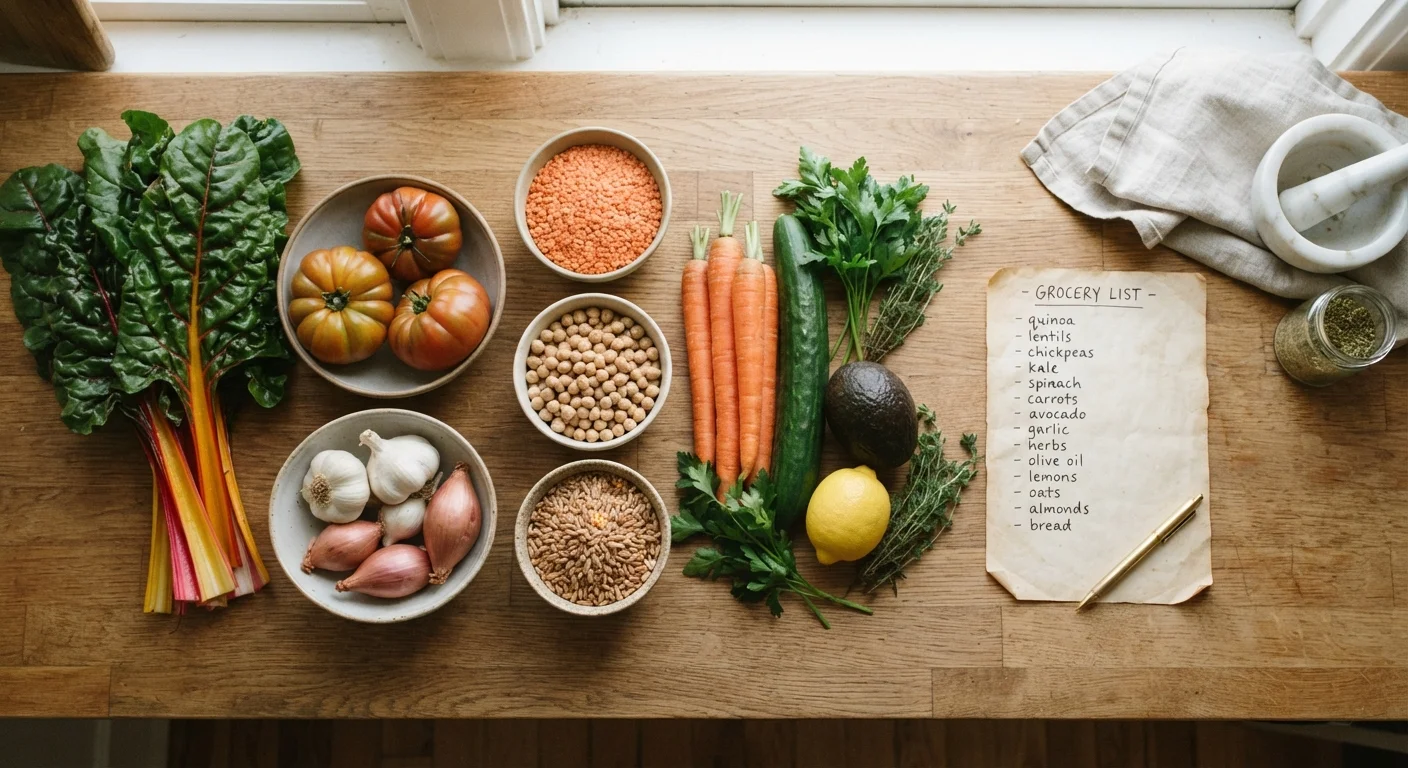
Small, consistent shopping habits shape what ends up on your plate. Here are the routines that make healthy eating easier.
Summary
18 items · 20 to 35 minutes per weekly shop
Key takeaways
- Shopping with a loose structure reduces impulse buys and gaps in nutrition.
- Keeping versatile staples stocked makes nutritious meals easier to assemble on busy nights.
- Reading ingredient lists matters more than relying on front-of-pack health claims.
- Choosing produce in a range of colors broadens the variety of nutrients you get each week.
- A consistent grocery routine supports long-term eating habits more reliably than occasional overhauls.
Why your grocery cart shapes your diet more than your willpower does
What you bring home from the store determines what you can realistically eat during the week. No amount of good intentions at dinnertime changes the fact that if only ultra-processed snacks are within reach, those are what get eaten. The reverse is also true: when a kitchen is stocked with a reasonable variety of whole foods, putting together a balanced meal takes less effort and fewer decisions.
This matters because eating habits tend to revert when the environment does not support them. Grocery habits are the upstream variable. Get those right, and the downstream choices get easier.
The checklist below is not about perfection or a complete dietary overhaul. It covers the weekly routines that consistently make a nutritious kitchen more achievable, without requiring you to spend more time or money than you already do.
Before you leave the house
Produce selection
Pantry and protein staples
Label reading and packaged goods
Wrap-up and storage prep
What to keep in mind before you shop
A few habits done before you leave the house have an outsized effect on what ends up in your cart. Checking what you already have avoids doubling up on items while letting genuinely low-stock staples run out. Writing even a rough list tends to reduce both forgotten items and unplanned purchases.
Grocery list app or notepad
Keeps your list organized and accessible while shopping, reducing forgotten items.
Reusable storage containers
Used for washing and portioning produce after shopping so it is ready to use during the week.
A basic kitchen scale
Helps with portioning bulk staples like grains or nuts without guesswork.
It also helps to eat something before shopping. Grocery decisions made while hungry skew toward high-calorie, low-fiber options, which is a pattern worth knowing about rather than blaming yourself for. It reflects normal appetite signaling, not a lack of self-control.
If budget is a consideration, check whether any staples you buy regularly are cheaper in a larger format or a different form. Dried lentils, frozen vegetables, and canned fish are often more economical than their fresh equivalents and nutritionally comparable or sometimes superior, since frozen produce is picked and frozen quickly, preserving nutrients well.
For a broader look at how small recurring purchases add up, the article on small spending habits that quietly derail a budget applies the same logic to finances.
Reading labels without getting lost in the details
Front-of-pack claims like 'low-fat', 'natural', or 'multigrain' are marketing language, not regulated nutrition measures. The ingredient list and the Nutrition Facts panel give you the actual picture. A few specific things are worth checking: the order of ingredients (they appear by weight, so the first three or four dominate the product), the amount of added sugar, and the sodium content relative to calories.
You do not need to scrutinize every item. Products with short ingredient lists made up of recognizable foods rarely need much analysis. The ones worth a closer look are packaged items marketed as health foods, since those often contain more added sugar or sodium than the front label implies. The article on foods labelled healthy that deserve a closer look covers specific examples in more detail.
Health claims on packaging are not regulated like drug labels
Terms like 'natural', 'wholesome', or 'made with real fruit' have no standardized legal definition in the US context and carry no guaranteed nutritional meaning. The Nutrition Facts panel and ingredient list are the regulated parts of a food label. Rely on those rather than the front of the package when making decisions.
Understanding labels also connects directly to gut health. Higher fiber content in whole grains, legumes, and vegetables is one of the most consistently supported dietary factors for digestive health. The evidence behind that is covered in the gut health and food evidence article.
Once you have a reliable grocery routine in place, it becomes easier to build the kind of balanced plates that the balanced plate guide describes, because the right ingredients are already there. For most adults, the single most common nutritional gap is fiber, which the fiber gap article addresses directly. These habits also support the everyday physical health habits that compound over time beyond any single workout.
This article is for informational purposes only and is not medical or nutritional advice. For guidance specific to your health needs, consult a qualified healthcare or registered dietitian professional.
The content on this site is for informational purposes only and is not a substitute for professional advice. Always consult a qualified professional for guidance specific to your situation.