
Building a Balanced Plate: A Practical Starting Point for Any Meal

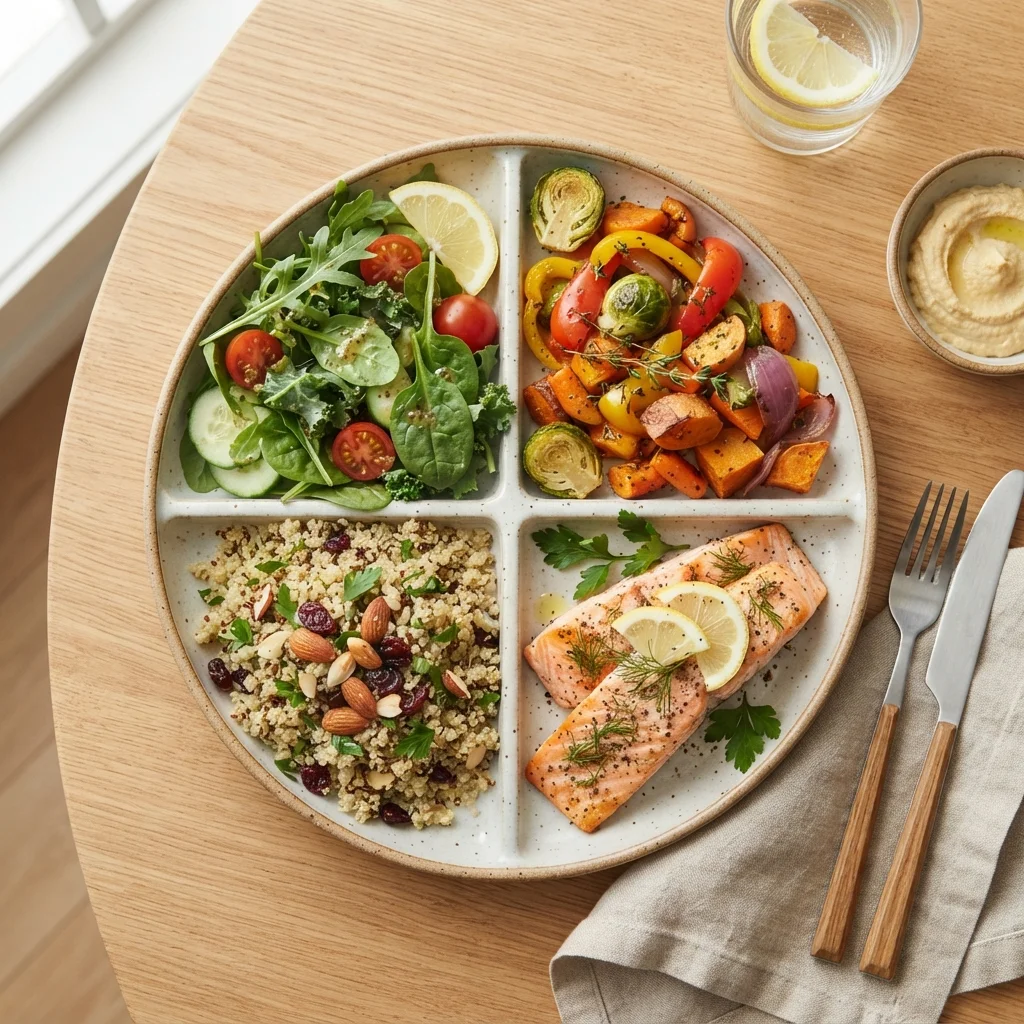
Learn the simple proportions that help you put together a nutritionally balanced meal without counting every calorie.
Key takeaways
- Half your plate as vegetables and fruit, a quarter protein, and a quarter whole grains is a widely supported starting proportion.
- You do not need to count calories or follow a rigid diet to eat more nutritiously.
- Choosing a variety of colors across vegetables and fruits broadens your intake of different nutrients.
- Healthy fats from sources like nuts, seeds, and avocado belong on a balanced plate in modest amounts.
- Consistent small adjustments over time matter more than any single perfect meal.
Why proportions matter more than perfection
Diet advice often arrives as a list of rules: cut this, eliminate that, eat only at certain times. Most of that framing creates anxiety without improving health outcomes. A more practical approach focuses on proportions, the relative share each food group takes up on your plate, rather than precise quantities or forbidden foods.
The general model backed by nutrition researchers at institutions such as the Harvard T.H. Chan School of Public Health divides a plate roughly into three zones: half for vegetables and fruit, a quarter for a protein source, and a quarter for whole grains or other starchy foods. A small side of healthy fat rounds out the picture. This model is not a prescription for your specific situation; it is a usable starting point that most adults can apply without special tools or expertise.
For a deeper look at how different proteins fit into this framework, see our guide to animal and plant protein sources.
Progress over precision
You do not need every meal to match these proportions exactly. A plate that hits roughly the right balance most of the time produces more lasting benefit than a rigid approach that is hard to sustain. Small, repeated improvements are what shift eating habits over weeks and months.
What to put in each section
The vegetable and fruit half is the most flexible zone. Any non-starchy vegetable counts: leafy greens, broccoli, peppers, zucchini, tomatoes, cucumber. Fruit can fill part of this space, though most plates lean toward vegetables at main meals. Aiming for two or three different colors in this half is a reasonable way to vary the nutrients you take in without tracking anything.
The protein quarter covers a wide range of options. Cooked chicken, fish, eggs, tofu, legumes like lentils or chickpeas, and tempeh all work. The choice between animal and plant sources depends on your preferences, health context, and budget. What matters most is that a protein source is present in a reasonable portion.
The grain quarter works best when it contains a whole grain rather than a refined one. Brown rice, quinoa, whole wheat bread, oats, barley, and whole grain pasta all fit here. Whole grains retain their fiber, which slows digestion and supports steadier energy levels compared to refined versions.
Healthy fats do not need their own plate section; they usually appear within the meal naturally. Olive oil used in cooking, a handful of nuts on the side, half an avocado, or seeds sprinkled over vegetables all contribute without requiring a separate calculation.
How to build the plate step by step
Start with the vegetable half
Fill roughly half your plate with vegetables before adding anything else. Using this as your starting point makes it easier to keep proportions in check. Cooked or raw both work; aim for at least two different vegetables if possible.
Add a protein source to one quarter
Choose a protein that fits your preferences and any dietary needs. A palm-sized portion of chicken, fish, tofu, or cooked legumes fills this section. If you are unsure which protein sources suit your goals, the protein sources comparison covers the trade-offs in plain terms.
Fill the remaining quarter with a whole grain
Scoop a portion of brown rice, quinoa, whole wheat pasta, or another whole grain into the last section. If whole grains are new to you, mixing them half and half with a refined grain you already enjoy is a low-friction way to transition.
Include a small amount of healthy fat
Add a modest serving of a healthy fat: a drizzle of olive oil, a few slices of avocado, a small handful of nuts, or a sprinkle of seeds. This does not need to be measured precisely; the goal is inclusion, not excess.
Choose water or a low-sugar drink alongside
What you drink with a meal affects overall nutrient intake. Water is the most straightforward option. Unsweetened tea, sparkling water, or low-fat milk are also reasonable choices. Sugary drinks add calories without contributing nutrients that support the meal's balance.
Following these steps does not require buying anything new or changing your entire diet at once. Work with whatever you have available and adjust gradually over time. For practical ideas on what to keep on hand, our weekly grocery habits guide covers shopping routines that make this easier to sustain.
Common adjustments and honest limitations
The plate model works well as a general guide, but some situations call for variation. People managing diabetes, kidney disease, or other chronic conditions often need different proportions, and a registered dietitian is the right person to give that guidance. Pregnant or breastfeeding people, children, and older adults have specific nutritional needs that go beyond general advice.
Appetite, culture, budget, and access to food all shape what ends up on your plate. A balanced plate built from affordable staples like canned beans, frozen vegetables, and brown rice is nutritionally sound. Cost does not have to be a barrier, and the Body and Fitness hub has additional context on how food choices connect to physical activity and overall health.
This article is for general informational purposes only and is not a substitute for professional medical or dietary advice. If you have a health condition or specific nutritional concerns, consult a qualified healthcare provider or registered dietitian before making significant changes to your diet.
The content on this site is for informational purposes only and is not a substitute for professional advice. Always consult a qualified professional for guidance specific to your situation.