
Earbuds, Headphones, and Hearing: What Regular Listeners Should Know

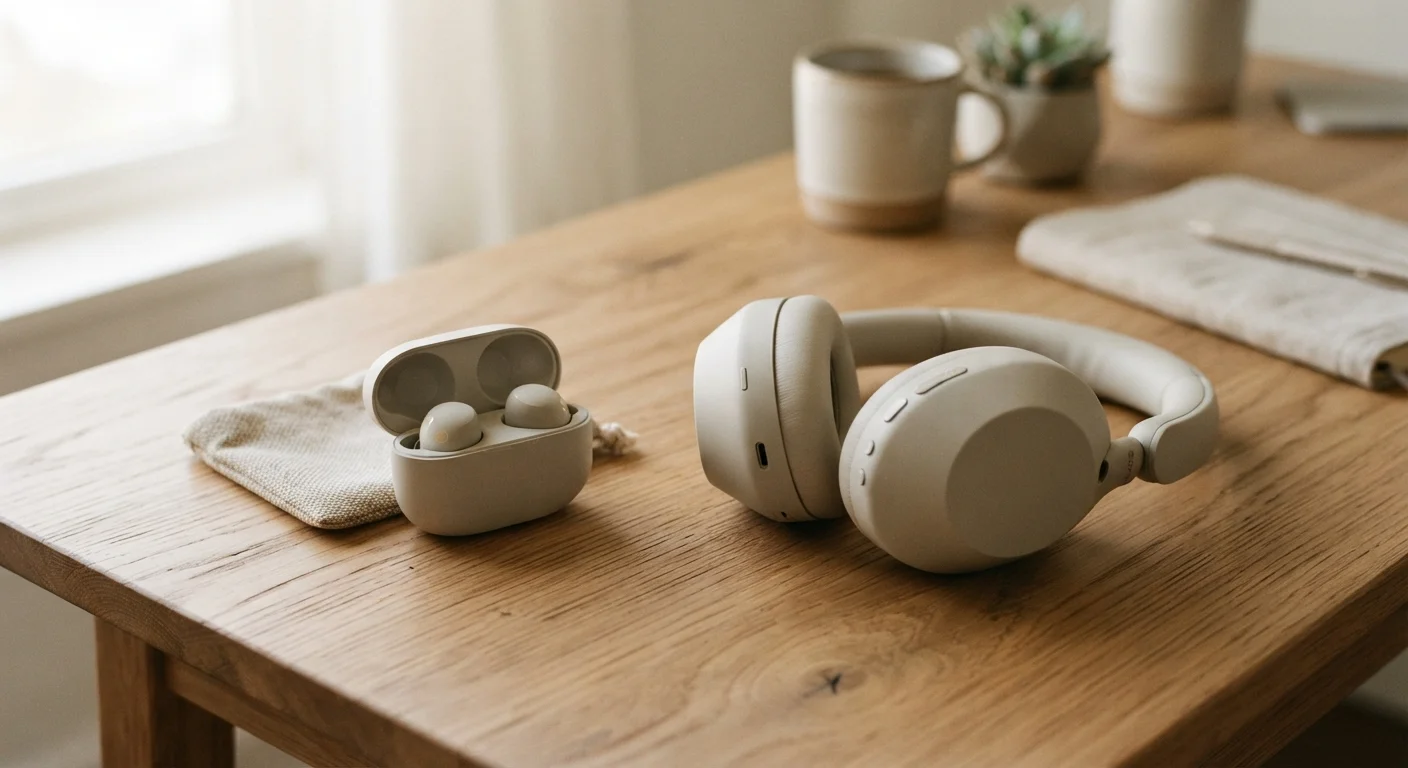
Volume levels and listening habits affect hearing over time. This article covers what audio researchers generally advise and how to apply it practically.
Key takeaways
- Listening above 85 decibels for extended periods is associated with gradual hearing damage over time.
- In-ear earbuds deliver sound closer to the eardrum, which affects how loudness is perceived.
- The 60/60 guideline (60% volume, 60-minute sessions) is a widely cited starting point for safer listening.
- Noise-canceling features can reduce the urge to raise volume in loud environments.
- Hearing loss from loud sound exposure builds gradually and is generally not reversible.
Why volume and time both matter
Hearing damage from audio devices is not simply about how loud the sound is. Duration matters just as much. Audiologists generally describe this as a dose relationship: a shorter exposure to very loud sound and a longer exposure to moderately loud sound can produce similar outcomes. The National Institute for Occupational Safety and Health uses 85 decibels (dB) as the threshold above which repeated exposure becomes a concern, with allowable exposure time dropping as volume rises.
Consumer headphones and earbuds can easily reach 100 dB or higher at maximum volume. At that level, the exposure time that occupational health guidelines flag as potentially harmful is measured in minutes per day, not hours. Most people have no idea how loud their devices actually get because volume percentage on a phone or media player is not a direct measure of decibels.
The cumulative nature of this risk is what catches people off guard. A person who listens at high volumes during a commute every weekday for years is building up exposure gradually. There is no sudden threshold where hearing is fine one day and damaged the next. The change happens slowly, often going unnoticed until someone struggles to follow a conversation in a noisy room or finds that sounds they used to hear clearly have become muffled.
Earbuds versus headphones: does the form factor change the risk?
In-ear earbuds sit inside the ear canal, which means the speaker is physically closer to the eardrum. Over-ear and on-ear headphones place the driver farther away, outside the ear canal. At the same volume setting on the same device, earbuds tend to deliver a higher sound pressure level at the eardrum than over-ear headphones do. This does not make earbuds inherently dangerous, but it does mean that the same percentage on a volume slider carries more punch when you are using in-ear buds.
Open-back headphones, which allow outside sound to pass through, generally require listeners to raise the volume less in quiet environments because ambient sound does not compete with the audio. Closed-back designs and earbuds with good passive seal block more outside noise, which is convenient in loud places but can encourage turning the volume up further when background noise changes.
Active noise cancellation (ANC) changes the equation somewhat. ANC works by using a microphone to pick up ambient sound and generating an opposing signal to cancel it out. The practical benefit for hearing is that many people find they can listen at noticeably lower volumes when ANC is running because they are not competing with background noise. Whether that benefit holds depends on listening habits, not the technology alone.
Practical guidelines audio researchers commonly cite
Set your device volume at or below 60% of its maximum as a default starting point.
Most consumer smartphones and media players reach sound levels well above 85 dB at maximum volume. Capping daily listening at 60% keeps many devices within a range that audio health researchers consider lower risk for typical session lengths.
Take a break from headphone use after about 60 continuous minutes of listening.
The ear benefits from recovery time after sustained sound exposure. Continuous multi-hour sessions accumulate more exposure than the same total time broken into segments with quiet intervals.
Use properly fitting ear tips or ear cushions to improve passive noise isolation.
A poor seal allows ambient noise in, which prompts volume increases to compensate. Better physical isolation means the same listening experience at a lower absolute sound level.
Enable any volume-limiting features your device or app offers.
Many phones and streaming apps include a maximum volume cap or a warning when volume exceeds a set level. These settings add a consistent backstop that works even when you forget to check manually.
Avoid compensating for noisy environments by raising volume; instead, address the noise source.
Turning up volume to overcome background noise is one of the most common paths to unsafe listening levels. Reducing the ambient noise through isolation or a quieter location is a safer approach.
Applying these practices does not require an audiologist's appointment or any special equipment. The 60/60 guideline is a reasonable starting point: 60% of maximum device volume, with breaks after about 60 minutes of continuous listening. It is not a precise prescription based on decibel measurements, but it is simple enough to remember and tends to keep most consumer devices within safer ranges.
If you are not sure how loud your current habits are, a free sound level meter app on a smartphone can give a rough estimate by holding the phone near your ear while your audio plays. These apps are not calibrated instruments, but they can reveal whether you are routinely in the 75 dB range or the 95 dB range, which is useful information. Your ability to hear speech clearly in the room around you while wearing headphones is another informal indicator: if someone has to shout or tap you to get your attention, the volume is likely higher than advisable for regular use.
Environmental noise and the urge to compensate
One of the most common reasons people listen too loudly is that they are trying to hear clearly in a noisy environment. A subway car, an open-plan office, or an airplane cabin can hover around 70 to 85 dB of background noise on its own. Without any noise isolation, a listener may raise device volume to 95 dB or above just to make the audio feel clear. This is where physical isolation or ANC can genuinely help. Reducing the background noise reaching your ears makes it possible to hear content at a lower absolute volume.
Good fit matters for passive isolation. Earbuds that do not seal well in the ear canal let in more ambient sound and push users toward higher volume. Trying different ear tip sizes, which most wireless earbuds include in the box, is a straightforward step. Over-ear headphones with padded cups that fully surround the ear also provide meaningful passive isolation without any electronics involved.
Just as listening is a skill that can be developed (see how active listening differs from passive hearing for a different angle on this), listening safely with headphones is largely a habit. The hardware choices matter less than the volume levels and time patterns a person settles into.
Check your device's audio exposure report
Many smartphones now log estimated headphone audio levels over time. On iPhones, this appears under Health data as Headphone Audio Levels. Android users may find similar data in the Digital Wellbeing section depending on the device. Checking this weekly takes about 30 seconds and gives you real usage data rather than a rough guess about your habits.
Signs worth paying attention to
Temporary ringing or muffled hearing after a long listening session, sometimes called a temporary threshold shift, is a signal that the auditory system has been stressed. It typically fades within hours. Audiologists generally treat it as a warning sign rather than a trivial side effect, because repeated episodes are associated with cumulative damage over time.
Difficulty following speech in background noise is often one of the earlier functional signs that hearing has changed. This is different from simply not catching every word in a chaotic room: it is a pattern where voices that used to be easy to follow require more effort to understand. A hearing evaluation from a licensed audiologist is the appropriate step if that pattern becomes consistent. This article covers general information about audio habits and is not a substitute for professional medical evaluation. If you have concerns about your hearing, consult a qualified healthcare professional.
The content on this site is for informational purposes only and is not a substitute for professional advice. Always consult a qualified professional for guidance specific to your situation.