
The 50/30/20 Rule: How This Simple Split Organises Your Spending

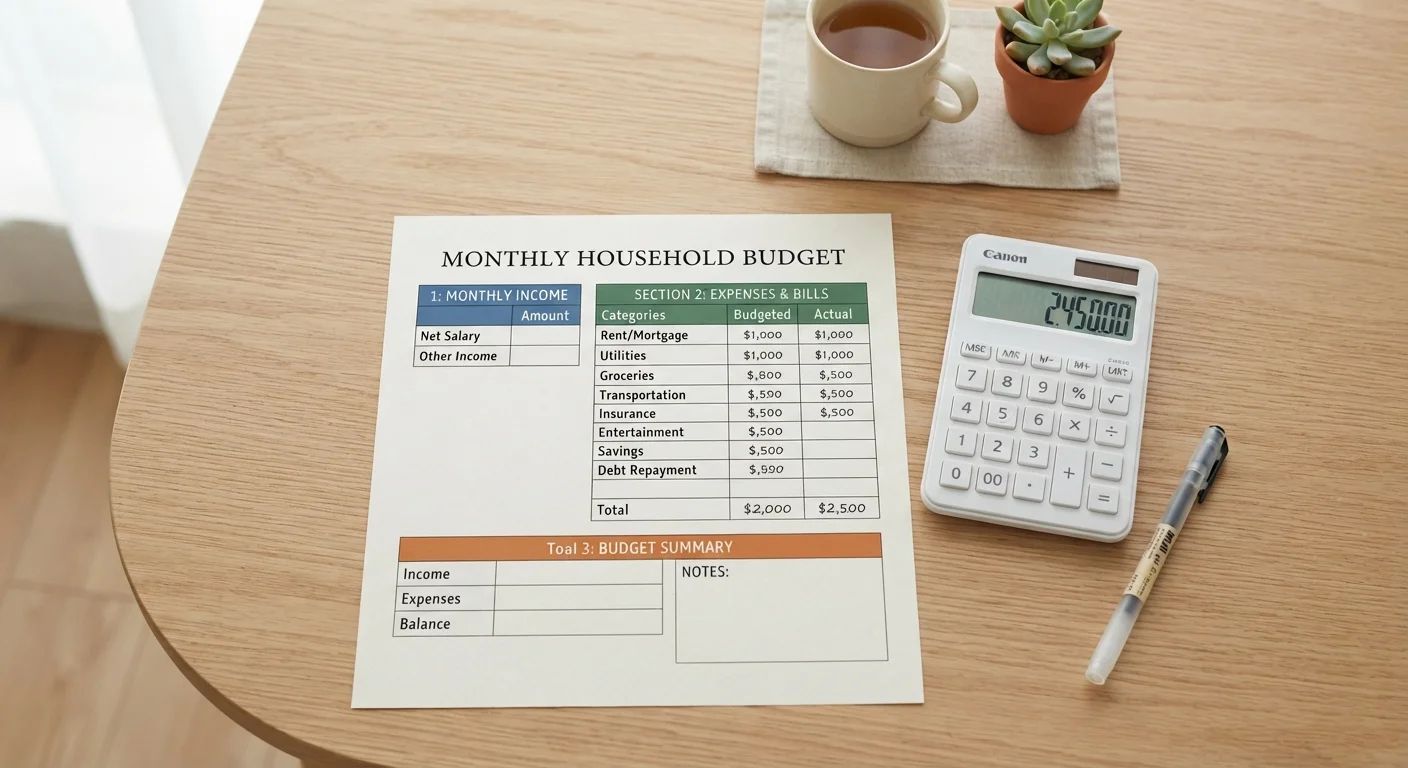
The 50/30/20 guideline divides income into needs, wants, and savings. Learn what each category means and how to apply this framework to a real budget.
Key takeaways
- The rule splits after-tax income into needs (50%), wants (30%), and savings or debt payoff (20%).
- Needs are expenses you cannot reasonably avoid; wants are expenses you choose for enjoyment or convenience.
- The 20% savings category covers both building an emergency fund and paying down debt faster.
- The percentages are a starting point, not a strict requirement. Higher costs of living may require adjustments.
- Tracking your current spending for one month first makes it much easier to apply the framework accurately.
What the three categories actually mean
The rule only works if you sort your spending correctly, and that sorting is trickier than it sounds. Needs, wants, and savings each have a specific definition in a percentage-based budget.
Needs are expenses you cannot reasonably cut without serious consequences: rent or mortgage, utilities, groceries, health insurance, minimum debt payments, and basic transportation to work. The word 'need' does not mean 'things I really like.' A streaming subscription is not a need. A car payment on a vehicle required to get to your job likely is.
Wants are spending choices that improve your life but are not strictly required. Dining out, gym memberships, clothing beyond basic necessity, hobbies, and entertainment all belong here. This category is not a problem category; it is simply the one with the most flexibility when money gets tight.
Savings and debt payoff covers contributions to retirement accounts, an emergency fund, and any extra payments on debt above the required minimum. These are dollars that improve your financial position rather than fund current consumption.
Check your numbers before changing them
Before adjusting your spending to hit the 50/30/20 targets, pull three months of bank and credit card statements and categorize every transaction. Guessing where your money goes almost always produces an inaccurate baseline. Real numbers give you a real starting point.
How to apply the framework to your actual numbers
Start with your monthly after-tax income. If your pay varies, use a realistic average or your lowest recent month to stay conservative.
Multiply that figure by 0.50, 0.30, and 0.20. Those results are your spending targets for each category. For example, on $4,000 take-home pay, the targets are $2,000 for needs, $1,200 for wants, and $800 for savings.
Before adjusting your behavior, spend one month simply recording where money actually goes. Most people find their real numbers do not match the targets, and that gap tells you exactly what to address. If needs are running at 58%, you are not failing. You have specific information to work with.
Building a full monthly budget around these categories takes this framework further, with specific steps for tracking and reviewing each month.
50%
Income ceiling for essential needs
The original framework, as described in 'All Your Worth' by Elizabeth Warren and Amelia Warren Tyagi, sets needs at no more than half of after-tax income.
~36%
Average US household spending on housing alone
According to the U.S. Bureau of Labor Statistics Consumer Expenditure Survey, housing consistently consumes the largest share of household budgets, often making the 50% needs target tight for renters in high-cost cities.
20%
Recommended share for savings and debt payoff
Financial education resources broadly cite this as a reasonable savings floor for building an emergency fund and contributing to retirement accounts over time.
Where the rule fits well and where it struggles
The 50/30/20 rule works well as a first budget because it requires no spreadsheet expertise and produces an immediate picture of whether spending is roughly balanced. For someone who has never budgeted before, three categories are much easier to manage than twenty line items.
The framework struggles in two common situations. First, people in expensive housing markets often cannot keep needs below 50% of income, regardless of how carefully they spend. Second, someone with significant debt may need to direct more than 20% toward payoff to make real progress, which compresses the wants category considerably.
Percentage-based budgeting has real limits worth understanding before you commit to any fixed-split framework. The percentages are a starting structure. Adjusting them to fit your actual income level and obligations is not cheating; it is how the tool gets used correctly.
Once the basics are in place, the 20% category connects to longer-term goals. The saving and debt hub and investing essentials hub cover where that slice of income can go once you have a stable monthly structure.
This article is for general informational purposes only and is not personalized financial advice. For guidance specific to your circumstances, consult a qualified financial professional.
Frequently Asked Questions
The content on this site is for informational purposes only and is not a substitute for professional advice. Always consult a qualified professional for guidance specific to your situation.