
Emergency Funds and Budgets: Why They Work Together

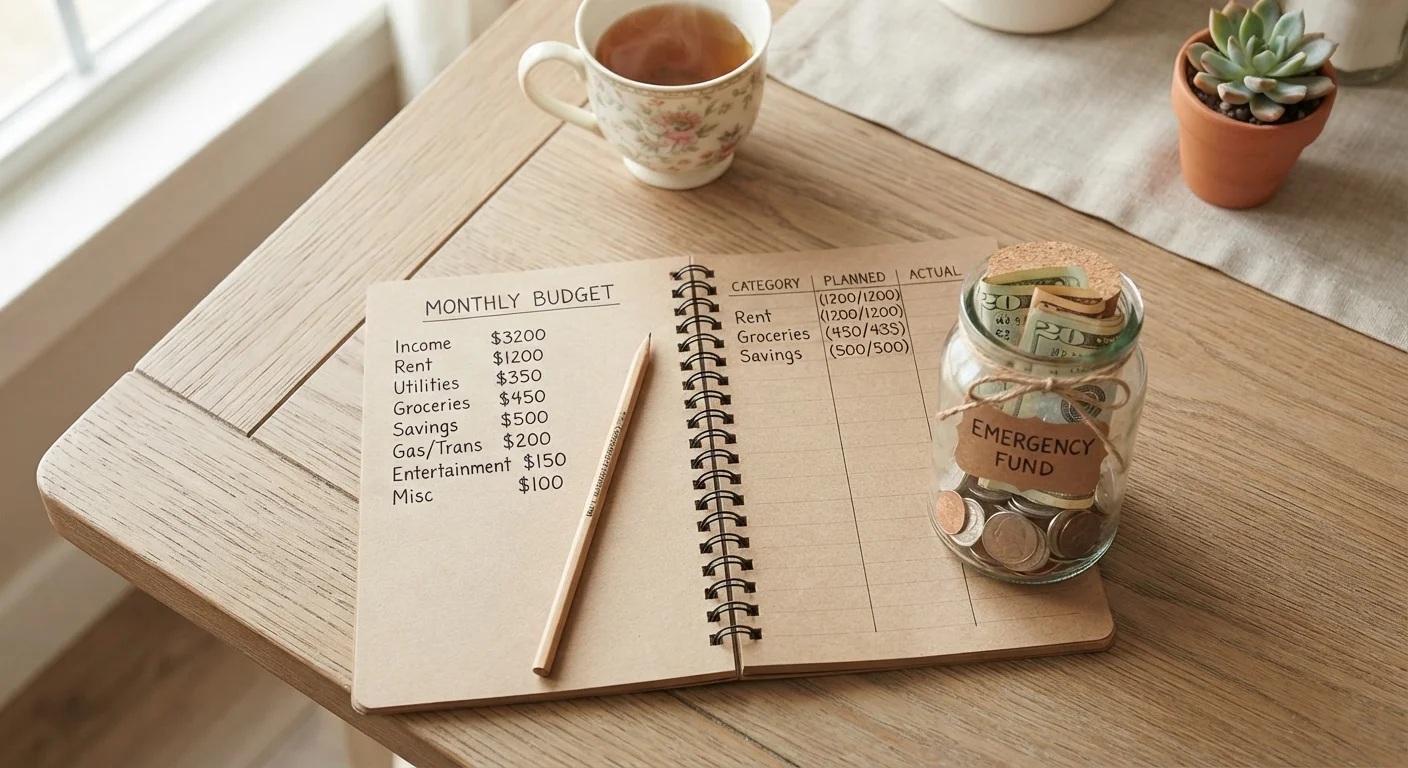
An emergency fund prevents one bad month from destroying a budget. Learn what an emergency fund is, how much to aim for, and how to work it into your plan.
Key takeaways
- An emergency fund absorbs financial shocks so your budget can keep running normally.
- Most guidance targets three to six months of essential expenses as a reasonable goal.
- Even a small starter fund of a few hundred dollars reduces the need to use credit cards for surprises.
- Building an emergency fund and sticking to a budget happen at the same time, not one before the other.
- The fund should be kept in a separate, accessible account to reduce the temptation to spend it.
What an emergency fund actually does for a budget
A budget tells your money where to go each month. An emergency fund tells your budget that it can survive when reality does not cooperate. Without one, a single unexpected expense, say a $900 car repair or a week of missed work, can force you to skip bill payments, carry credit card debt, or abandon savings goals entirely.
The two tools work together because a budget depends on a degree of predictability. When something unpredictable happens and there is no cash set aside, the budget breaks. With an emergency fund in place, the surprise gets paid from the fund, and the rest of the budget continues as planned. The month stays on track. Personal budgeting works best when it has a safety net behind it, and the emergency fund is that net.
How to size your emergency fund
The standard guidance is to save three to six months of essential expenses. Essential expenses are the costs you must cover no matter what: housing, utilities, groceries, transportation, insurance, and minimum debt payments. Discretionary spending like dining out or subscriptions does not need to be included in that calculation.
~56%
Americans who could not cover a $1,000 emergency from savings
A Bankrate survey found that roughly 56% of U.S. adults said they would be unable to pay a $1,000 unexpected expense from their savings alone.
3-6 months
Recommended emergency fund coverage
Most financial education sources, including the Consumer Financial Protection Bureau, point to three to six months of essential expenses as a reasonable target for most households.
$500-$1,000
Common starter emergency fund target
Many personal finance educators suggest a small starter fund in this range as the first savings milestone before aggressively paying down debt or growing investments.
Three months is a reasonable starting point for someone with stable employment and a dual-income household. Six months or more makes more sense for people with variable income, a single income stream, or jobs in industries with longer hiring timelines. Budgeting without a fixed paycheck comes with its own risks, and a larger emergency fund helps offset them.
If a multi-month fund feels out of reach right now, that is fine. A starter fund of $500 to $1,000 is worth building first. That amount covers a large share of common emergencies and keeps smaller surprises from landing on a credit card.
Where the emergency fund fits in a budget
Building an emergency fund does not require a separate plan. It belongs in the budget as its own line item, the same way rent or groceries do. Decide on a monthly contribution, even if it is modest, and treat it as a fixed expense until the fund hits its target.
Where you keep the money matters. A dedicated savings account, separate from your everyday checking account, reduces the chance that emergency savings get spent on non-emergencies. Some people find it useful to use an account at a different bank to add a small amount of friction before accessing it.
An emergency fund is not the same as a sinking fund. A sinking fund handles costs you can predict in advance, such as annual car registration or holiday spending. An emergency fund handles costs you cannot predict. Sinking funds are worth setting up alongside an emergency fund, not instead of one.
Building the fund while managing everything else
Most households are not starting from zero in a vacuum. There are bills, existing debt, and limited income. The question of how to save at all is real.
The practical approach is to start small and automate. Even $25 or $50 per paycheck, moved automatically to a savings account on payday, builds a fund without requiring ongoing willpower. Over time, as income grows or expenses drop, the contribution amount can increase.
Debt and emergency savings do not have to wait for each other. Carrying a starter fund while paying down debt is generally better than putting every dollar toward debt and having nothing when something breaks. If you are working through debt alongside saving, the saving and debt section covers approaches that address both at once.
For households with two incomes, coordinating contributions is worth a conversation. Budgeting as a couple introduces variables that a solo budget does not have, and agreeing on a shared emergency fund target is part of that coordination.
This article is for general informational purposes only and does not constitute personalized financial advice. Consult a licensed financial professional regarding decisions specific to your situation.
Frequently Asked Questions
The content on this site is for informational purposes only and is not a substitute for professional advice. Always consult a qualified professional for guidance specific to your situation.