
Sinking Funds Explained: Planning Ahead for Irregular but Predictable Costs

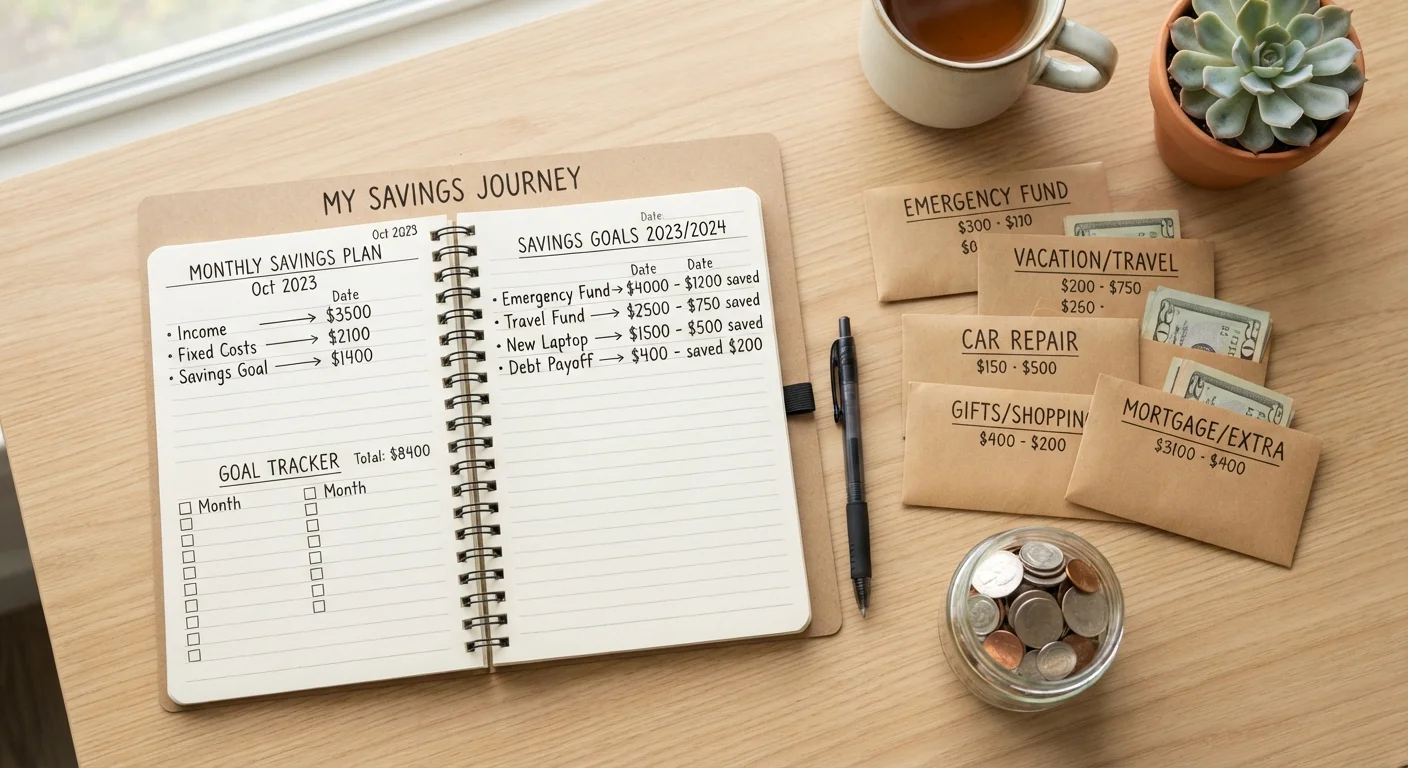
Car repairs, annual subscriptions, holiday gifts: sinking funds let you set aside money gradually so irregular costs never blindside a budget.
Key takeaways
- A sinking fund is for irregular but predictable costs, not true emergencies.
- Divide the total cost by the number of months until you need the money to find your monthly savings target.
- Keeping sinking funds separate from daily spending money prevents accidental overspending.
- Automating monthly transfers into a sinking fund removes the temptation to skip contributions.
- Most households benefit from running several sinking funds at once for different categories.
Why irregular expenses break budgets
Most budgets account for rent, utilities, groceries, and other costs that repeat each month at roughly the same amount. What trips people up is the second category: expenses that are real, predictable, and sometimes large, but do not show up every month. Car registration, annual software subscriptions, back-to-school supplies, holiday gifts, a yearly vet checkup. None of these are surprises, yet they can feel like one when they arrive in a month that is already stretched thin.
The result is usually one of two things: people raid their emergency fund, which was meant for genuine crises, or they put the expense on a credit card and carry a balance. Both options cost more in the long run than planning ahead would have. Emergency funds and regular budgets are designed to work together, but only when the emergency fund is not being used as a general overflow account.
A sinking fund closes that gap. It turns an occasional large cost into a small monthly line item, which is much easier to absorb.
How to set up a sinking fund
The math is straightforward. Estimate the total cost of the expense, then divide by the number of months you have before you need the money.
If a car registration runs $240 and it is due in 12 months, you need to set aside $20 per month. If the family holiday budget is $900 and you start saving 9 months out, that is $100 per month. Neither figure is dramatic on its own.
Once you have the monthly targets, the practical step is to move that money out of your regular checking account on or near every payday. Automating those transfers is the most reliable way to stay consistent. When the money moves automatically, you do not have to decide whether to save each month; the decision is already made.
Where you keep the money matters too. Mixing sinking fund balances with your everyday spending account makes it easy to accidentally spend what you have saved. A separate savings account, or a savings account that allows labeled sub-buckets, keeps each fund visible and distinct.
Start with your calendar
Look 12 months ahead and write down every expense you know is coming that does not appear in your monthly bills. Assign a dollar estimate and a due date to each one. Those are your sinking fund candidates. Even rough estimates beat no plan at all.
Common categories worth funding
There is no universal list, because households vary. That said, several categories come up repeatedly for most American families.
- Car maintenance and repairs (oil changes, tires, unexpected but statistically likely repair bills)
- Annual insurance premiums paid in a lump sum
- Holiday and gift spending, spread across the year rather than charged in December
- Travel or vacation costs
- Home maintenance (HVAC service, appliance replacement, seasonal repairs)
- Medical or dental out-of-pocket costs not covered by insurance
The goal is not to predict every cost to the dollar. It is to make a reasonable estimate so that when the bill arrives, the money is already there. You can refine your estimates each year based on what you actually spent.
Understanding which of your expenses are fixed versus flexible makes it easier to spot the categories that belong in a sinking fund rather than your monthly budget.
Sinking funds and the broader budget
A sinking fund is one tool in a budget, not a replacement for one. It works alongside your monthly spending categories, your emergency fund, and any debt payoff or savings goals you are working toward.
For households where two people share finances, sinking funds can help reduce friction. When both partners know that $75 per month is already going toward home repairs, there is less room for disagreement when a plumber bill shows up. Budgeting as a couple involves a lot of alignment on exactly these kinds of shared future costs.
One thing sinking funds are not: a path to growing wealth over time. The money is earmarked and will be spent. For building long-term savings beyond what you need for expenses, saving and debt strategies and eventually investing basics are the next steps.
This article is for general informational purposes only and does not constitute personalized financial advice. Consult a qualified financial professional for guidance specific to your situation.
Frequently Asked Questions
The content on this site is for informational purposes only and is not a substitute for professional advice. Always consult a qualified professional for guidance specific to your situation.