
Personal Budgeting: What It Actually Means and Why It Works

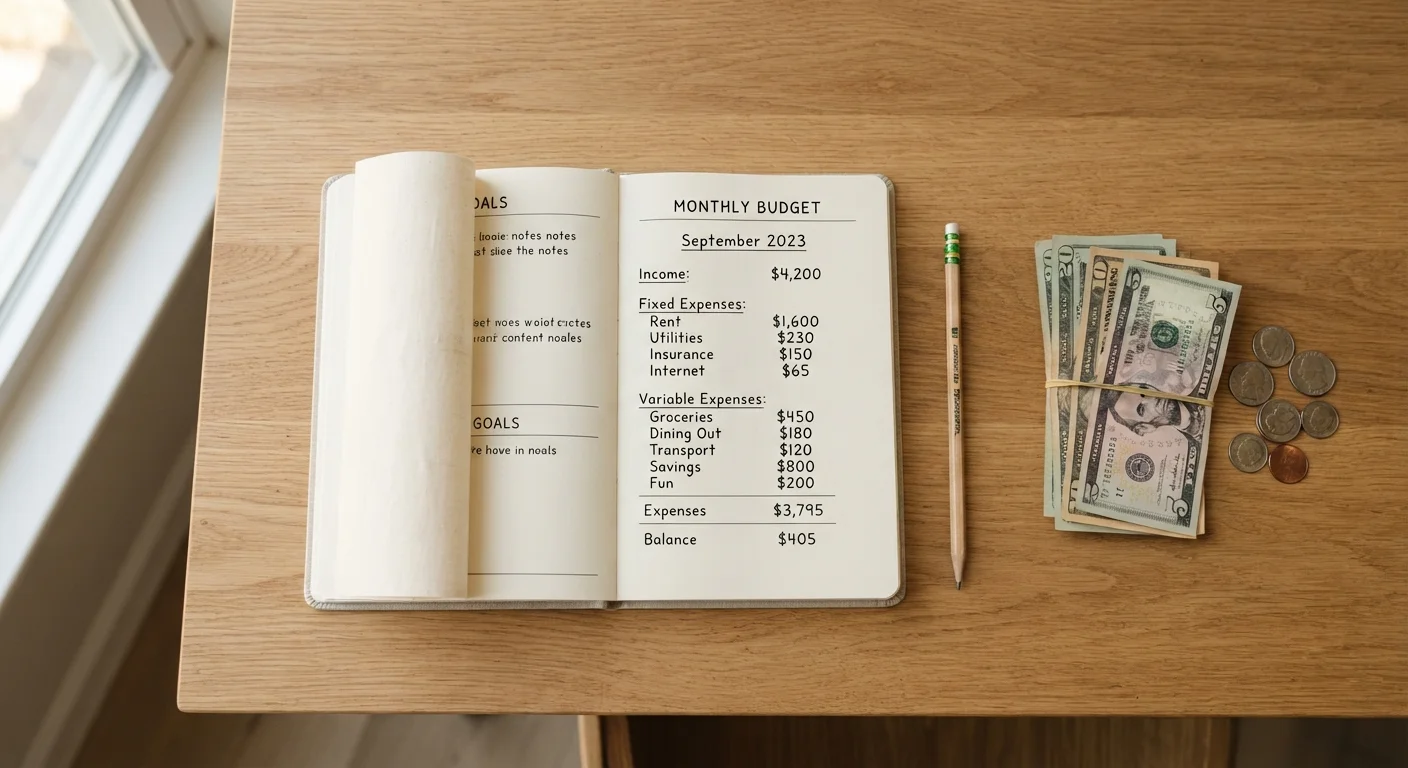
Budgeting is more than cutting spending. Learn what a personal budget really is, how it functions, and why it helps people feel more in control of their money.
Key takeaways
- A budget is a plan for your income, not a punishment or a restriction.
- Budgets work because they make spending visible and intentional.
- You do not need a high income or special software to budget effectively.
- A written budget reduces financial stress by replacing guesswork with information.
- Budgeting pairs naturally with saving and debt payoff to make both more manageable.
What a budget actually is
A budget is a written plan that assigns your income to specific categories before you spend it. That is the whole idea. You look at what comes in, decide where it goes, and write it down.
Most people picture budgeting as a strict spending limit or a sign that money is tight. Neither is accurate. A budget works at any income level, and it does not require cutting everything you enjoy. It requires deciding, in advance, what you want to do with your money.
The plan usually covers one month at a time because most bills and paychecks follow a monthly cycle. You list your income, then list your expected expenses across categories like housing, groceries, transportation, and savings. Whatever is left after essential expenses gets directed somewhere intentional rather than disappearing into small purchases you cannot account for later.
Understanding how to sort your spending into categories is the first real skill in budgeting, and it is simpler than most people expect.
Why budgets work
A budget works for one reason: it makes your finances visible. When you can see where every dollar goes, you make different decisions than when you are guessing.
Without a plan, spending tends to drift. Subscriptions accumulate. Small daily purchases add up to amounts that would surprise most people at the end of the month. A budget does not stop those things from happening by itself, but it makes them impossible to ignore.
~33%
Americans with a written household budget
Gallup polling has consistently found that fewer than half of American households maintain a detailed written budget.
Top stressor
Money as a source of stress
The American Psychological Association has repeatedly found financial concerns among the most commonly reported sources of stress for U.S. adults.
Visibility also removes the low-grade anxiety that comes from not knowing whether you can cover an upcoming bill or reach a savings goal. When the numbers are written down, the answer is right there. That clarity, more than any single spending cut, is why people who budget consistently report feeling more in control of their finances.
There is also a compounding effect over time. A budget that includes even a modest savings line builds an emergency fund over several months, which protects the budget itself when unexpected expenses arrive.
Common misconceptions
The word 'budget' carries baggage. Many people associate it with deprivation, with financial failure, or with something only necessary when money is scarce. None of those associations hold up.
High earners who do not budget often find that spending expands to fill available income with no clear progress toward goals. Lower earners who do budget often find that visibility alone surfaces options they had not seen. Income level shapes the budget's contents, but not whether a budget is worth making.
Another common assumption is that a budget must be perfect to be useful. It does not. A rough plan that accounts for 80 percent of your spending is far more useful than no plan at all. Adjustments happen every month as you get more accurate about what things actually cost.
If you share finances with a partner, the planning process introduces its own considerations. Shared budgets involve different conversations than solo ones, but the underlying mechanics are the same.
How to move from knowing to doing
Understanding what a budget is and actually building one are different steps. The gap between them is usually smaller than it feels.
Start with your monthly income after taxes. Then write down every expense you expect that month: fixed costs like rent or loan payments, variable costs like groceries and gas, and anything irregular coming up. Subtract expenses from income. Whatever remains either goes to savings, debt payoff, or discretionary spending, depending on your priorities.
A step-by-step walkthrough of building your first monthly budget covers each of those stages in detail. If the process feels connected to longer-term goals like paying down debt or starting to invest, practical approaches to saving and debt and foundational investing concepts build on the same foundation a budget creates.
This article is for general informational purposes only and does not constitute personalized financial advice. For guidance specific to your situation, consider speaking with a licensed financial professional.
Frequently Asked Questions
The content on this site is for informational purposes only and is not a substitute for professional advice. Always consult a qualified professional for guidance specific to your situation.