
Sugar by Any Other Name: A Field Guide to Food Label Sweeteners

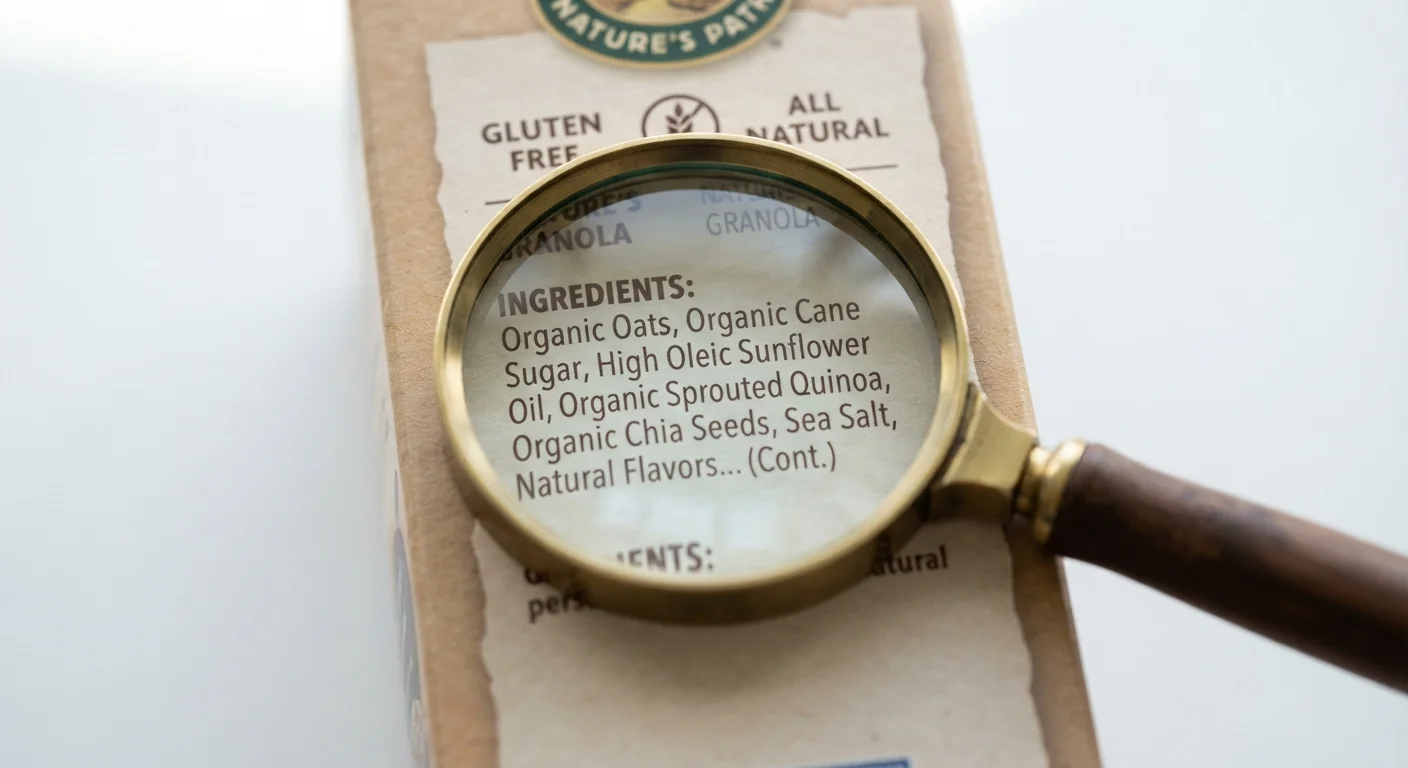
Added sugar hides under dozens of names on ingredient lists. This reference helps you spot them all.
Why ingredient lists can be misleading
Food manufacturers are required to list ingredients in descending order by weight. That rule should make sugar easy to spot, except that sugar rarely appears as a single ingredient. A product might list five or six different sweeteners separately, each one ranking lower on the list than a single combined entry would. The result is a label that looks like it contains little sugar when the total is actually substantial.
The FDA requires that added sugars be declared on the Nutrition Facts panel in grams and as a percentage of the Daily Value. That number is your most reliable quick reference. The ingredient list, by contrast, tells you which forms of sugar are present, not the combined total. Both pieces of information are worth reading together.
If you find this kind of label confusion familiar, foods often labelled healthy that deserve a closer look covers how that same pattern plays out in products marketed as nutritious.
Added sugar
Any sugar or caloric sweetener added to a food during processing or preparation, as distinct from sugars that occur naturally in whole fruit, vegetables, or plain dairy.
High-fructose corn syrup
A liquid sweetener made from corn starch in which some glucose has been converted to fructose. It is used widely in processed foods and beverages.
Sucrose
The chemical name for ordinary table sugar, a molecule made of one glucose and one fructose unit bonded together.
Dextrose
Another name for glucose derived from corn starch. It behaves identically to other forms of glucose in the body.
Fruit juice concentrate
Juice from which most of the water has been removed, leaving a dense, sweet liquid. When added back to a product, it counts as an added sugar.
The main categories of sweetener names
Added sugars fall into a few broad categories. Knowing the category helps you recognize new names as they appear.
Syrups
Any ingredient ending in "syrup" is almost certainly an added sugar. Common examples include high-fructose corn syrup, brown rice syrup, tapioca syrup, malt syrup, oat syrup, and agave syrup (also sold as agave nectar). Despite differences in source and fructose content, all of them contribute added sugar calories.
Words ending in "-ose"
The "-ose" suffix indicates a sugar molecule. Sucrose (table sugar), fructose, glucose, dextrose, maltose, and lactose all fall here. Dextrose is simply another name for glucose derived from corn. Maltose comes from starch and appears frequently in baked goods and cereals.
"Natural" and minimally processed sweeteners
Honey, maple syrup, coconut sugar, date sugar, and fruit juice concentrate are all added sugars. Their micronutrient content is minimal at the amounts typically used, and the body processes their sugars similarly to refined sucrose. They count toward the added sugars total on the Nutrition Facts panel.
Less familiar names
Barley malt extract, carob syrup, treacle, muscovado, turbinado, demerara, panela, and sucanat are all sweeteners. Evaporated cane juice is a term the FDA has clarified should not replace the word "sugar" on labels, though it still appears on some products.
| Added sugars on Nutrition Facts panel | Required since 2020 (large manufacturers) and 2021 (smaller ones) (U.S. Food and Drug Administration) |
| Grams of sugar per teaspoon | Approximately 4 grams (FDA reference conversion) |
| Common "-ose" sugars | Sucrose, fructose, glucose, dextrose, maltose, lactose |
| "Natural" sweeteners that still count as added sugar | Honey, maple syrup, agave, coconut sugar, date sugar, fruit juice concentrate (FDA added sugars definition) |
| Ingredient list ordering rule | Descending order by weight (FDA food labeling regulations) |
How to use this information practically
Start with the Nutrition Facts panel. The added sugars line, introduced in updated labeling rules, gives you the total in grams regardless of how many individual sweeteners appear in the ingredient list. Four grams equals roughly one teaspoon, which can help translate an abstract number into something more concrete.
Then scan the ingredient list for how early a sweetener appears. An ingredient in the first three positions is present in a significant amount. If several sweeteners appear across positions four through ten, their combined contribution may still be meaningful even though no single one ranks near the top.
This same habit of reading ingredient lists carefully applies across product categories. reading a pet food label follows a similar logic, and the structural parallels can make both tasks feel more manageable once you understand how ingredient ordering works.
No single food choice determines overall diet quality. Knowing these names gives you more information, not a reason to avoid every product that contains an added sweetener. Context, portion size, and the rest of your diet all matter.
This article is for general informational purposes only and is not a substitute for advice from a registered dietitian or other qualified healthcare professional. If you have questions about your specific dietary needs, consult a qualified provider.
The content on this site is for informational purposes only and is not a substitute for professional advice. Always consult a qualified professional for guidance specific to your situation.