
Dental Health in Pets: The Connection Between a Clean Mouth and a Longer Life

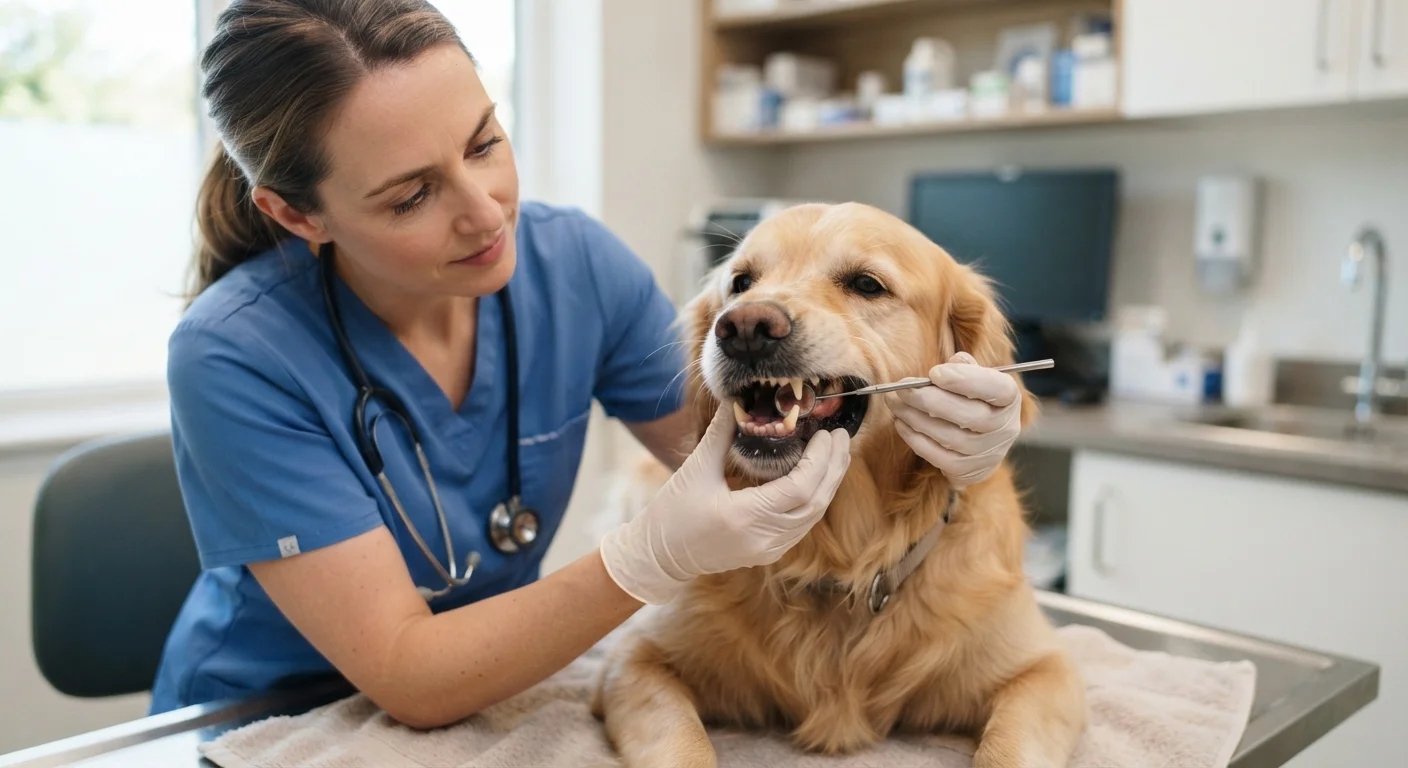
Periodontal disease affects most adult pets yet often goes unnoticed. Understand what good dental hygiene involves and why it matters beyond fresh breath.
Key takeaways
- Periodontal disease affects an estimated 80% of dogs and 70% of cats by age three.
- Bacteria from infected gums can travel through the bloodstream and affect the heart, kidneys, and liver.
- Daily tooth brushing is the single most effective home care method for preventing plaque buildup.
- Annual professional cleanings under anesthesia allow thorough assessment that home care alone cannot provide.
- Bad breath in pets is not normal; it is usually a sign of bacterial overgrowth requiring attention.
Why dental health goes far beyond fresh breath
Most pet owners know bad breath can signal a problem, but the real consequences of poor oral health extend well past the mouth. When plaque accumulates and hardens into tartar, the bacteria living in that buildup cause gum inflammation called gingivitis. Left unaddressed, gingivitis progresses into periodontitis, where infection destroys the tissue and bone holding teeth in place.
The systemic effects are what make dental disease a genuine health concern rather than a cosmetic one. Bacteria from infected gums enter the bloodstream during normal activities like chewing and grooming. Over time, this bacterial exposure has been associated in veterinary literature with changes in kidney, heart valve, and liver tissue. Pets with untreated advanced dental disease often show signs of systemic illness that owners never connect back to their mouth.
This is why oral health belongs in the same conversation as weight management, parasite prevention, and vaccination. It is part of avoiding preventable health problems that often go undetected until a pet is already unwell.
How disease develops in your pet's mouth
Plaque forms within hours of eating. It is a soft film of bacteria that coats the tooth surface and, without mechanical removal, mineralizes into tartar within days. Tartar is porous and rough, giving more bacteria a surface to colonize. The gum tissue responds with inflammation, which is the body's attempt to contain the infection.
At Stage 1, gingivitis, the process is reversible with professional cleaning and consistent home care. At Stages 2 and 3, some permanent damage has occurred. By Stage 4, bone loss is substantial, teeth may be loose, and the infection has often been present for months or years. Pets rarely show obvious pain at early stages because animals instinctively mask discomfort, which makes the disease easy to underestimate.
80%
Dogs with periodontal disease by age three
According to the American Veterinary Medical Association, the majority of dogs show signs of periodontal disease by their third year of life.
70%
Cats affected by dental disease by age three
Veterinary dental prevalence data consistently shows periodontal disease as one of the most common conditions diagnosed in adult cats.
4 stages
Severity classifications for periodontal disease
The American Veterinary Dental College uses a four-stage classification system, with only Stage 1 (gingivitis) considered fully reversible with proper treatment.
Small dog breeds and flat-faced (brachycephalic) breeds such as bulldogs and Persian cats have teeth crowded into a smaller jaw, which accelerates tartar buildup. These animals often need more frequent professional attention than the standard annual schedule.
Building a practical home care routine
Daily tooth brushing is the most effective way to disrupt plaque before it hardens. Use a toothbrush sized for your pet and toothpaste formulated for animals. Human toothpaste contains fluoride and foaming agents that are unsafe for pets when swallowed.
Introduce brushing gradually. Start by letting your pet lick a small amount of pet toothpaste from your finger, then progress to touching the gumline, then to short brushing sessions. Most pets accept this within a few weeks when the process is kept calm and paired with positive reinforcement.
Starting brushing with a reluctant pet
Break the introduction into five-minute daily sessions over two to three weeks. Begin by simply touching your pet's lips and muzzle, then progress to gently lifting the lip and touching the gum surface with your finger. Introduce the toothbrush only after your pet is comfortable with that level of handling. Short, consistent sessions build more acceptance than longer, infrequent attempts.
For pets that resist brushing despite a slow introduction, veterinary-approved alternatives include dental wipes, water additives with the Veterinary Oral Health Council (VOHC) seal, and certain dental chews. None of these replaces brushing in effectiveness, but each is more beneficial than no home care at all.
What to expect from professional dental care
A professional dental cleaning performed by a veterinarian involves anesthesia so the animal stays still and the clinician can safely work below the gumline, where most disease lives. The procedure includes scaling to remove tartar above and below the gumline, polishing the enamel surface, and dental X-rays to assess bone levels and tooth roots that are invisible on surface examination.
Many owners are surprised to learn that a large percentage of dental disease in pets is found below the gumline and would not be detected or treated without X-rays. This is also why anesthesia-free cleanings, which can only address visible surfaces, are not endorsed by veterinary dental organizations for treating or diagnosing disease.
Most adult pets without established disease do well with annual professional cleanings. Pets with a history of rapid tartar buildup or those in higher-risk categories may benefit from more frequent schedules. Your veterinarian can assess the appropriate interval based on your individual pet's mouth, age, and overall health.
This article is for general informational purposes only and does not constitute veterinary medical advice. Always consult a licensed veterinarian for guidance specific to your pet's health.
Frequently Asked Questions
The content on this site is for informational purposes only and is not a substitute for professional advice. Always consult a qualified professional for guidance specific to your situation.