
Indoor vs Outdoor Cats: Understanding the Health Trade-offs of Each Lifestyle

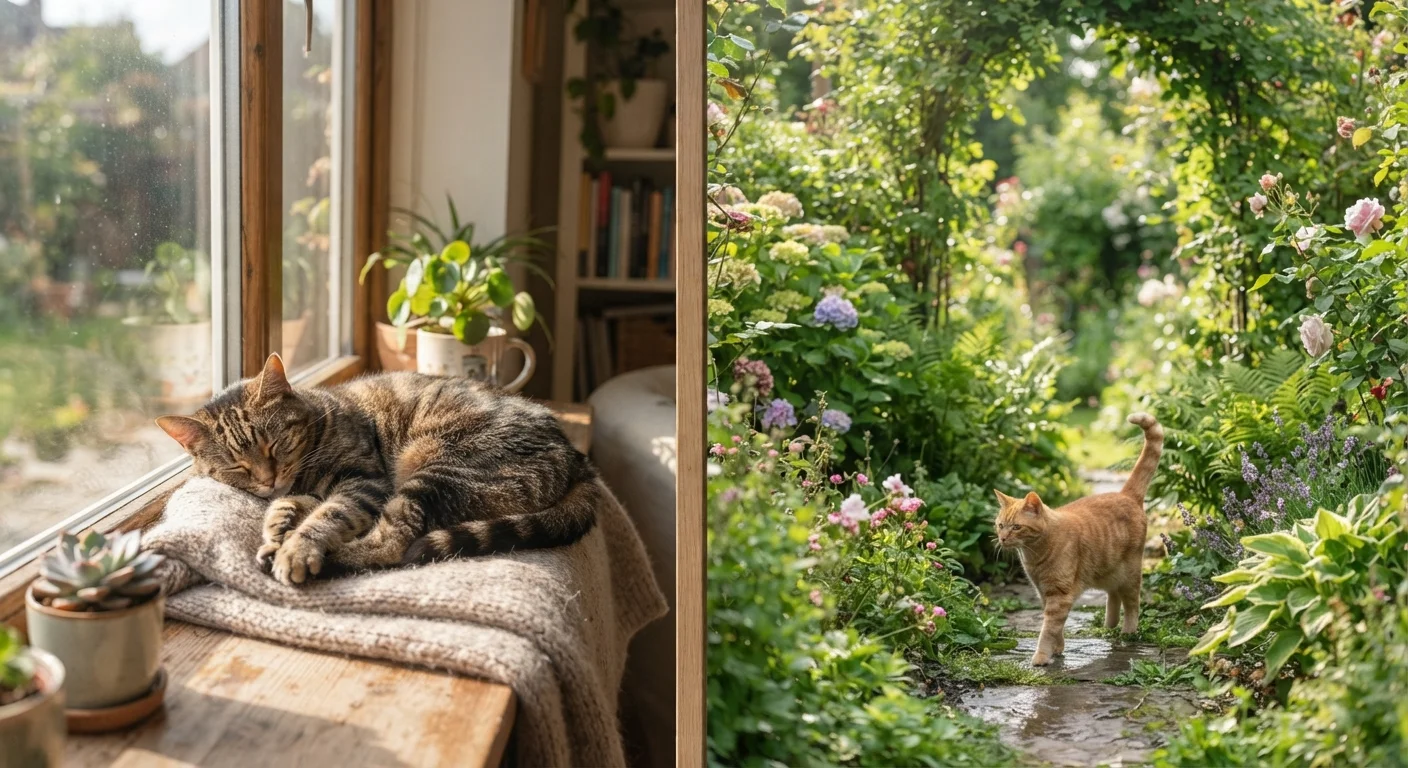
Indoor and outdoor lifestyles each carry distinct health risks and benefits for cats. Here's a balanced look at what the evidence suggests.
Option A
Indoor cats
The protected, controlled lifestyle choice.
Best for: Owners who want to minimize exposure to infectious disease, predators, and traffic injuries.
Option B
Outdoor cats
The active, environmentally rich lifestyle choice.
Best for: Cats in low-traffic, low-predator environments where owners can manage parasite prevention and vaccines consistently.
Key takeaways
- Indoor cats live longer on average but face higher risks of obesity, boredom, and stress-related illness.
- Outdoor cats encounter more infectious diseases, parasites, injuries, and environmental hazards.
- Both lifestyles require active, preventive veterinary care rather than a passive approach.
- Enrichment and diet management are the two most important factors for indoor cat health.
- Vaccination and parasite control are non-negotiable for any cat with outdoor access.
- A supervised or contained outdoor setup can offer environmental benefits with reduced risk.
What the lifespan data actually shows
Veterinary sources consistently report that indoor cats live longer than outdoor cats. Average lifespan estimates vary by source, but indoor cats often reach 12 to 18 years, while outdoor cats average closer to 5 to 7 years in published ranges. The gap comes from the density of hazards outdoor cats encounter daily rather than from any inherent biological advantage of indoor living.
Traffic injuries account for a large proportion of sudden feline deaths. Infectious disease exposure, including feline leukemia virus (FeLV) and feline immunodeficiency virus (FIV), spreads primarily through contact with other cats during outdoor roaming. Predators, poisons, and human interference add further risk. None of these disappear through luck or acclimation; they are structural features of free-roaming life.
This does not mean an outdoor cat is destined for a short life. It means the probability of a life-shortening event is meaningfully higher without mitigation. Owners who manage outdoor cats well through full vaccination schedules, consistent parasite control, and supervised access can shift those odds, though they cannot eliminate them. See our guide to preventable cat health problems for a closer look at where early prevention makes the most difference.
The indoor health risks owners underestimate
Indoor living removes many acute dangers but introduces chronic ones. Obesity is the most clinically significant. Without hunting behavior or sustained activity, indoor cats often eat past their caloric needs. Obesity raises the risk of type 2 diabetes, hepatic lipidosis (fatty liver disease), and joint disease. Weight management through measured feeding and active play is therefore a health requirement, not an optional preference.
Boredom and understimulation produce behavioral signs that owners sometimes misread. Overgrooming, house soiling, aggression, and compulsive eating can all stem from an environment that does not meet a cat's need for predatory activity. Cat training research shows that structured enrichment, including puzzle feeders, wand toys, and vertical space, reduces these behaviors by giving cats appropriate outlets for their instincts.
Chronic stress from monotony or multi-cat tension in a closed space also affects urinary health. Feline idiopathic cystitis (FIC), a painful bladder condition with no identifiable infection, is associated with stress in indoor cats. Water intake is one modifiable factor; signs of inadequate water intake are often subtle until a urinary episode occurs.
| Criterion | Indoor cats | Outdoor cats |
|---|---|---|
| Average lifespan | 12 to 18 years (typical range) | 5 to 7 years (typical range) |
| Infectious disease risk | Low (limited contact with other cats) | High (FeLV, FIV, upper respiratory) |
| Injury risk | Low | High (traffic, predators, falls) |
| Obesity risk | Higher without active management | Lower due to activity level |
| Parasite exposure | Minimal | Ongoing (fleas, ticks, worms) |
| Behavioral enrichment | Requires deliberate owner effort | Provided by the environment |
| Stress-related illness | Higher (FIC, overgrooming) | Lower if range is adequate |
| Vet visit frequency needed | Annual wellness exams | Annual plus parasite checks |
Managing health proactively for each lifestyle
For indoor cats, the priority areas are caloric control, environmental enrichment, and dental health. Dental disease is the most common condition diagnosed in domestic cats and is often more advanced in indoor cats by middle age because owners assume fewer hazards means fewer vet visits. Annual wellness exams catch dental disease, weight gain, and early organ changes before they become costly or painful to treat.
For outdoor cats, vaccination and parasite prevention are not optional extras. FeLV, FIV, rabies, and upper respiratory infections are all transmissible through contact with other cats or wildlife. A flea, tick, and intestinal parasite protocol should be in place before outdoor access begins and maintained throughout the year in most US climates. A veterinarian should set the specific schedule based on local prevalence.
Diet quality matters for both lifestyles. The nutritional needs of an active outdoor cat differ from those of a sedentary indoor one, and a one-size approach misses that distinction. If you have ever considered preparing food at home, our overview of homemade pet food trade-offs outlines the nutritional and safety considerations worth weighing first.
Grooming also reflects underlying health in both groups. Changes in grooming frequency or thoroughness can signal pain, skin parasites, stress, or systemic illness regardless of where a cat spends its time.
This article is for general informational purposes only and is not veterinary advice. Consult a licensed veterinarian for guidance specific to your cat's health, lifestyle, and medical history.
The content on this site is for informational purposes only and is not a substitute for professional advice. Always consult a qualified professional for guidance specific to your situation.