
Cat Grooming Habits: What Is Normal and What Warrants Attention

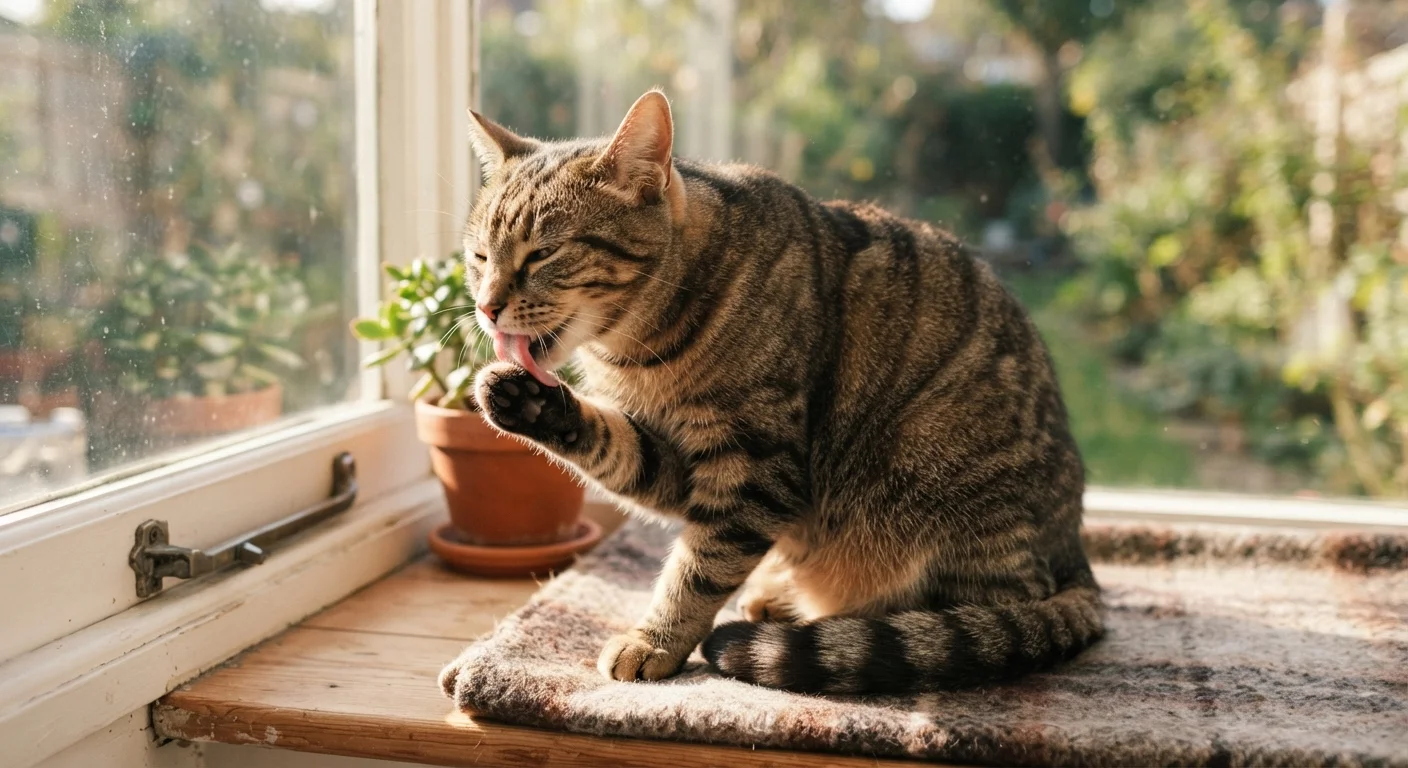
Understand how much grooming is typical for cats, what over-grooming or under-grooming can signal, and when to consult a vet.
Key takeaways
- Cats typically spend 30 to 50 percent of waking hours grooming, and that is normal.
- Over-grooming that creates bald patches or skin irritation often signals stress, allergies, or a medical condition.
- Under-grooming, especially in a cat that previously groomed well, can indicate pain, illness, or obesity.
- Coat condition is a reliable early indicator of a cat's overall health.
- A veterinarian should evaluate any sudden or persistent change in grooming behavior.
What normal cat grooming looks like
A healthy adult cat grooms in frequent, short bursts throughout the day. Sessions typically follow sleeping, eating, or play. The cat licks its paws and uses them to clean its face, then works methodically along its body. This sequencing is consistent enough that veterinary behaviorists treat any major deviation as a clinical observation worth noting.
Coat condition is the most visible indicator. A well-groomed cat has a coat that lies flat, feels clean, and shows no clumping or matting. Longhaired breeds groom just as instinctively as shorthaired ones, though their coats are more prone to tangles if grooming is disrupted. If you share your home with multiple cats, you may also observe allogrooming, where one cat licks another around the head and neck. This is normal social behavior between cats that are comfortable with each other.
Age matters here. Kittens develop grooming reflexes within weeks of birth, initially prompted by their mother. Senior cats may groom less thoroughly, partly because reduced flexibility makes certain areas harder to reach. Knowing your individual cat's baseline makes it much easier to notice when something shifts. For context on how lifestyle factors affect coat health, see our article on indoor vs. outdoor cat health trade-offs.
Recognizing over-grooming
Over-grooming means a cat is licking, chewing, or scratching at a frequency or intensity that causes visible coat damage or skin injury. The clearest signs are symmetrical thinning fur, bald patches, or broken hairs along the belly, inner thighs, or flanks. The skin beneath may look pink, raw, or develop sores.
Check for fleas before assuming stress
Flea allergy dermatitis is the most common physical cause of over-grooming in US cats, and a single flea bite can trigger a reaction in a sensitized cat. Before attributing increased licking to anxiety or behavioral causes, have a veterinarian check for flea activity and signs of flea allergy. Missing this step can lead to months of unnecessary behavioral intervention.
The causes fall into two broad categories: physical and behavioral. Physical causes include flea allergy dermatitis (the most common cause in the US), environmental or food allergies, fungal infections such as ringworm, and localized pain. A cat with a urinary tract problem may repeatedly lick its lower abdomen. A cat with an ear infection may scratch its head and neck constantly.
Behavioral over-grooming, sometimes labeled psychogenic alopecia by veterinary behaviorists, typically follows an identifiable stressor: a new pet, a move, a change in household routine, or even a change in the owner's schedule. Distinguishing physical from behavioral causes requires a veterinary exam, because the treatment paths differ significantly. Do not assume a change is purely stress-related without ruling out a physical trigger first.
Recognizing under-grooming
Under-grooming is less dramatic in onset but equally informative. A cat that has stopped maintaining its coat will show matting along the back and rump first, since these are the areas most dependent on active grooming effort. The coat may look dull, feel oily, or have a noticeable odor.
The most common physical reasons include obesity (which physically limits a cat's ability to reach its hindquarters), dental pain (grooming requires the teeth and jaw), osteoarthritis, and systemic illness such as kidney disease or hyperthyroidism. Poor nutrition can also degrade coat quality over time, making it harder for a cat to maintain a healthy appearance even with normal grooming effort.
If your cat has always been a diligent self-groomer and suddenly stops, that warrants a veterinary appointment rather than a wait-and-see approach. When paired with other symptoms such as reduced appetite, increased water intake (see our guide on increased water intake in pets), or lethargy, the change becomes more urgent.
30-50%
Of waking hours cats spend grooming
Veterinary behaviorists estimate healthy adult cats dedicate roughly a third to half of their active hours to self-grooming.
#1
Most common cause of over-grooming in US cats
Flea allergy dermatitis is widely cited by veterinary dermatologists as the leading physical trigger for excessive licking and scratching in domestic cats in the US.
2x
Higher matting risk in overweight cats
Cats carrying excess weight have reduced flexibility and a harder time reaching their hindquarters, making under-grooming and coat deterioration more likely.
When to involve a veterinarian
Any change in grooming behavior that persists beyond a few days, or that produces visible skin or coat damage, is a reasonable basis for a vet visit. Veterinarians can rule out parasites, perform allergy assessments, check for pain responses, and run bloodwork if systemic illness is suspected.
Owners sometimes hesitate because the cat seems otherwise fine. However, cats are adept at masking discomfort, and grooming changes are one of the few external signals that something may be wrong internally. Early evaluation tends to produce simpler, less expensive treatment than delayed evaluation.
For households managing multiple animals, keeping grooming observations as part of a daily routine helps. Our article on building a consistent daily routine for a multi-pet household offers a practical structure for tracking each pet's baseline. If you are also managing a dog's grooming alongside your cat's, the basics of grooming a dog at home covers the key differences in approach.
This article is for general informational purposes only and is not a substitute for veterinary advice. If you have concerns about your cat's health or behavior, consult a licensed veterinarian.
Frequently Asked Questions
The content on this site is for informational purposes only and is not a substitute for professional advice. Always consult a qualified professional for guidance specific to your situation.