
Building a Consistent Daily Routine for a Multi-Pet Household

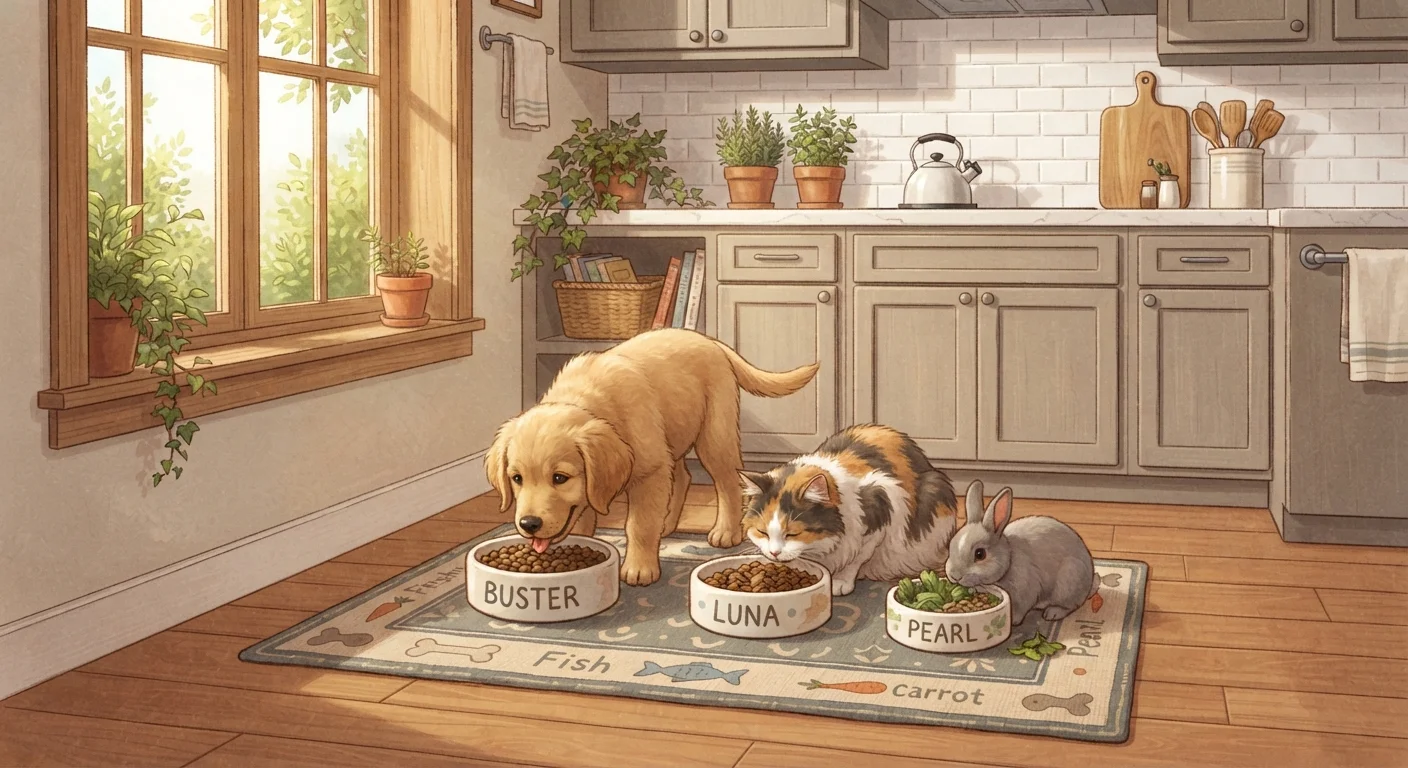
Practical approaches for managing feeding times, exercise, and grooming across different species and schedules without constant chaos.
Key takeaways
- Feeding different species at fixed, separate times prevents competition and overeating.
- Grouping grooming and exercise tasks by pet type saves time without shortchanging any animal.
- A written or posted schedule helps all household members follow the same routine.
- Small adjustments to timing can resolve most conflicts between overlapping pet needs.
- Watching each pet's response to the routine tells you when something needs to change.
Why routine matters more with multiple pets
A single pet adapts to a household's rhythms fairly easily. With two or more animals, especially across species, small inconsistencies in timing compound quickly. A dog fed late gets anxious and paces; a cat who misses her window steals from the dog's bowl; a rabbit left without hay beyond her usual hour develops digestive discomfort. These are not personality quirks to manage individually. They are signals that the household lacks a shared structure.
Routine serves a second function beyond basic care: it reduces decision fatigue for owners. When feeding times, exercise windows, and grooming sessions are fixed, you stop making the same small decisions every day. That mental space adds up, especially in households juggling work schedules or caring for children alongside pets.
For owners new to managing multiple animals, the first 90-day health checklist is a useful starting point for organizing early care before routines are set.
Structuring feeding across species
Feeding is where multi-pet routines break down most often. Dogs and cats have different caloric needs, meal frequencies, and food types. Add a small mammal like a rabbit or guinea pig, and you have a third nutritional framework running alongside the first two.
The most practical approach is to feed each species in a separate space at a fixed time, then remove uneaten food before animals have access to each other's areas. This prevents cross-feeding, which can cause digestive upset or nutritional imbalance. For cats and dogs sharing a home, feeding the cat on an elevated surface the dog cannot reach is a straightforward physical solution.
Meal frequency matters too. Most adult dogs do well with two meals a day. Cats often prefer smaller, more frequent portions. Small mammals like rabbits need near-constant access to hay with measured pellets at set times. Understanding how those needs shift across a pet's life helps you adjust without guesswork. The article on feeding schedules across a pet's life covers those changes in detail.
If portion control is a recurring problem in your household, why pets overeat and what to do about it explains the behavioral and environmental causes worth addressing.
Feed each pet in a physically separate space at a fixed time each day.
Feeding in proximity creates competition and stress, even between animals that get along well. Fixed times set a biological rhythm that reduces food-guarding behavior and overeating.
Write the routine down and post it somewhere all household members can see.
Verbal agreements about who feeds which pet at what time break down under a busy schedule. A posted chart removes ambiguity and prevents double-feeding or skipped meals.
Schedule exercise and enrichment in sequence, not simultaneously.
Trying to walk a dog while monitoring a rabbit's floor time or engaging a cat splits attention and usually results in one animal's needs being shortchanged. Sequential slots take similar total time with better outcomes.
Assign one grooming task per pet to a specific day of the week.
Distributing grooming across the week keeps sessions short and manageable, reduces pet resistance, and makes it easier to spot health changes early.
Observe each pet's response to the routine for the first two weeks and adjust timing based on what you see.
An ideal schedule on paper may conflict with a specific animal's temperament or energy cycle. Early observation prevents small friction points from becoming ingrained behavioral problems.
Fitting exercise and enrichment into one schedule
Dogs need daily physical activity. Cats need interactive play, even if they appear indifferent to it. Small mammals like guinea pigs need supervised out-of-cage time for social and physical stimulation. These needs do not have to compete for time if they are scheduled in sequence rather than handled reactively.
A workable model for most households: dog walk in the morning before other feeding tasks, cat play session in the evening when dogs are settled after their walk, and small pet floor time during a predictable quiet window like after dinner. Each slot takes 10 to 20 minutes. The total time commitment is similar to an unstructured day, but the predictability prevents the pets from soliciting attention simultaneously.
If your own schedule is compressed, the strategies in staying active when life gets busy offer a parallel framework: short, planned windows beat long, irregular sessions. The same logic applies to pet exercise.
Training sessions fit naturally into the exercise slot. A five-minute reinforcement session before a dog's morning walk costs no extra time and builds behavior consistency. The article on building a training routine your pet will stick to explains how to structure those sessions without overloading your schedule.
Grooming without letting it pile up
Grooming backlogs are one of the most common sources of stress in multi-pet households. When brushing, nail trimming, and ear checks are left until a pet visibly needs them, the tasks feel large and the pets resist more because they are unaccustomed to handling.
The solution is to assign one grooming task per pet to a recurring weekly slot, rather than attempting full grooming sessions for all animals at once. A dog might get a brush on Sunday mornings and a nail check every other week. A short-haired cat might only need a weekly wipe-down of ears and a brief coat inspection. A rabbit needs regular brushing during molt periods and routine nail trims every four to six weeks.
For owners who handle dog grooming at home, the basics of grooming a dog at home provides step-by-step guidance on each task and how to keep sessions calm. Applying that structure across all pets in the household makes grooming a maintenance habit rather than a periodic crisis.
Consistent grooming also functions as a health check. Owners who handle their animals regularly are more likely to notice lumps, skin changes, or parasites early. For a broader view of what owners miss, preventable health problems in pets covers the most common gaps in routine care.
The content on this site is for informational purposes only and is not a substitute for professional advice. Always consult a qualified professional for guidance specific to your situation.