
Why Pets Overeat and What You Can Do About It

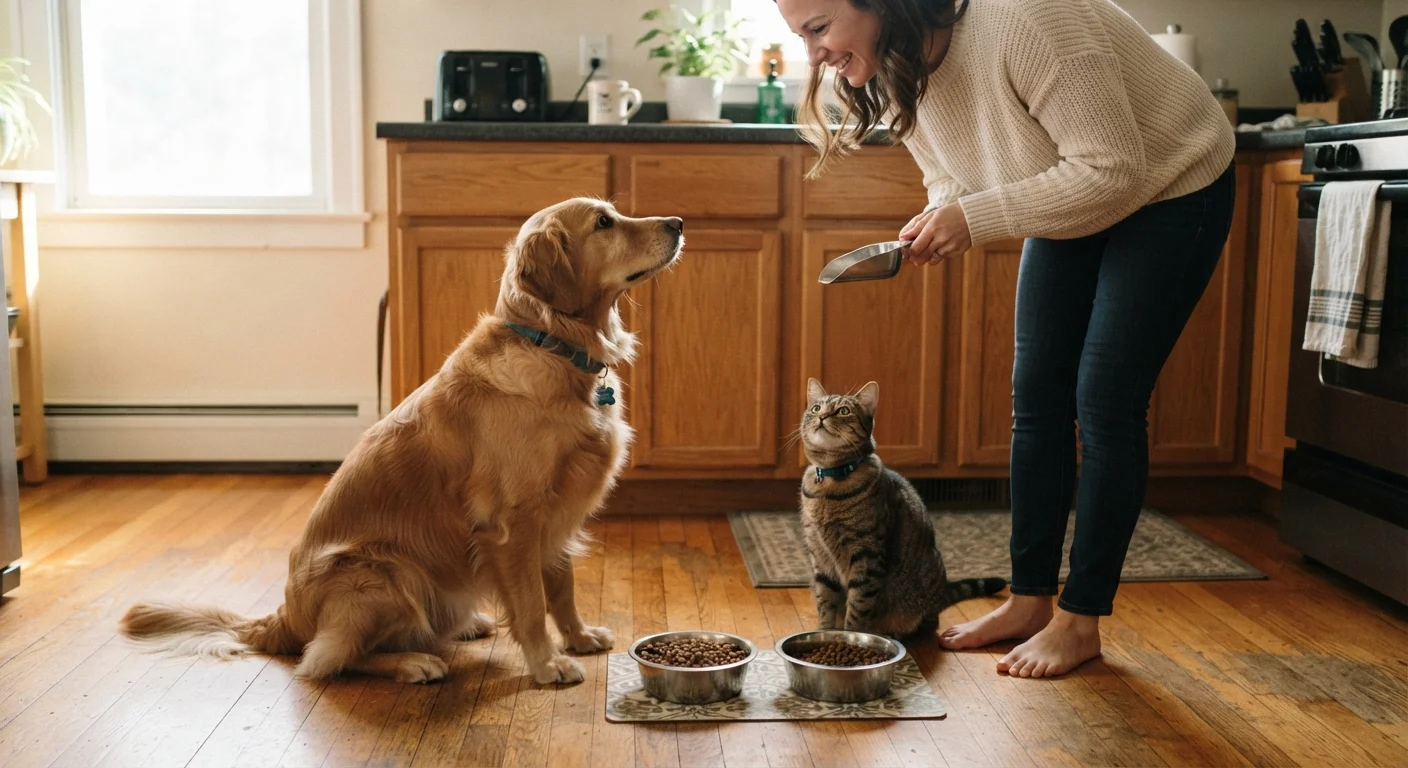
Understand the behavioural and environmental reasons pets eat too fast or too much, and learn practical strategies to manage portion sizes.
Key takeaways
- Overeating in pets is usually driven by environment and learned behavior, not true hunger.
- Free-choice feeding is one of the most common contributors to excess calorie intake.
- Measured meals served on a consistent schedule help most pets regulate intake more effectively.
- Multi-pet households often mask overeating because one animal eats another's portion.
- Persistent overeating can lead to obesity-related conditions including joint problems and diabetes.
- A veterinarian can confirm whether a pet's weight and intake are appropriate for its life stage.
Why pets eat past the point of fullness
Domestic pets do not eat purely because they are hungry. Behavior, environment, and learned associations all shape how much a pet consumes. A dog that was underfed early in life may develop a persistent drive to eat quickly and in large amounts, a pattern that continues long after food is reliably available. Cats living in multi-cat households sometimes eat competitively, taking in food faster than their digestive systems can signal satiety.
The satiety signal itself takes time. It typically requires 15 to 20 minutes after eating for the body to communicate fullness to the brain. A pet that eats an entire meal in two minutes has finished long before that feedback arrives. This gap between eating speed and fullness recognition is one reason puzzle feeders and slow-feed bowls reduce total intake in many dogs.
Boredom and owner response also matter. Pets learn quickly that standing near the bowl, pawing at a cupboard, or vocalizing produces food. When owners respond to these behaviors by topping up the bowl, the pet has trained the human, not the other way around. Understanding how habits form is part of solving the problem.
Common feeding setups that encourage overeating
Free-choice feeding, where dry food sits in a bowl all day, is one of the most widespread contributors to excess intake. It suits a narrow subset of pets with naturally moderate appetites, but for most animals it removes any structure around meals. Without a defined mealtime, there is no moment at which eating is clearly finished.
Portion estimation by eye is a related problem. Most owners who eyeball portions significantly overestimate or underestimate caloric needs. A difference of 20 extra kibble pieces per day can add up to meaningful excess calories over months. Measuring cups and, more accurately, a kitchen scale with gram measurements give consistent results that eyeballing cannot.
In homes with more than one pet, overeating often goes unnoticed because the evidence disappears fast. One animal may finish its meal and move to another's bowl before the owner realizes. Separating pets during mealtimes is one of the most straightforward fixes in a multi-pet home.
Use a kitchen scale, not a cup
Measuring cups are inconsistent because kibble shape and density vary between brands. A digital kitchen scale set to grams gives the same result every time. Weigh your pet's daily allotment once in the morning and divide it across scheduled meals throughout the day.
Practical steps to manage portion sizes
The first step is establishing what your pet's current intake actually is. Weigh or measure every meal for one week before changing anything. Many owners discover their pet has been eating 30 to 50 percent more than the food label's suggested amount.
Food labels give a starting range, not a precise prescription. Labels are calculated for unaltered animals at typical activity levels, so a spayed or neutered, lightly active pet often needs less than the suggested amount. Your veterinarian can calculate a more accurate calorie target based on your pet's ideal body weight, life stage, and health status. Caloric needs shift significantly across life stages, so a target that was correct at age two may not be right at age eight.
Once a target is set, divide daily calories into two to three meals rather than one large feeding. Smaller, more frequent meals slow the eating pace and reduce post-meal hunger signaling. Slow-feed bowls or food puzzle toys add time to the meal without changing the total amount. For cats specifically, placing food puzzles in different locations mimics foraging behavior and reduces fixation on the bowl.
Treats count toward daily calories. If treats are part of training or enrichment, factor them into the total rather than adding them on top. A useful rule of thumb from veterinary nutrition guidance is that treats should make up no more than 10 percent of daily caloric intake.
This article is for general informational purposes only and is not a substitute for professional veterinary advice. Always consult a licensed veterinarian before making significant changes to your pet's diet or if you have concerns about your pet's health or weight.
Frequently Asked Questions
The content on this site is for informational purposes only and is not a substitute for professional advice. Always consult a qualified professional for guidance specific to your situation.