
Feeding Schedules Across a Pet's Life: Puppy, Adult, and Senior Stages

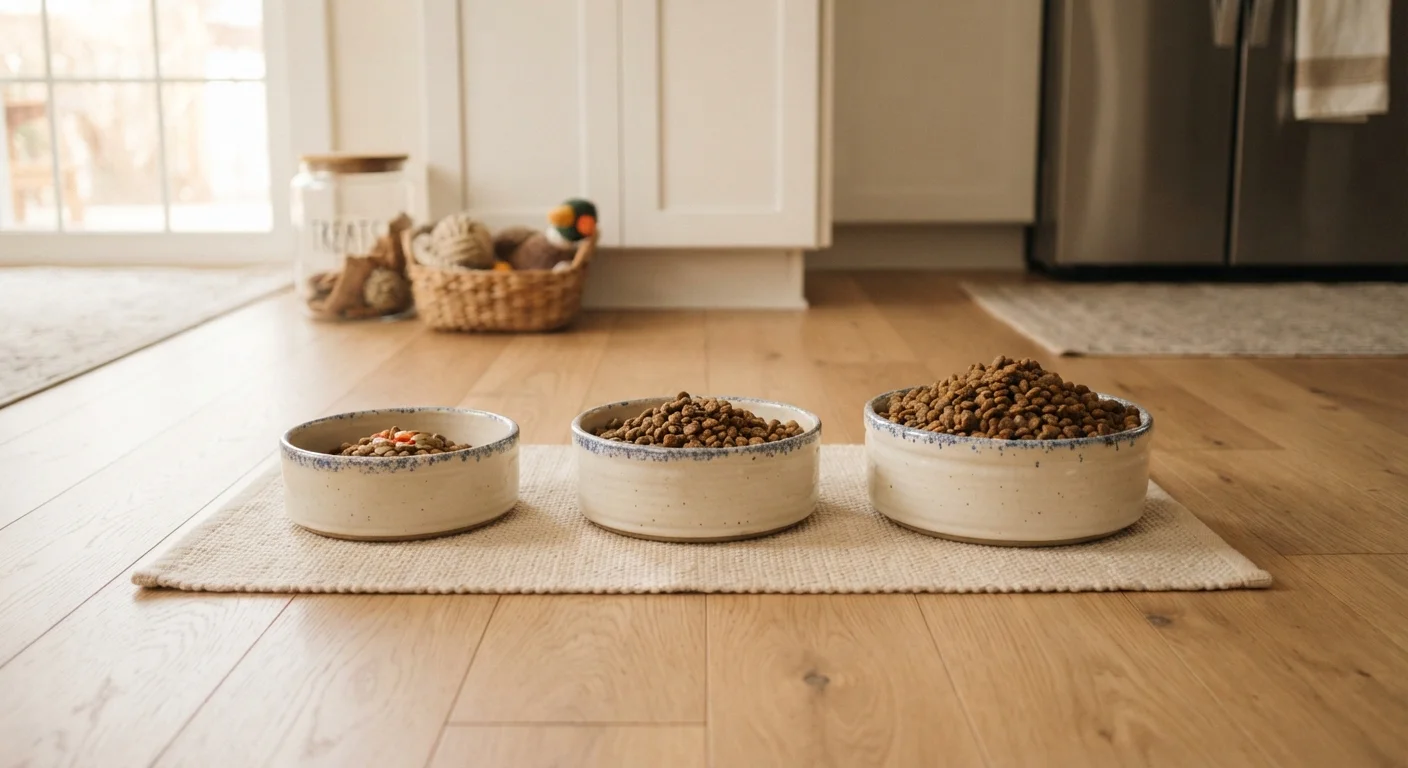
How nutritional needs and meal frequency shift from puppyhood through senior years, and what that means for your daily feeding routine.
Why feeding schedules change across life stages
A dog's caloric needs, digestive capacity, and metabolic rate shift considerably from puppyhood through old age. A schedule that works well for an eight-week-old puppy will leave an adult dog overfed, and a senior dog's appetite and gut motility require adjustments that an adult feeding plan does not account for. Understanding why these changes happen makes it easier to adjust your routine with confidence rather than guessing.
Puppies grow rapidly. Their organs, muscles, and bones demand a steady supply of energy and nutrients, but their stomachs are small. Adult dogs have reached their maintenance phase: growth has stopped, and the goal shifts to sustaining a healthy weight. Senior dogs, broadly dogs over seven years old for medium breeds (though large breeds age faster), often have slower metabolisms, reduced kidney and liver efficiency, and sometimes dental or digestive conditions that affect how they process food.
Consulting a veterinarian before changing any feeding routine is the right first step, particularly when a pet has an existing health condition. The guidance here is general information, not a substitute for professional veterinary advice.
Life stage feeding
The practice of adjusting meal frequency, portion size, and food type to match a pet's age and physiological phase, such as growth, maintenance, or senior years.
Body condition score
A standardized assessment, typically on a 1-to-9 or 1-to-5 scale, that veterinarians and owners use to evaluate whether a pet is underweight, at a healthy weight, or overweight based on visual and tactile cues.
Free-choice feeding
A feeding method where food is left available at all times rather than offered at scheduled intervals. It suits some species but can lead to overeating in dogs.
Hypoglycemia
Abnormally low blood sugar. In puppies, especially small breeds, skipping meals or going too long between feedings can trigger this condition, which requires prompt veterinary attention.
Senior formula
A commercial pet food formulated with adjusted nutrient ratios, such as modified protein or phosphorus levels, intended for older animals whose organ function and metabolism have changed.
Puppy stage: frequent, measured meals
Most puppies from weaning (around three to four weeks) through approximately six months do best with three to four meals per day. Spreading meals across the day keeps blood glucose stable and reduces the risk of hypoglycemia, which small and toy breeds are particularly prone to. It also prevents the stomach distension that can occur when a puppy consumes a large meal at once.
Portion guidance on commercial puppy food packaging gives a starting point based on projected adult weight, but individual puppies vary. Watch body condition: you should be able to feel ribs without pressing hard, and the waist should be visible from above. Adjust portions if a puppy is gaining weight too fast or appears thin, and confirm targets with a vet.
Between six months and one year, many puppies transition to twice-daily feeding. Large and giant breeds may benefit from staying on three meals longer because of their extended growth period. Abrupt schedule changes can cause digestive upset, so reduce meal frequency gradually over one to two weeks.
Daily care guidance for first-time dog owners covers how feeding fits into the broader routine of a new puppy's first weeks at home.
Adult stage: consistency and portion control
Most adult dogs thrive on two meals per day, roughly twelve hours apart. Once-daily feeding is common but can increase hunger-driven behaviors and, in large deep-chested breeds, may contribute to the conditions associated with bloat. Twice daily is the standard recommendation from most veterinary nutrition guidelines.
The adult phase is when portion discipline matters most. Activity level, body weight, whether the dog is spayed or neutered, and whether the food is wet, dry, or mixed all affect how much to feed. Calorie density varies significantly between food types and even between product lines.
| Puppy meal frequency | 3 to 4 times daily (up to 6 months) (General veterinary nutrition guidance) |
| Adult meal frequency | 2 times daily (approx. 12 hours apart) (General veterinary nutrition guidance) |
| Senior threshold (medium breeds) | Around 7 years old (Varies by breed size) |
| Large/giant breed senior threshold | Around 5 to 6 years old (Varies by individual breed) |
| Transition period when changing schedules | 1 to 2 weeks (gradual reduction) (To minimize digestive upset) |
Free-choice feeding (leaving food out at all times) suits some cats but generally does not work well for dogs: most will overeat. If your dog eats very quickly or appears to inhale food, strategies for managing overeating and portion size can help. In multi-pet homes, separate feeding stations or staggered meal times prevent competition and make it easier to monitor each animal's intake. See building a consistent routine for multi-pet households for practical approaches.
Senior stage: smaller meals, adjusted nutrition
Dogs are generally considered senior from around seven years old, though this varies by breed size. Large and giant breeds age faster and may show senior changes from five or six years onward. Toy breeds often remain in the adult phase longer.
Senior dogs typically benefit from smaller, more frequent meals if digestion has slowed. Two meals remain the baseline, but some dogs do better with three smaller portions if they show signs of nausea, acid reflux, or weight loss. A veterinarian can help determine whether a change in frequency or a switch to senior-formula food is appropriate.
Kidney function declines with age in many dogs, which affects how the body processes protein and phosphorus. This does not mean protein should be drastically reduced without veterinary guidance: current veterinary nutrition research suggests moderate, high-quality protein is still important for maintaining muscle mass in older dogs. The decision to change protein levels should come from blood work and a vet's assessment, not from a general assumption that old dogs need less protein.
Dental disease, which is common in seniors, can make dry kibble uncomfortable. Softening food with a little warm water or transitioning to wet food may be necessary. For broader context on how health needs change with age, senior pet health and care guidance goes into detail on what to monitor and when to act.
This article is for general informational purposes only and does not constitute veterinary advice. Always consult a licensed veterinarian for guidance specific to your pet's health, age, breed, and medical history.
The content on this site is for informational purposes only and is not a substitute for professional advice. Always consult a qualified professional for guidance specific to your situation.