
Signs Your Cat May Not Be Drinking Enough Water

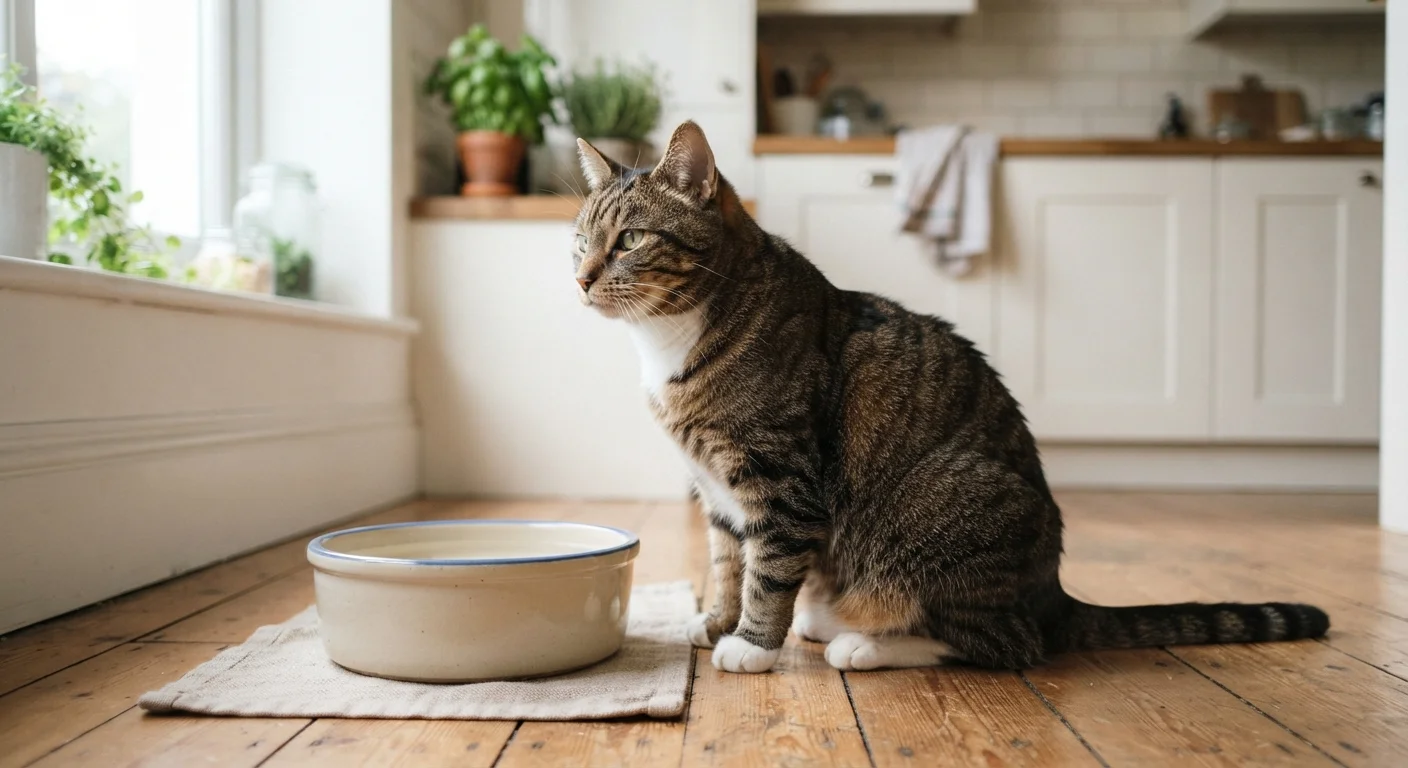
Learn the subtle signs of low water intake in cats, why it matters for kidney and urinary health, and simple ways to encourage drinking.
Key takeaways
- Cats evolved from desert animals and have a naturally low thirst drive, making dehydration easy to miss.
- Dry kibble diets provide very little moisture, significantly raising a cat's daily water requirement.
- Skin turgor testing and gum moisture checks are simple at-home tools for gauging hydration.
- Chronic low water intake is a known risk factor for kidney disease and urinary tract problems in cats.
- Multiple water stations, running water sources, and wet food can meaningfully increase a cat's intake.
Why cats are prone to low water intake
Domestic cats are descended from desert-dwelling ancestors that obtained most of their moisture from prey. That evolutionary background left cats with a lower thirst drive than dogs or humans. A cat can be mildly dehydrated without seeking water at all, which is why owners often miss the problem until it has persisted for some time.
For cats eating primarily dry kibble, this matters a great deal. Dry food contains roughly 10 percent moisture, while a mouse or piece of raw meat is closer to 70 percent. Cats on a kibble-only diet must compensate by drinking considerably more than cats eating wet food, yet their internal thirst signals rarely prompt them to do so. The result is a quiet, chronic shortfall that our complete guide to cat nutrition addresses in detail alongside broader dietary considerations.
Hydration matters because a cat's kidneys concentrate urine to conserve water. When fluid intake is consistently low, the kidneys work harder, and highly concentrated urine can irritate the bladder lining and promote crystal formation. Over time, this contributes to the chronic kidney disease and lower urinary tract disease that are among the most common health conditions in adult and senior cats.
Common mistakes owners make around cat hydration
Most hydration problems in cats trace back to a small set of repeated errors. Recognizing them is the first step toward correction.
Assuming a cat that does not appear thirsty is adequately hydrated.
Why it happens: Because cats do not pant or seek water the way dogs do, owners interpret a cat's calm behavior as a sign that all is well.
Placing a single water bowl next to the food bowl and leaving it unchanged.
Why it happens: This mirrors how humans set up a dining area and seems logical, but cats show stronger interest in water sources that are separate from their food.
Relying entirely on dry kibble without accounting for its very low moisture content.
Why it happens: Dry food is convenient, shelf-stable, and widely recommended for dental health, so many owners do not realize it creates a moisture deficit the cat must make up through drinking.
Ignoring subtle behavioral changes that often accompany early dehydration.
Why it happens: Early dehydration in cats is quiet. The cat may simply be a little less active or slightly less interested in play, changes that owners attribute to mood or age.
Switching to a water fountain but never cleaning it.
Why it happens: Pet fountains are marketed as low-maintenance, and the moving water looks clean, so owners clean them far less often than a standard bowl.
How to check your cat at home
Two quick physical checks can give you useful information between vet visits. Neither replaces a veterinary assessment, but both can signal when a visit is needed sooner rather than later.
Skin turgor test: Gently pinch a small fold of skin at the back of the neck or between the shoulder blades, then release. In a well-hydrated cat, the skin snaps back almost immediately. Skin that returns slowly or holds a ridge briefly suggests the cat may be low on fluids. Note that this test is less reliable in older cats or those that have lost significant body condition, as skin loses elasticity with age regardless of hydration.
Gum check: Press one finger gently against the cat's upper gums, then release. The blanched spot should return to a normal pink color within two seconds. Gums that feel tacky or sticky rather than slick and moist are a straightforward sign of dehydration. Pale, white, or bluish gums are a medical emergency requiring immediate veterinary attention.
If your cat shows lethargy, sunken eyes, loss of appetite, or has stopped producing urine, contact a veterinarian promptly. These are not situations to manage at home. You can also read about what it means when a pet drinks more water than usual, since the opposite extreme carries its own set of concerns.
~70%
Moisture content of a cat's natural prey
Veterinary nutrition references consistently note that wild felid prey provides far more moisture than commercially prepared dry food, which averages around 10 percent.
1 in 3
Cats affected by kidney disease over a lifetime
Chronic kidney disease is one of the most frequently diagnosed conditions in cats, with prevalence rising sharply in cats over age 7, according to veterinary epidemiological data.
Practical ways to increase your cat's water intake
Several environmental and dietary adjustments can reliably raise how much a cat drinks. None require expensive equipment or drastic change.
- Place water bowls in multiple locations, away from the food bowl and litter box. Cats instinctively avoid water near their elimination area or food source, which mimics a prey-protection behavior in the wild.
- Use wide, shallow bowls. Cats dislike having their whiskers touch the sides of a bowl, a sensitivity called whisker fatigue. A bowl that lets the cat drink without contact tends to be used more.
- Try a pet water fountain. Moving water is more appealing to most cats, likely because flowing water signals freshness in a natural setting. Many owners report noticeable increases in intake after switching.
- Add wet food to at least one meal daily. Even a partial switch from dry kibble to canned food adds substantial moisture without requiring the cat to drink more.
- Offer a small amount of plain, low-sodium chicken broth (with no onion, garlic, or added seasonings) over food or in a separate bowl as an occasional enticement.
Changes in grooming can sometimes accompany dehydration or underlying illness. The guide to normal cat grooming habits can help you judge whether what you are seeing warrants a vet call.
This article is for general informational purposes only and does not constitute veterinary advice. Always consult a licensed veterinarian regarding your cat's specific health needs.
The content on this site is for informational purposes only and is not a substitute for professional advice. Always consult a qualified professional for guidance specific to your situation.