
Everything You Actually Need to Know About Device Warranties

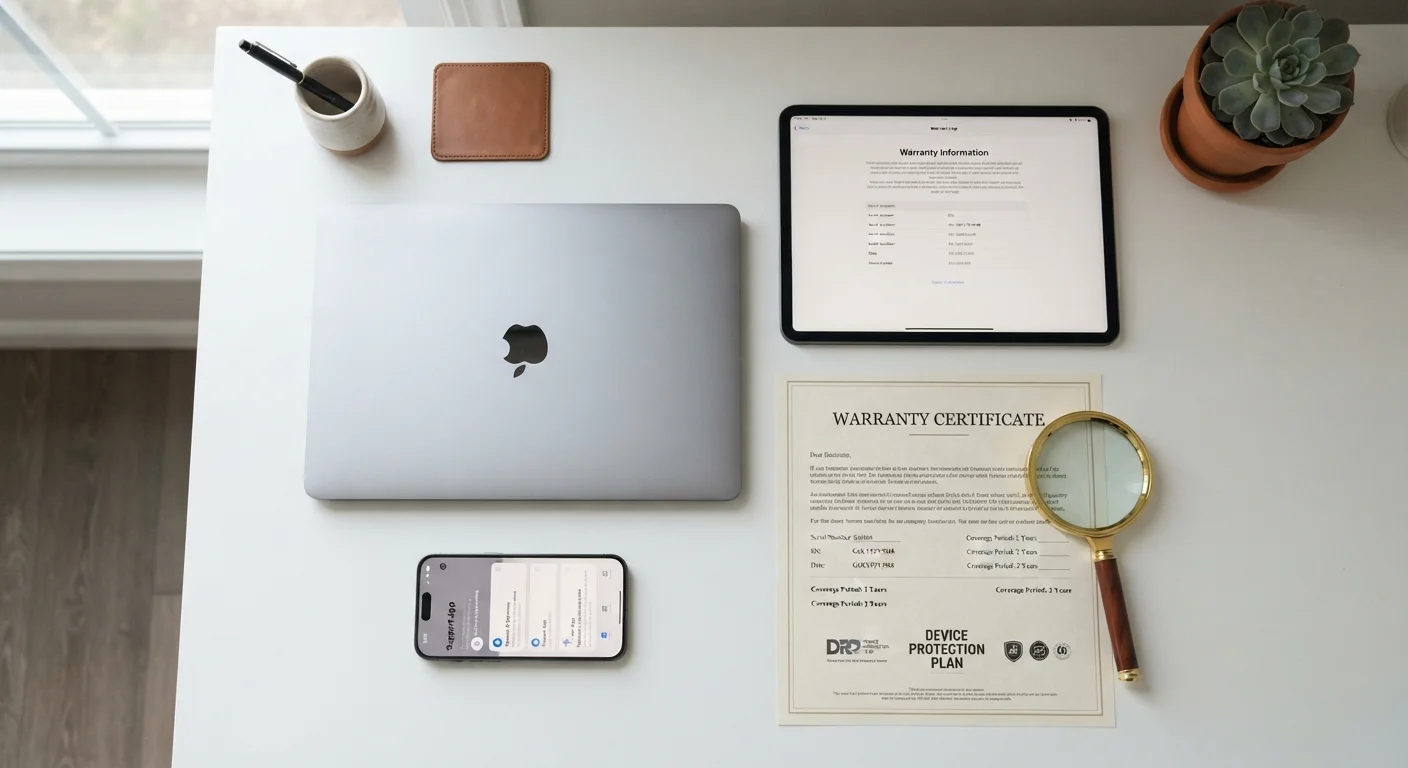
Manufacturer warranties, extended coverage, and accidental damage plans work very differently. This guide explains the key terms and what they cover.
Key takeaways
- Manufacturer warranties cover defects in materials or workmanship, not accidents or misuse.
- Extended warranties and accidental damage plans are separate products with different coverage rules.
- Registering your device and keeping your receipt strengthens your position when filing a claim.
- Credit cards sometimes provide warranty extension benefits automatically, at no extra cost.
- Reading the exclusions section of any plan matters more than reading the coverage section.
What a manufacturer warranty actually covers
Every new device ships with a manufacturer warranty, sometimes called a limited warranty. The word "limited" is doing real work there. These warranties promise to repair or replace a device that stops working because of a flaw in how it was built or what it was made from, within a set period, usually one year for most consumer electronics.
Common covered failures include a screen that develops dead pixels without being dropped, a battery that won't hold a charge from the start, ports that stop working despite normal use, and software that ships with errors the manufacturer must fix. If the device breaks because it was made wrong, the warranty should cover it.
Proof of purchase matters. Retailers and manufacturers use your receipt or order confirmation to verify the warranty period. Registering a device on the manufacturer's website is often optional, but it creates a record tied to your contact information, which can speed up the process if you ever need service. Store that receipt somewhere you'll actually find it.
Take a short video of a new device during setup, showing it working normally. If a defect appears later, this footage can support your claim that the problem was not caused by how you used it.
Manufacturer claims processes often hinge on proving a defect was present at or near purchase; contemporaneous documentation shifts that burden in your favor.
Screenshot your warranty expiration date and store it with your device receipt in a dedicated folder, whether in email or cloud storage. Warranty windows close fast, and a missed deadline means the cost falls entirely on you.
Many people discover a defect exists but realize too late that their warranty lapsed weeks earlier, leaving no recourse through the manufacturer.
What warranties almost never cover
The exclusions section of a warranty is where the real information lives. Manufacturer warranties do not cover physical damage from drops, cracks, or liquid exposure. They do not cover damage from using a third-party charger that fries a battery, a pest infestation (yes, this comes up), or modifications you made to the device yourself.
Normal wear is also excluded. A battery that degrades after two years of daily use is not defective; it is worn. Cosmetic scratches, faded buttons, and worn-out speaker grilles fall into the same category.
One area that surprises people: if a repair shop that is not authorized by the manufacturer opens your device, many warranties void immediately. Before taking a device anywhere for service, check whether the manufacturer has certified that repair shop. Unauthorized repairs can close off your warranty options entirely, even for an unrelated problem that appears later.
Extended warranties versus manufacturer coverage
An extended warranty (also called a service contract or protection plan) picks up where the manufacturer warranty ends, or sometimes overlaps with it from day one. Retailers sell these at the point of purchase, and manufacturers sell their own versions as well.
The core question with any extended plan is what it actually adds. If a manufacturer warranty lasts one year and the extended plan covers years two and three for defects, that can be useful for expensive devices you intend to keep for several years. For a device you expect to replace in 18 months, paying for three years of coverage is not a match.
Before buying an extended warranty, check your credit card benefits. Several major credit cards automatically double the manufacturer warranty on eligible purchases, up to one additional year, at no extra charge. This is a standing benefit many cardholders never use because they do not know it exists. Your card's benefits guide or a call to the number on the back of the card will confirm whether this applies to your account.
See our device security guide for related habits that can help you avoid problems that no warranty will fix.
Accidental damage plans: a different product entirely
Accidental damage protection (sometimes called ADP) is not a warranty. It is a separate insurance-style product that covers the things a warranty specifically excludes: drops, spills, cracked screens, and similar mishaps. Manufacturers and retailers sell these plans, and some mobile carriers bundle them into monthly device plans.
These plans typically involve a deductible, meaning you pay a fixed fee per claim, and there is often a cap on the number of claims per year. Read these limits before signing up. A plan that covers one screen repair per year with a $99 deductible has very different math than one covering two incidents per year at $29 each.
If you already have renters or homeowners insurance, check whether your policy covers personal electronics for accidental damage. Some policies do, sometimes with a lower deductible than a standalone plan. Paying for both creates duplicate coverage you cannot fully use.
Duplicate coverage costs more than it protects
Paying for both a standalone accidental damage plan and a home or renters insurance policy that already covers personal electronics means you are paying twice for overlapping protection. Review your existing policies before purchasing any device plan. If you do file a claim under both, insurers may coordinate benefits in ways that reduce your actual payout.
How to make a warranty claim without the runaround
Start with the manufacturer's support website or phone line, not the retailer. Retailers can sometimes help with returns within a short return window, but warranty service after that period goes through the manufacturer directly in most cases.
Have these ready before you contact support: proof of purchase, the device's serial number (usually found in settings or printed on the device itself), and a clear description of the problem. Be specific. "The screen flickered twice" is harder to act on than "the screen shows a vertical green line across the right side whenever the device is powered on, starting three weeks ago."
If the manufacturer denies a claim you believe is valid, ask for the specific reason in writing. This gives you something concrete to respond to, and it creates a record if you choose to escalate. Consumer protection laws in many U.S. states provide additional rights beyond what a written warranty states, so it is worth knowing that the written warranty is not always the final word.
Key terms decoded
A few terms appear constantly in warranty documents and coverage plans, and they mean specific things:
- Limited warranty: Coverage that applies only to specified failures under specified conditions. Almost all manufacturer warranties are limited.
- Full warranty: Under U.S. law (the Magnuson-Moss Warranty Act), a full warranty must repair or replace a defective product within a reasonable time at no charge. Full warranties are uncommon in consumer electronics.
- Void warranty: The warranty no longer applies, typically because of unauthorized modification or repair.
- Deductible: The amount you pay out of pocket each time you file a claim under an accidental damage or protection plan.
- Refurbished replacement: Some warranties resolve claims by replacing your device with a factory-refurbished unit rather than a brand-new one. This is common and generally acceptable, but worth knowing in advance.
- Carry-in service: You bring the device to an authorized service location. The alternative, depot service, means mailing the device to a repair center and waiting for its return.
For electronics purchased while traveling, coverage can get complicated. Our travel insurance overview covers how travel protection intersects with personal property when you are away from home.
The content on this site is for informational purposes only and is not a substitute for professional advice. Always consult a qualified professional for guidance specific to your situation.