
Smart Home Devices: A Realistic Look at the Upsides and the Friction

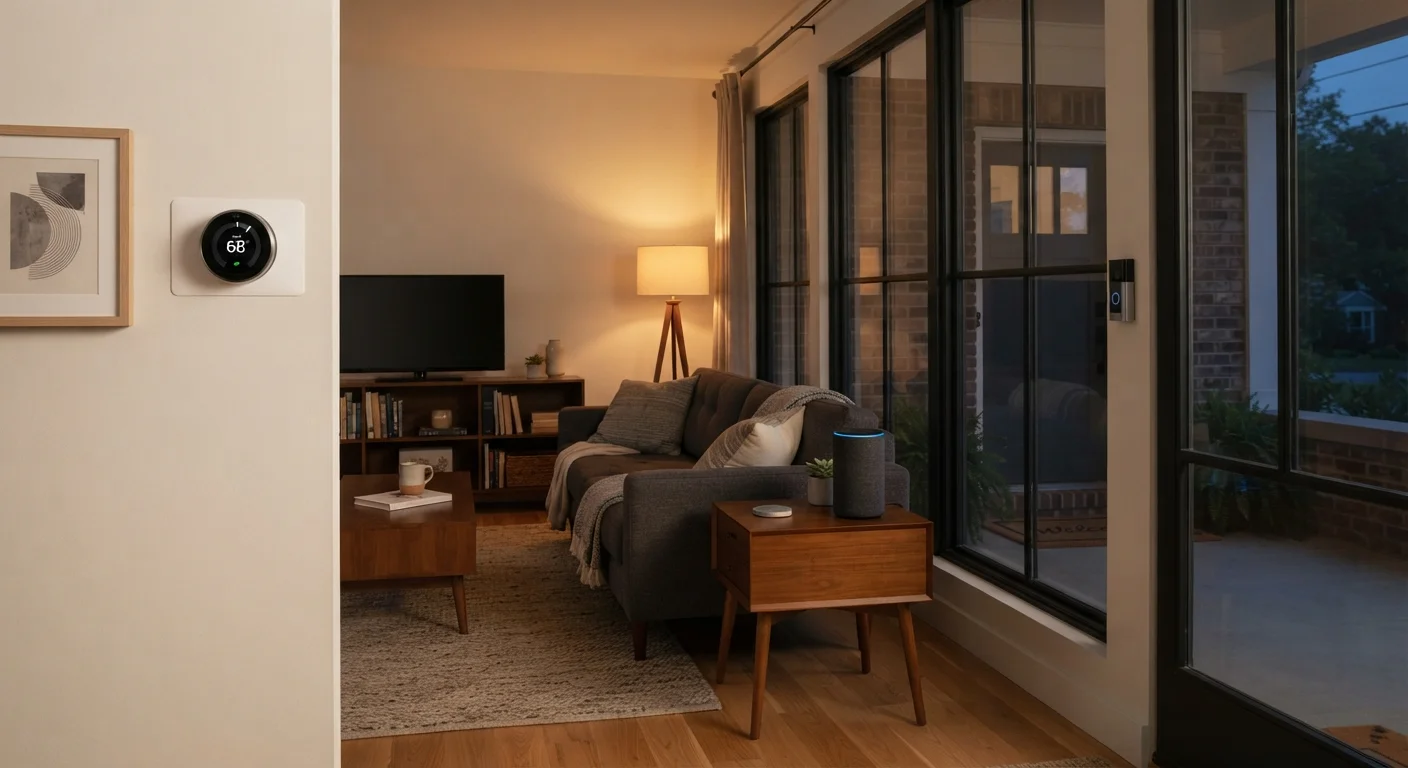
Smart plugs, thermostats, and doorbells promise convenience. But there's genuine friction too. Here's a balanced look before you commit.
Our Verdict
Smart home devices deliver genuine convenience for people who are comfortable with some setup and accept that their devices will collect data. The benefits are most tangible for households that have consistent routines, solid Wi-Fi coverage, and a willingness to troubleshoot occasionally. For people who want things to simply work with no maintenance, the friction can outweigh the payoff.
Adults who want to automate repetitive tasks at home and are willing to spend time on initial setup and occasional troubleshooting.
Key takeaways
- Smart home devices can automate routine tasks, but they require reliable Wi-Fi and some setup effort.
- Privacy is a legitimate concern: most devices collect usage data and some include microphones or cameras.
- Upfront costs vary widely, and ongoing value depends on how consistently you actually use the devices.
- Compatibility between brands is improving but still causes real friction for many households.
- Starting with one or two low-cost devices is a practical way to test whether smart home tech fits your life.
What counts as a smart home device
The term covers a wide range of hardware. At the simple end: a smart plug that lets you turn a lamp on and off from your phone. At the more complex end: a whole-home system that links your thermostat, locks, lights, and security cameras under one app. In between, you will find video doorbells, smart bulbs, robotic vacuums, and voice-activated speakers.
Each category has different setup requirements, privacy implications, and costs. What they share is a connection to your home Wi-Fi network, some form of app control, and the ability to be automated or controlled remotely. For a closer look at one common entry point into smart home tech, see our guide to smart speakers.
The genuine upsides
Convenience is the most honest argument for smart home devices. Automating the lights when you leave for work, or getting a notification when someone rings your doorbell while you are at the grocery store, solves real problems.
Automates repetitive daily tasks
Scheduling lights to turn off at bedtime or setting a thermostat to cool down before you arrive home removes small but persistent mental load from your day.
Can reduce energy use over time
Smart thermostats that learn your schedule can avoid heating or cooling an empty home. Whether that translates into meaningful savings depends on your existing habits and utility rates.
Remote access adds practical flexibility
Checking a video doorbell from your phone or unlocking a smart lock for a delivery person are tasks that are genuinely difficult with traditional hardware.
Entry-level devices are affordable
Smart plugs and basic bulbs often cost under $15 each, so testing the concept does not require a large financial commitment.
Accessibility benefits for some users
Voice-controlled lights and locks can reduce physical barriers for people with mobility limitations, making certain daily tasks easier without physical interaction.
Energy management is another area where these devices show measurable results for some households, though the savings are not guaranteed and depend heavily on how much manual control you were already exercising over heating and cooling.
The friction you should expect
Setup difficulty catches many first-time buyers off guard. The box often implies a five-minute process. In practice, network troubleshooting, app account creation, and device pairing can consume an evening, particularly if your home Wi-Fi has dead spots.
Setup is rarely as simple as advertised
Most devices require downloading an app, creating an account, connecting to Wi-Fi, and sometimes updating firmware before they work. That process can take well over an hour for a first-time setup.
Privacy exposure is real
Devices with microphones, cameras, or motion sensors collect data that is typically stored on the manufacturer's servers. Reviewing a device's privacy policy before buying is worth the time.
Compatibility between brands is inconsistent
A thermostat from one company may not integrate with a speaker from another without extra steps or a separate hub. The Matter interoperability standard is gradually improving this, but gaps remain.
Dependent on stable internet and power
If your Wi-Fi goes down or there is a power outage, many smart devices stop responding or fall back to manual-only operation, which some users find frustrating.
Manufacturer support can end unexpectedly
Companies have discontinued app support for older devices, effectively turning functioning hardware into unusable hardware. This is a documented risk across the industry.
Ongoing subscription fees erode value
Some video doorbells and cameras require a paid cloud storage plan to access recorded footage, adding a recurring cost that was not obvious at the time of purchase.
Security is worth treating seriously. Because these devices sit on your home network, a poorly secured router can expose them to outside access. The article on securing your home Wi-Fi covers the foundational steps. For broader device security habits, this practical guide is a useful follow-up.
A note on the Matter standard
Matter is a connectivity standard backed by major tech companies intended to make smart home devices from different brands work together more reliably. Devices launched since late 2022 are more likely to support it, but older hardware generally does not. If cross-brand compatibility matters to you, check for Matter support before purchasing.
How to approach the decision
A single low-cost smart plug is a reasonable starting point. It introduces you to the app-based control model without locking you into an ecosystem or a large upfront cost. If the experience feels natural after a few weeks, expanding to a thermostat or doorbell camera is a smaller leap.
Before buying any device, check three things: whether your router reaches the room where the device will live, what data the manufacturer collects and how long they retain it, and whether the device requires a paid subscription for its core features. Those three questions filter out most of the purchases people regret.
If you are evaluating smart home spending alongside other household budget priorities, the general guidance on budgeting basics may help you weigh the cost against other goals. Smart home hardware is a discretionary purchase, and the value it delivers varies considerably from one household to the next.
The content on this site is for informational purposes only and is not a substitute for professional advice. Always consult a qualified professional for guidance specific to your situation.