
The Real Cost of a Cruise: Building an Honest Pre-Trip Budget

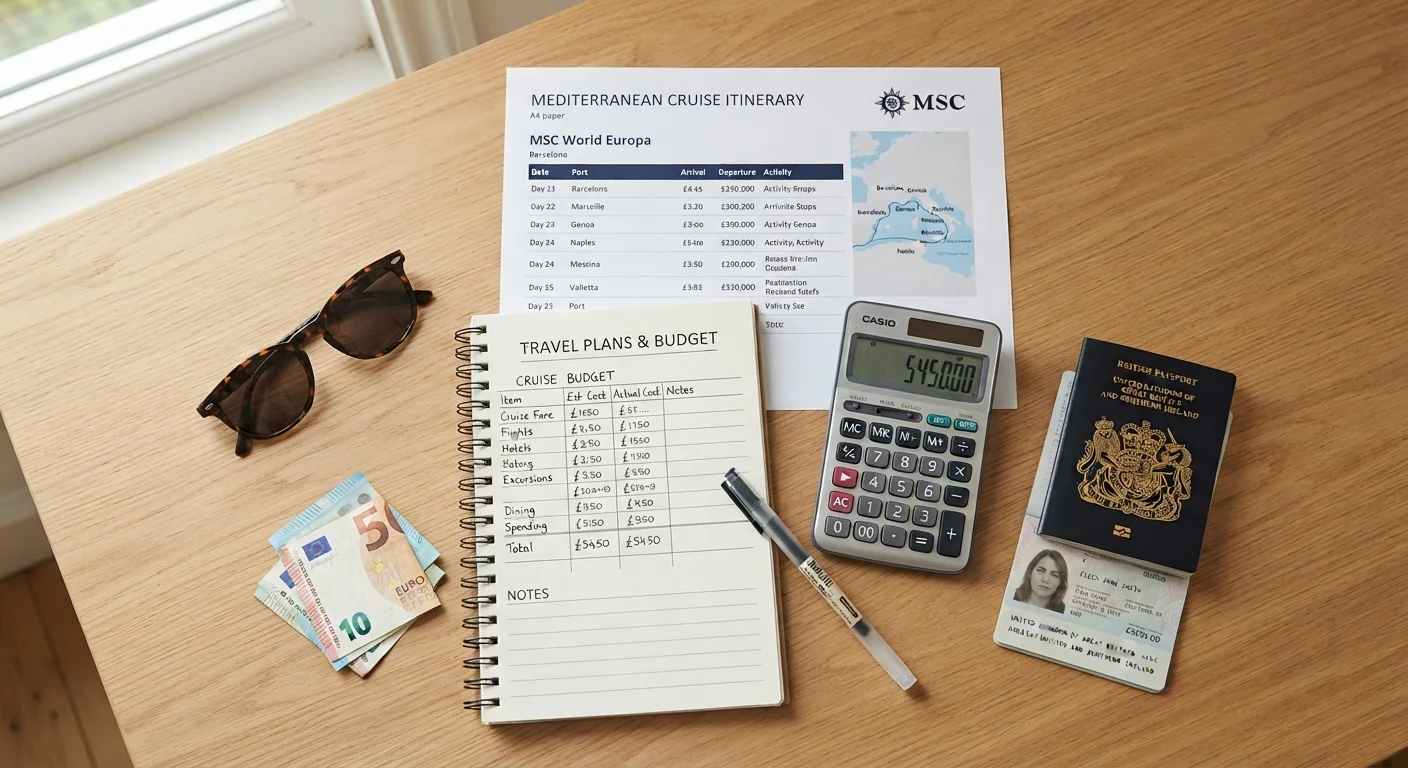
Fare alone rarely reflects what you'll spend. This guide maps every common expense category so you can build a realistic cruise budget before you book.
Key takeaways
- The advertised cruise fare covers the cabin and most main dining, but not most onboard spending.
- Gratuities, port fees, travel to the embarkation port, and excursions are common budget gaps.
- Writing out every cost category before booking gives you a number you can actually plan around.
- Pricing structures vary by cruise line, so read your booking terms carefully before assuming what is included.
- Building in a contingency of 10 to 15 percent of your estimated total helps absorb unexpected charges.
Why the fare is only the starting point
The price displayed on a cruise booking page typically covers your cabin and access to the main dining room and buffet. It rarely covers gratuities, most beverages, specialty restaurants, Wi-Fi, shore excursions, parking or flights to the port, travel insurance, or items from the spa and gift shops. For many travelers, these extras add up to as much as the fare itself.
Hidden costs that catch first-timers off guard go beyond what most people anticipate when they see an attractive per-night rate. The step-by-step process below helps you map those categories before you commit to a booking, so the final bill is not a surprise.
If you are still deciding between pricing models, this comparison of all-inclusive and a la carte cruise pricing explains how bundled fares differ from itemised ones and what each approach means for your total spend.
What you will need
How to build your cruise budget step by step
Work through the steps below in order. Each one adds a layer to your total. Complete all of them before deciding whether a cruise fits your budget.
Record the base fare and what it includes
Write down the total fare for all travelers in your group. Then read the booking page carefully to list exactly what is covered: typically the cabin, main dining, and some entertainment. Note what is explicitly excluded. If the listing is unclear, call the cruise line or check its FAQ before assuming anything is free.
If cabin category affects your budget significantly, cruise cabin categories explained breaks down what each tier includes and how prices differ.
Add port taxes, fees, and government charges
These are usually itemised separately from the advertised fare and are non-negotiable. They vary by itinerary and port. Find the exact amount on the booking summary page before you confirm. Add this figure as a fixed line in your budget.
Calculate gratuities
Most cruise lines charge a daily gratuity per person, typically applied automatically to your onboard account. The amount varies by cruise line and cabin category. Find the current per-person daily rate in the cruise line's FAQ or terms, multiply it by the number of nights and the number of travelers, and add this to your budget as a fixed cost.
Estimate transportation to and from the port
Include flights, train tickets, or fuel and parking costs to reach the embarkation port. If you are flying, add one night of hotel near the port as a buffer in case of delays. Return transportation is a separate line. These costs are entirely outside the cruise fare and are among the most commonly forgotten items in a first cruise budget.
Budget for beverages
Most cruise fares include water, coffee, and tea at main dining venues, but not alcohol, specialty coffees, juices, or sodas outside of meals. If your group drinks regularly, a beverage package may cost less than paying per drink; calculate both scenarios using the per-drink prices listed on the cruise line's website. Enter whichever total is lower as your beverage line.
Estimate shore excursion and port spending
For each port of call, decide whether you plan to book an organized excursion, explore independently, or stay on the ship. Organized excursions booked through the cruise line are priced per person and listed on the cruise line's excursion page. Independent activities vary widely. Budget a per-person amount for each port day you plan to go ashore, including meals, entry fees, and local transportation.
Always verify entry requirements and local conditions with official government sources before travel. Conditions at ports can change, and neither the cruise line nor any article can guarantee what you will find on arrival.
Account for onboard extras and discretionary spending
Specialty restaurants, the spa, fitness classes, casino play, Wi-Fi packages, and gift shop purchases are all charged to your onboard account. Set a per-day discretionary limit for your group and multiply it by the number of sea days and port days combined. This becomes your variable spending line.
Add travel insurance
Travel insurance for a cruise typically covers trip cancellation, medical evacuation, and travel delays. Costs depend on trip value, traveler age, and the level of coverage selected. Get quotes from multiple providers and read the policy terms before purchasing. This cost belongs in your pre-trip budget, not as an afterthought.
Consult a licensed insurance professional if you have questions about what a specific policy covers. General insurance information is not a substitute for reading your actual policy documents.
Add a contingency buffer
Once you have totaled all the lines above, add 10 to 15 percent to the combined figure. This buffer absorbs charges you did not anticipate: a last-minute excursion, a medical co-pay on board, or a missed port that changes your plans. If you do not spend it, you keep it.
Use a single running document
Keep all budget lines in one spreadsheet or document rather than tracking categories separately. A single total is easier to compare against your actual account balance at the end of the trip. The trip planning basics hub has additional guidance on organizing pre-trip research.
Staying on budget once you board
A written pre-trip budget only works if you track spending during the trip. Most cruise lines display a running account balance on their app or at a kiosk near guest services. Check it every day or two rather than waiting until disembarkation morning.
Set a daily discretionary limit for onboard spending before you sail. If your group includes children or older adults, review planning considerations for multi-generational cruising, since those trips often carry extra costs for medical supplies, accessible shore excursions, or age-specific programs.
Once your budget is set, your next task is confirming what to pack. The cruise packing checklist covers documents, clothing, and medications sized for cabin storage. General budgeting strategies that apply beyond this trip are covered in budgeting basics.
The content on this site is for informational purposes only and is not a substitute for professional advice. Always consult a qualified professional for guidance specific to your situation.