
Hidden Cruise Costs That Catch First-Timers Off Guard

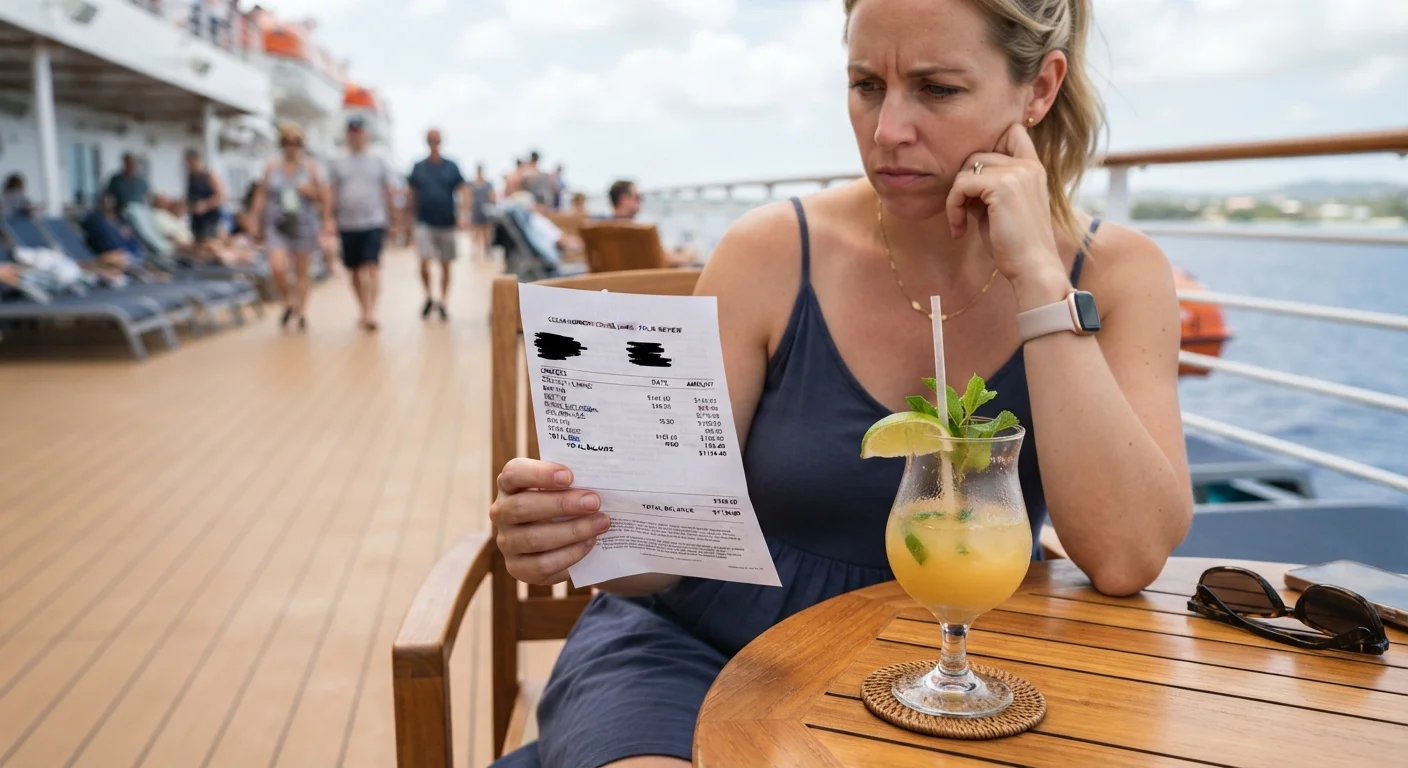
Gratuities, specialty dining, Wi-Fi, and port excursions can double your trip budget. Here's where the extra charges tend to appear and how to plan for them.
Key takeaways
- Daily gratuity charges are almost always added automatically and can total hundreds of dollars per person.
- Wi-Fi, specialty dining, and beverage packages are rarely included in the base cruise fare.
- Port excursions booked through the ship typically cost more than independently arranged alternatives.
- Reading the full booking terms before paying a deposit helps you avoid the most common budget surprises.
Why cruise budgets go wrong
Cruise fares are marketed as an all-in-one deal, and the base price genuinely does cover a cabin, main dining, and most onboard entertainment. What it rarely covers is everything else you will want or need during the trip. First-time cruisers often board with a fixed spending number in mind, then watch it dissolve within the first 48 hours.
The gap between what the fare includes and what a typical trip actually costs is well-documented in consumer travel research, yet it still catches people off guard because the charges are spread across multiple line items, added at different times, and worded in ways that obscure the cumulative total. Understanding each category in advance is the most reliable way to protect your budget.
For a broader look at every expense category to plan for, see The Real Cost of a Cruise: Building an Honest Pre-Trip Budget. And if you are still deciding between pricing structures, All-Inclusive vs. A La Carte Cruise Pricing breaks down what bundled and itemized models actually mean for total spend.
The most common hidden charges
Ignoring automatic daily gratuities when calculating trip cost.
Why it happens: Gratuities are listed in the booking terms but not in the headline fare, so travelers focus on the advertised number and forget the daily per-person charge that accumulates across every night of the voyage.
Assuming all dining is covered by the base fare.
Why it happens: Main dining rooms and buffets are included, but specialty restaurants, which are often the most appealing options onboard, carry per-person cover charges that can run $30 to $60 or more per meal.
Underestimating the cost of Wi-Fi packages.
Why it happens: Travelers accustomed to included Wi-Fi at hotels or on flights assume internet access is a standard inclusion. On most cruise lines, it is a paid add-on sold by the day or by the voyage.
Booking all shore excursions through the ship without comparing prices.
Why it happens: The ship's excursion marketplace is convenient and visible in the cruise app, so many first-timers assume it offers the best or only option. Independent operators in most ports offer comparable or identical tours at lower prices.
Overlooking beverage costs when not buying a package.
Why it happens: Soft drinks, specialty coffees, bottled water, and alcoholic drinks are almost universally charged separately. Travelers who drink casually throughout the day are often surprised by how quickly individual charges add up on the final bill.
Not accounting for port fees, taxes, and parking or transportation to the port.
Why it happens: Port fees and taxes are sometimes broken out below the headline fare in fine print, and pre-cruise logistics like airport transfers or port parking are rarely mentioned in any cruise advertisement.
Port excursions deserve a separate note on timing. Some travelers over-book shore activities before departure out of anxiety, then find they have paid for tours that did not suit them or that they could have arranged independently for less. Things That Feel Essential to Book in Advance But Often Are Not walks through which reservations genuinely matter and which usually do not.
How to build an accurate pre-cruise budget
Check onboard account settings before you sail
Most cruise lines allow you to set a spending limit or review your onboard account daily through their app or a cabin TV portal. Without monitoring, charges accumulate silently and the total on the final morning can be genuinely startling. Ask the front desk at embarkation how to enable account alerts or review your running balance so nothing catches you off guard at checkout.
Start with the cruise line's own fee schedule, which is typically published in the booking terms or the FAQ section of their website. Write down the daily gratuity rate per person, the Wi-Fi package prices, and the cost of any drink packages. Multiply gratuities by the number of sailing days and the number of travelers in your cabin. That single calculation often reveals a four-figure charge that was never visible in the advertised fare.
Next, estimate your dining intentions honestly. If you plan to eat at specialty restaurants two or three times, price those individually rather than assuming the main dining room will satisfy every meal. The same applies to alcohol: a per-drink price is typically listed in the app or onboard menu, and adding up a realistic daily number shows quickly whether a beverage package makes financial sense for your habits.
For port days, research one or two independent tour operators in each destination before you sail. Prices and itineraries are usually publicly available, and comparing them against ship-sold excursions gives you a concrete sense of the difference. Keep in mind that ship-organized excursions do carry one practical benefit: if the tour runs late, the ship will wait. Independent tours do not come with that guarantee, so factor that risk into your planning. You should also verify entry requirements and local conditions with official government sources before booking any port activity.
Travel insurance is a separate cost that belongs in the same budget conversation. Cruise Travel Insurance Explained: What It Covers and What It Doesn't covers what policies typically include and where gaps tend to appear, so you can decide whether the added cost makes sense for your trip.
The content on this site is for informational purposes only and is not a substitute for professional advice. Always consult a qualified professional for guidance specific to your situation.