
Gear Worth Packing for Extreme Cold: Layering Logic for Winter Travel

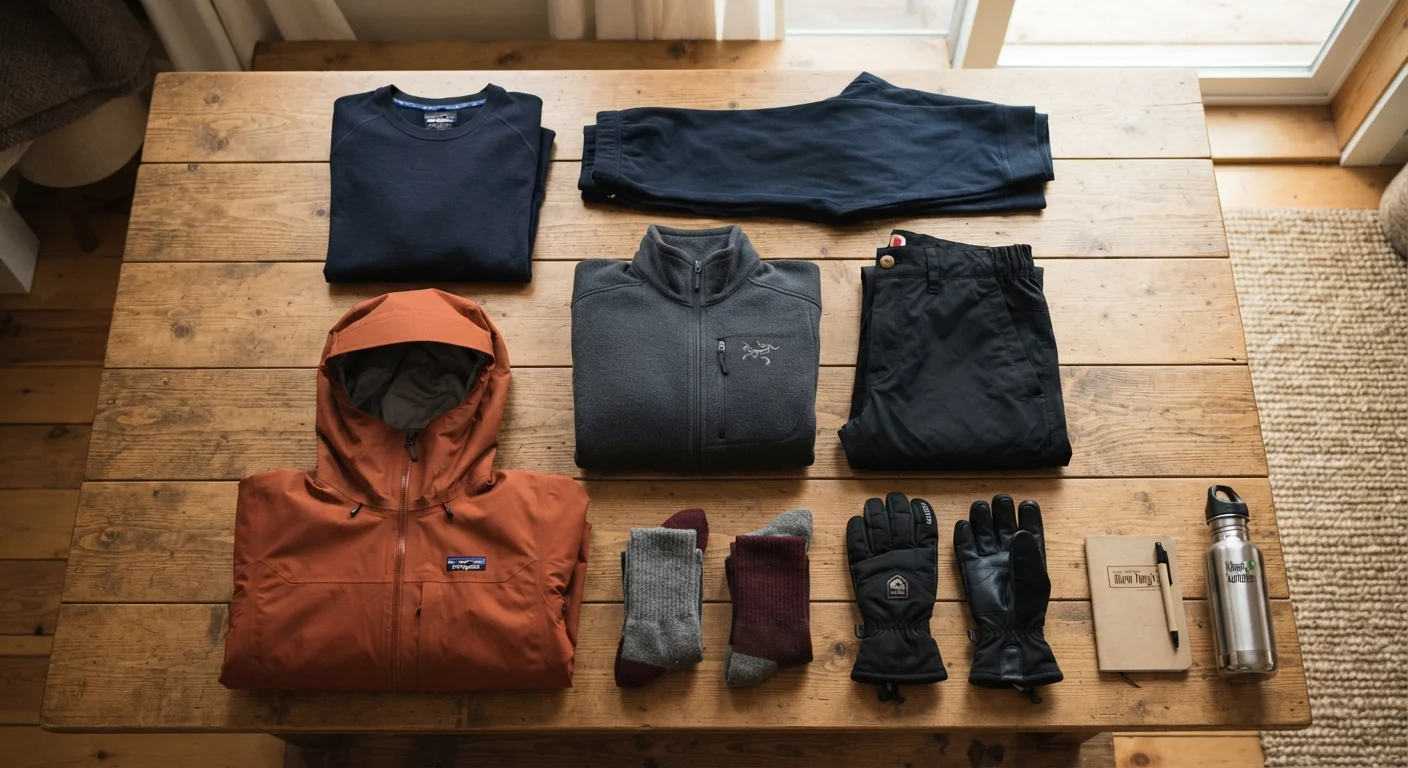
Cold-weather packing is all about layering strategy, not volume. Learn how base, mid, and outer layers work together to keep you warm without a huge bag.
Key takeaways
- Cold-weather packing works best when you build around a base, mid, and outer layer system.
- Each layer has a specific function: moisture control, insulation, and weather protection.
- Choosing versatile, packable pieces lets you handle varying temperatures without a heavy bag.
- Wool and synthetic fabrics outperform cotton in cold, wet, or high-activity conditions.
- Accessories like gloves, a hat, and a neck gaiter close the gaps that layering alone cannot cover.
Why layering beats packing more
Most people preparing for a cold-weather trip ask the wrong question. Instead of asking how many warm items to bring, the more useful question is whether each item can work with others to handle a range of temperatures. That shift in thinking is the basis of layering logic, and it cuts pack weight significantly.
A single heavy parka handles one temperature well. Three coordinated layers handle ten. You add or remove pieces as conditions change, whether you move from a cold street into a heated museum or step off a train into wind and snow. The system adapts; a single bulky coat cannot.
If you want to understand how this fits into a broader approach to traveling light, the carry-on packing framework covers how to apply capsule-wardrobe thinking to any trip, including cold-weather ones.
The three-layer system explained
Each layer in the system has one job, and understanding that job helps you choose the right garment rather than defaulting to whatever feels warmest in the store.
Base layer: moisture management
The base layer sits against your skin. Its job is to move sweat away from your body, because wet skin loses heat fast. Merino wool and synthetic fabrics (polyester blends built for moisture-wicking) both do this well. Cotton does not. Even light activity in cold weather creates sweat, and a cotton base layer holds that moisture against you, which makes you colder, not warmer.
For most cold-weather trips, one or two midweight base layer sets (tops and bottoms) cover daily use with room to wash and dry overnight.
Mid layer: insulation
The mid layer traps warm air close to your body. Fleece jackets, down sweaters, and synthetic-fill hoodies all work here. Down is warm and packs small but loses its insulating ability when wet. Synthetic fill retains more warmth when damp, which matters in rainy or high-humidity destinations.
A packable mid layer that compresses into its own pocket is worth prioritizing, especially if you are working within a 40-litre backpack.
Outer layer: weather protection
The outer layer blocks wind, rain, and snow. It does not need to be heavily insulated if your mid layer is doing its job. A hardshell or softshell jacket with a durable water-repellent (DWR) finish is the standard choice. Hardshells are more waterproof; softshells breathe better during active use. Neither insulates on its own, which is why the mid layer matters.
Accessories that do real work
Extremities lose heat faster than your torso, and no layering system covers your hands, head, or neck on its own. A lightweight wool or fleece hat, a pair of gloves rated for actual cold (liner gloves plus a waterproof outer shell if temperatures drop below 20 degrees Fahrenheit), and a neck gaiter together weigh almost nothing but change comfort significantly.
Wool socks deserve attention too. Two pairs of heavyweight merino wool socks, rotated daily, outperform a stack of thin cotton ones in cold conditions. Waterproof boots with a removable insulated liner give you flexibility: use the liner alone indoors, add the boot for outdoor exposure.
If you find yourself tempted to pack extra just in case, the psychology behind overpacking is worth understanding before you start. Accessories are one of the most common places where extra items sneak in.
Fabric choices that hold up in the cold
Material selection is where many cold-weather packing lists go wrong. The table below shows how common fabrics compare across the conditions that matter most for winter travel.
| Fabric | Warmth when wet | Pack size | Best use |
|---|---|---|---|
| Merino wool | Good | Medium | Base and mid layers, socks |
| Synthetic (polyester) | Good | Small | Base layers, synthetic-fill mid layers |
| Down | Poor | Very small | Mid layer in dry conditions |
| Fleece | Moderate | Medium | Mid layer, general insulation |
| Cotton | Poor | Bulky | Avoid in cold or wet conditions |
For travelers new to gear terminology, the introduction to packing and gear explains fabric ratings and bag types in plain terms.
One practical note: dark-colored outer layers show less grime over multiple days of travel, which matters when you cannot launder frequently.
The content on this site is for informational purposes only and is not a substitute for professional advice. Always consult a qualified professional for guidance specific to your situation.