
First-Time Traveler's Introduction to Packing and Gear

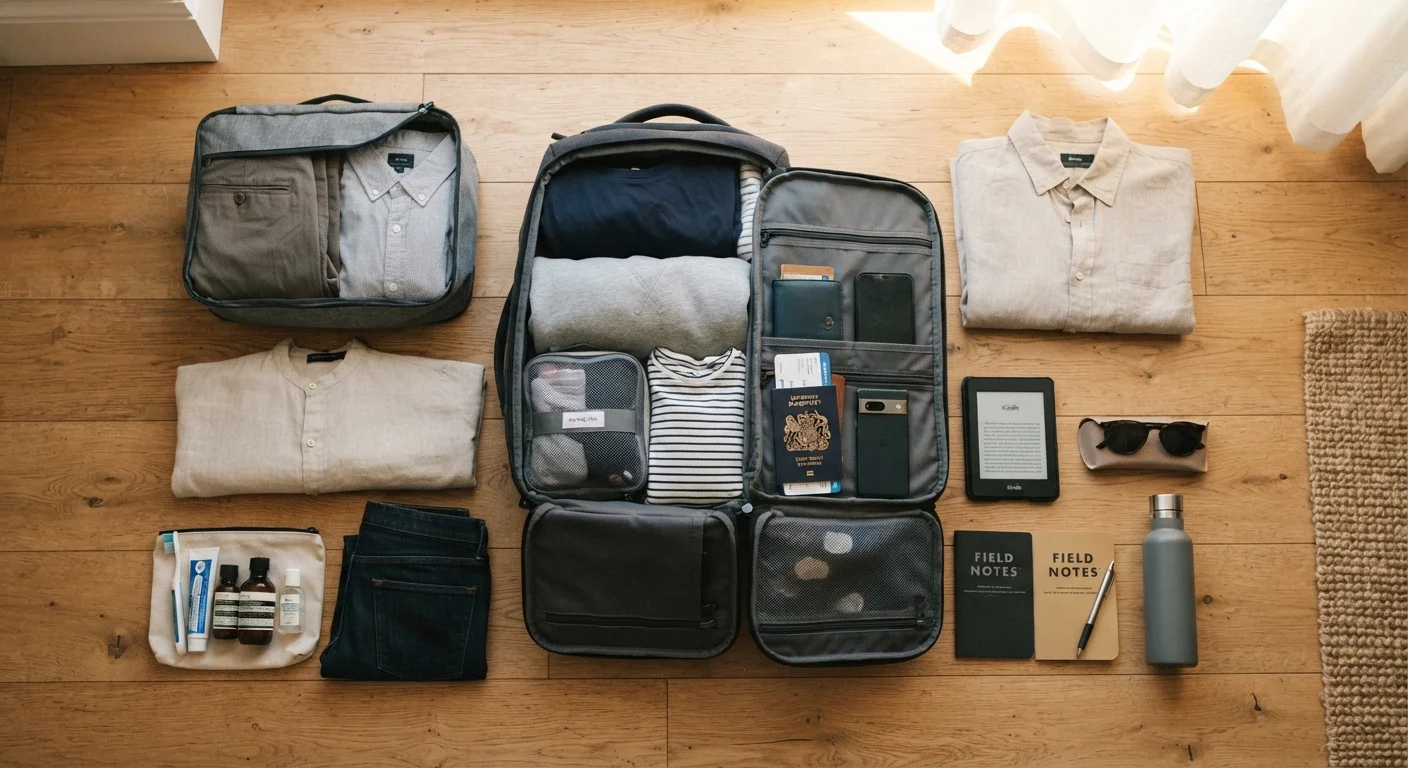
New to travel? This guide covers the essential concepts behind smart packing, bag types, organizers, and gear so you can start confidently.
Start here
Why packing feels harder than it should
Next
Choosing the right bag for your trip
Then
What goes inside: a practical framework
When you're ready
Gear worth understanding before you buy
Key takeaways
- Your bag choice shapes every other packing decision, so settle it first.
- A simple category-based approach reduces overpacking more reliably than any checklist.
- Packing cubes and compression bags help with organization but are not required for a first trip.
- Most gear purchases can wait until after your first trip, when you know what you actually need.
Why packing feels harder than it should
The gear market is large and loud. Bag reviews, packing lists, and product comparisons compete for attention before a traveler has even decided where to go. Most of the complexity is manufactured. The actual decisions are few: what bag, what categories of items, and how to keep it organized.
This guide gives you a framework for those decisions. It does not assume you own any travel gear yet, and it does not push you toward purchases you do not need for a first trip. If you are still working through the planning side, the no-overwhelm trip planning framework covers that process separately.
Choosing the right bag for your trip
Bag choice comes first because it sets the physical limit for everything else. The two main formats are rolling luggage and backpacks, each with real tradeoffs.
Rolling luggage is easier to maneuver in airports and keeps clothing less wrinkled. It struggles on uneven surfaces, stairs, and cobblestone streets. A carry-on roller typically holds 35 to 45 litres.
A travel backpack distributes weight across your body and works on any terrain. It packs into overhead bins easily and fits as a personal item on some carriers when sized around 20 to 25 litres. The 40-litre backpack packing guide shows how much a standard travel backpack can realistically hold.
For most first trips, the bag format matters less than confirming it meets your specific airline's size limits. Check those limits before buying anything.
Airline size limits vary by carrier
Carry-on and personal item size limits differ across airlines and even between fare classes on the same carrier. Check the specific policy for every airline on your itinerary before you finalize your bag choice. A bag that qualifies on one flight may not on a connecting flight operated by a different carrier.
What goes inside: a practical framework
Packing by category is more reliable than working from a generic list. The main categories are clothing, toiletries, documents and money, electronics, and any trip-specific items such as medications or gear for planned activities.
Carry-on bag
A bag small enough to fit in an airplane's overhead bin or under the seat in front of you, avoiding checked baggage fees and wait times.
Checked bag
Luggage handed to the airline at check-in and stored in the cargo hold. It is retrieved at baggage claim after landing.
Packing cube
A rectangular zippered fabric container used inside a bag to group and compress clothing or other items by category.
Personal item
A smaller bag, such as a daypack or tote, that fits under the seat in front of you. Most airlines allow one in addition to a carry-on.
Litre capacity
The volume measurement used for travel bags. A higher number means more space; 40 litres is a common carry-on backpack size.
Within clothing, pack pieces that combine with each other. Three bottoms and five tops that all work together give more outfit options than seven complete outfits that only go together one way. For carry-on travel, liquids fall under TSA's 3-1-1 rule. The TSA liquids guide explains what qualifies as a liquid and common exceptions worth knowing.
Test your packed bag before the airport
Pack everything you plan to bring at least two days before departure. Wear or carry the bag for 20 minutes. You will quickly notice weight problems or fit issues that are easy to fix at home but stressful to deal with at the airport.
Organizers and how they help
Packing cubes are the most common organizer. They group items by category inside your bag, which makes unpacking and repacking at each stop faster. Compression cubes go further by compressing soft items to roughly half their original volume, freeing space for other things.
A toiletry bag keeps liquids together and contained in case of leaks. A document wallet or travel pouch keeps your passport, boarding passes, and cards in one place rather than spread across pockets.
None of these are required for a first trip. They are worth adding once you have a sense of your own packing habits and where the friction actually is.
Gear worth understanding before you buy
Beyond bags and organizers, travel gear falls into a few consistent categories: luggage and carrying accessories, toiletry and liquid containers, tech and power items (adapters, portable chargers, cables), and security items such as luggage locks. The travel gear categories overview covers each category in detail if you want a structured reference before making any purchases.
For a first trip, the honest priority list is short: a bag that fits your airline's limits, a toiletry bag, and a power adapter if you are traveling internationally. Everything else can wait until you have traveled once and know what you actually reach for.
Frequently Asked Questions
The content on this site is for informational purposes only and is not a substitute for professional advice. Always consult a qualified professional for guidance specific to your situation.