
Liquids, TSA Rules, and the 3-1-1 Principle: What Travelers Actually Need to Know

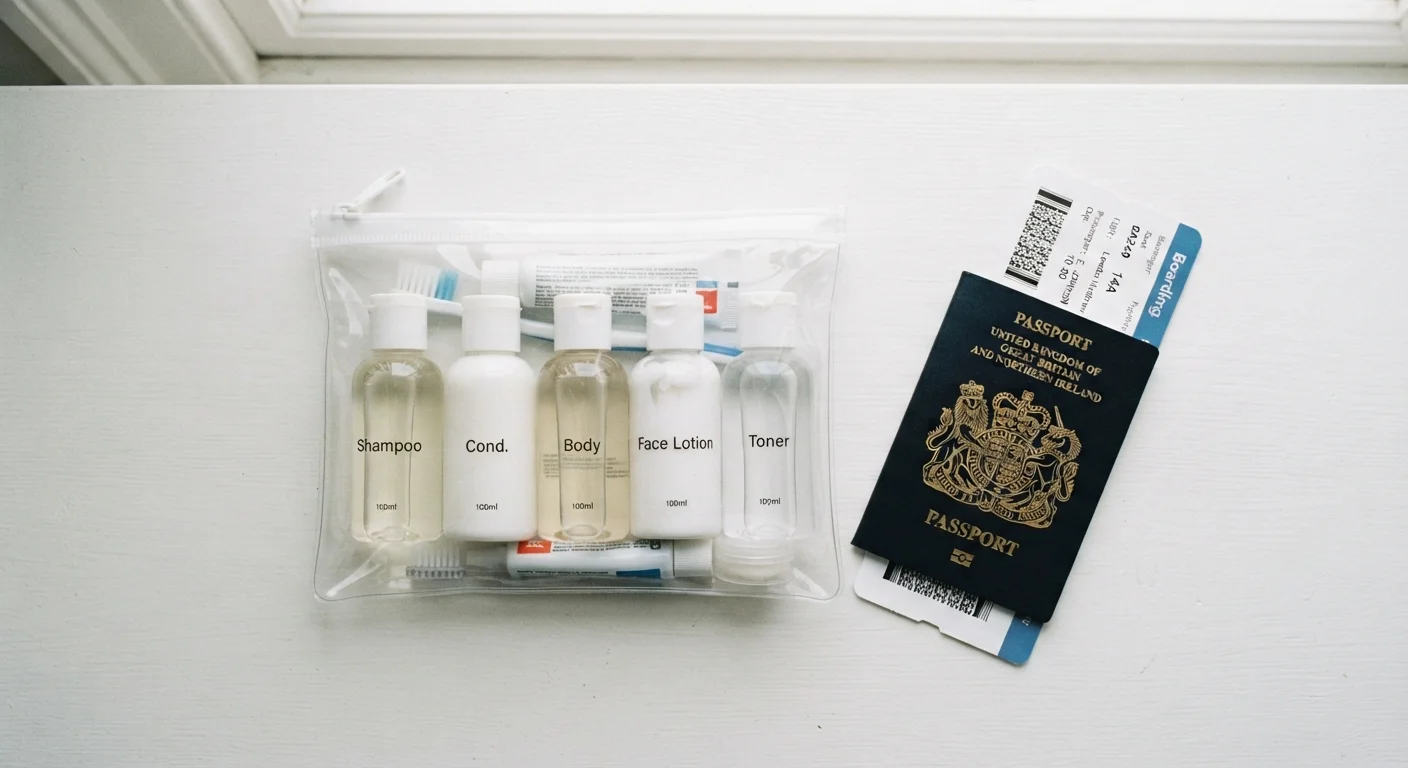
A clear reference guide to carry-on liquid restrictions, what counts as a liquid, and how to stay compliant without checking a bag.
What the 3-1-1 rule actually means
The TSA's 3-1-1 rule covers liquids, gels, aerosols, creams, and pastes carried through a U.S. airport security checkpoint in carry-on luggage. The name comes from three specific limits:
- Each container must hold 3.4 ounces (100 milliliters) or less.
- All containers must fit in 1 clear, quart-sized zip-top bag.
- Each traveler is allowed 1 such bag, removed from the carry-on and placed in a bin for screening.
The 100 ml limit applies to the container's stated capacity, not how full it is. A 6 oz shampoo bottle that is half empty still fails the rule because the container itself exceeds the limit.
For international flights departing from or connecting through airports outside the U.S., the underlying standard is similar (most countries adopted an ICAO-aligned 100 ml rule), but individual airports and airlines may apply it differently. Always verify requirements with your airline and the relevant government authority before travel.
What counts as a liquid
The TSA defines the category broadly. If a substance can pour, squeeze, smear, pump, or spray, it falls under the rule. That includes items travelers often overlook:
- Toothpaste and lip balm
- Mascara and liquid eyeliner
- Spray sunscreen and aerosol deodorant
- Peanut butter, hummus, jam, and similar spreads
- Snow globes and gel-filled shoe insoles
- Liquid medications and contact lens solution
Solid versions of many products, such as bar shampoo, solid cologne, stick deodorant, and powder sunscreen, are not liquids and are not subject to the 3-1-1 limit. Switching to solid or powder formats is a practical way to free up space in your quart bag. See the carry-on-only packing framework for more strategies on fitting everything into one bag.
Exceptions that apply at the checkpoint
The TSA allows certain liquids in carry-ons beyond the 3.4 oz limit, provided travelers declare them separately at the checkpoint for additional screening:
- Medications: Prescription and over-the-counter liquid medications in reasonable quantities are permitted. Keep them accessible and inform the officer.
- Infant and toddler formula, breast milk, and juice: These are exempt from the volume limit in quantities considered reasonable for the flight. A companion does not need to be present to carry them.
- Ice packs or gel packs: Allowed when used to keep medically necessary items cool, but must be frozen solid at the checkpoint. A slushy or partially melted pack may not pass.
Duty-free liquids purchased beyond the security checkpoint at an international airport may be transported in a secure, tamper-evident bag, but rules on connecting flights can differ. Confirm with your airline if your itinerary includes international connections.
If you are preparing for a longer international trip, the pre-trip packing checklist covers how to organize medications and toiletries across different travel scenarios.
How to pack your quart bag without wasting space
A standard quart-sized bag holds roughly 6 to 8 small containers, depending on their shape. A few habits make the most of that space:
- Decant products into small refillable containers rather than buying pre-packaged travel sizes, which often cost more and generate more plastic waste.
- Count only what you actually use daily. Travelers frequently overpack toiletries by adding items they might use rather than items they will use.
- Check whether your hotel or accommodation supplies shampoo, conditioner, and body wash. If it does, those items do not need a spot in your bag at all.
- Put the quart bag near the top of your carry-on so it is easy to remove at the checkpoint without unpacking everything else.
Travelers who find the quart bag too limiting for multi-week trips often shift more products to checked luggage or explore common myths about packing light that make carry-on-only feel harder than it is.
This article provides general information about TSA screening guidelines. Rules can change, and enforcement can vary by airport. Always confirm current requirements directly with the TSA (tsa.gov) and your airline before your travel date.
The content on this site is for informational purposes only and is not a substitute for professional advice. Always consult a qualified professional for guidance specific to your situation.