
Pre-Trip Packing Checklist for International Travel

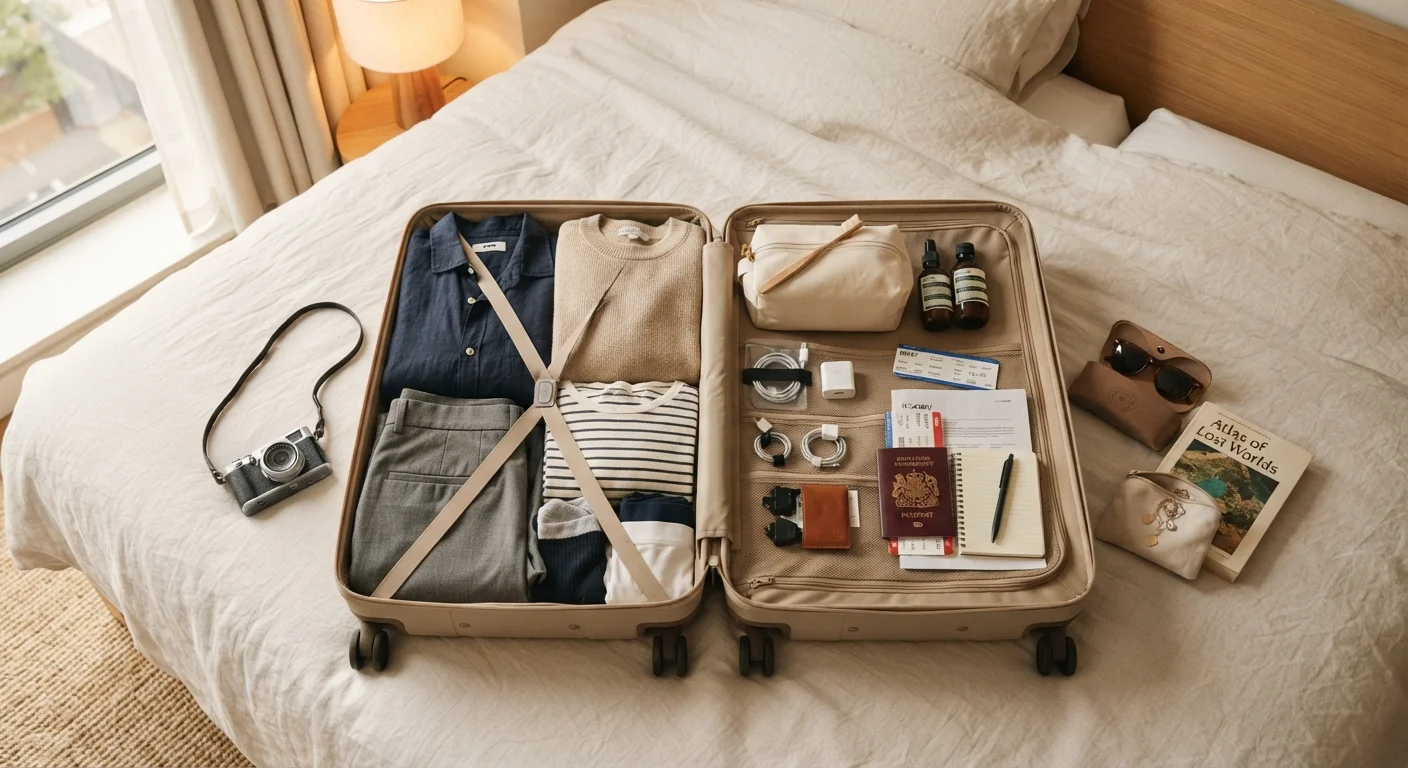
A practical, printable-style checklist covering documents, clothing, toiletries, tech, and health supplies for international trips.
Summary
38 items · 45 to 90 minutes
Key takeaways
- Documents and health items should be gathered first, at least two weeks before departure.
- Carry-on liquids must comply with TSA 3-1-1 rules; solids and solid-format toiletries bypass the limit.
- A destination-specific clothing count beats packing by instinct every time.
- Tech and power items are easy to forget and hard to replace abroad.
- Prescription medications belong in your carry-on, not your checked bag.
How to use this checklist
Work through each group in order, starting at least two weeks before your departure date. Some items, particularly documents and health supplies, need lead time that same-day packing does not allow. Print this list or copy it into a notes app and mark each item as you place it in your bag or confirm it is handled.
If you are new to building a packing system, the first-time traveler packing guide covers bag types, organizers, and foundational concepts worth reading before you start. For a deeper constraint-based approach, see packing a two-week trip into a 40-litre backpack, which shows how far deliberate editing can take you.
This checklist covers international travel in general. If your trip includes a cruise leg, the cruise packing checklist addresses cabin-specific considerations separately.
Documents and financial
Health and medications
Clothing and footwear
Toiletries and personal care
Tech and power
Bag organization and security
Tools and gear you will need
Before working through the list, gather the physical items that make packing easier and more reliable. Having the right containers and organizers on hand prevents last-minute substitutions that waste space or violate carry-on rules.
TSA-approved quart-size zip-lock bag
Holds all carry-on liquids in containers of 3.4 oz or less for security screening compliance.
Packing cubes
Organize clothing by category and compress volume inside your main bag.
Universal power adapter
Adapts your US plugs to foreign outlet shapes across multiple destination types.
Portable luggage scale
Lets you weigh checked bags at home and avoid airline overweight fees at the airport.
TSA-approved luggage locks
Secure checked bags while allowing airport security to inspect without cutting the lock.
Portable power bank
Charges phones and devices during flights, layovers, and days when outlets are scarce.
For carry-on liquid rules, TSA's 3-1-1 principle applies to all flights departing US airports. The 3-1-1 liquids guide explains exactly what counts as a liquid, what the volume limits are, and how to stay compliant without checking a bag. Solid-format toiletries (shampoo bars, solid sunscreen) bypass the limit entirely and are worth considering for longer trips.
Check airline bag policies before you pack
Carry-on size and weight limits vary by airline and sometimes by route or fare class. An item accepted by one carrier may be checked or rejected by another. Review your specific airline's current policy for every flight on your itinerary, since codeshare and connecting flights can involve different carriers with different rules.
Packing notes by category
Documents should be confirmed, not assumed. Check expiration dates on your passport: many countries require at least six months of validity beyond your return date. Verify visa requirements directly with the destination country's official consulate or embassy website, and check the US State Department travel advisory page for your destination before departure. Requirements change and no third-party source is a substitute for official verification.
For clothing, count your actual travel days and pack for fewer. Most travelers pack for the number of days they are away rather than the number of outfit changes they genuinely need. A rough rule: pack for roughly half the days you are traveling, then adjust for laundry access.
Medications in your carry-on matter most when checked bags are delayed or lost. Keep prescriptions in their original labeled containers, and carry a note from your prescribing physician for controlled substances or injectable medications, since some countries have specific import rules. Always consult your doctor or travel health clinic well before departure for destination-specific health advice, including recommended vaccines or preventive medications.
Power adapters are destination-specific. The US uses Type A plugs at 120V; most of Europe uses Type C or F at 220-240V. A universal adapter handles plug shape but does not convert voltage. Check that your devices are dual-voltage (look for "100-240V" on the label or charger brick) before relying on an adapter alone. Trip planning basics covers additional logistics worth reviewing as your departure date approaches.
The content on this site is for informational purposes only and is not a substitute for professional advice. Always consult a qualified professional for guidance specific to your situation.