
Gear Categories Every Traveler Should Understand Before Buying Anything

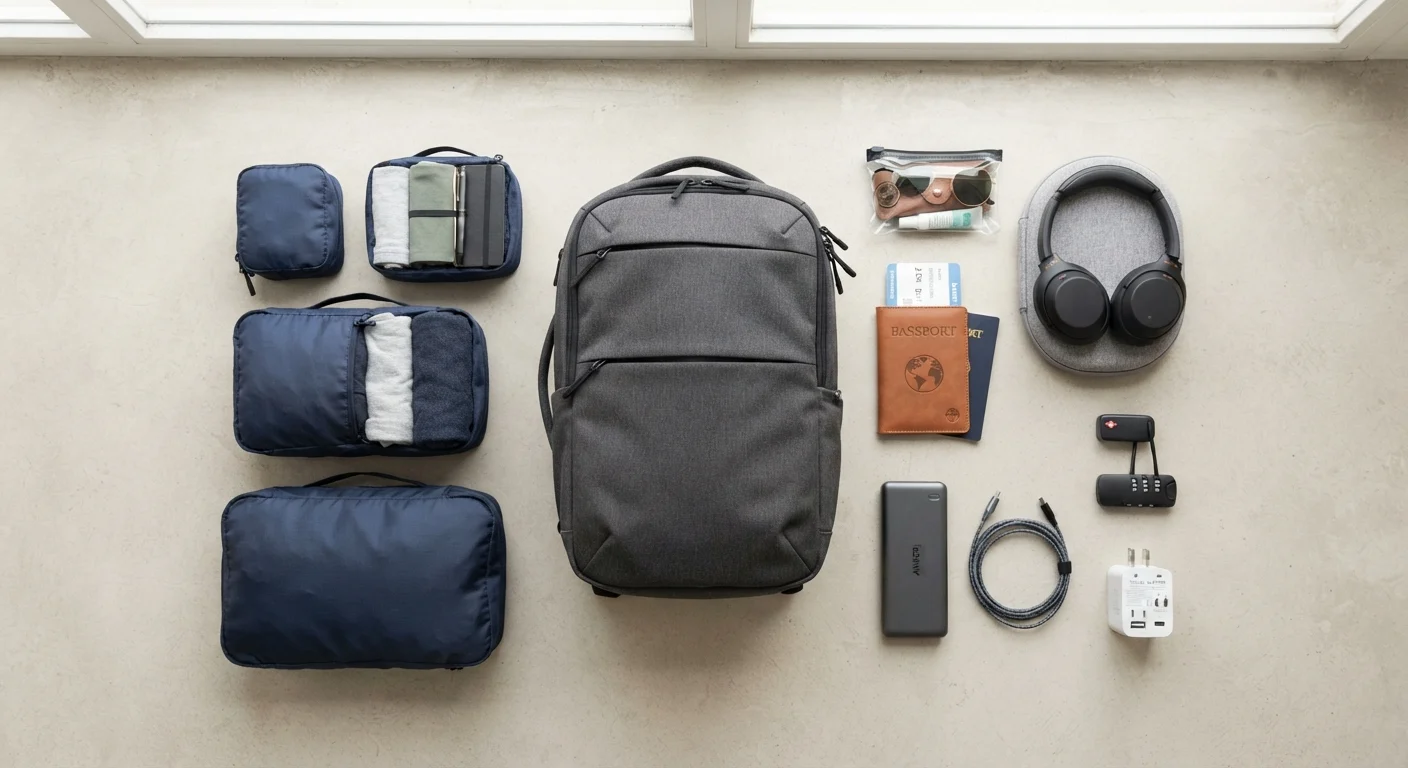
A structured reference covering the main categories of travel gear, from luggage and organizers to tech accessories and security tools.
Why gear categories matter before you shop
Most travelers run into trouble not because they pack the wrong items, but because they have no framework for deciding what they need at all. When gear is a blur of products, it is easy to buy duplicates, skip essentials, or overbuy in one area and underpack in another.
Organizing gear into categories solves that problem. Each category covers a distinct function, so you can assess each one separately and ask: do I have this covered? If you are new to the topic, the first-time traveler packing introduction is a useful starting point before going deeper here.
Packing cube
A rectangular fabric container used inside a bag to group and compress clothing or other items. Cubes make unpacking and repacking faster and help keep contents from shifting in transit.
RFID-blocking wallet
A wallet lined with material that blocks radio-frequency signals, preventing unauthorized scanners from reading the chip data stored in contactless credit cards or passports.
Universal adapter
A single plug adapter with interchangeable or adjustable heads that fits electrical outlets in multiple countries. It handles plug shape differences but does not always convert voltage.
Personal item bag
A smaller bag, such as a tote or backpack, that most airlines allow passengers to stow under the seat in front of them in addition to a carry-on. Size limits vary by airline.
Compression bag
A bag designed to reduce the volume of soft items like clothing by forcing out excess air, either through a zip-seal and rolling method or a valve connected to a vacuum.
Money belt
A thin pouch worn against the body, typically under clothing, used to carry passports, cash, and cards in areas where pickpocketing is a common concern.
The main gear categories explained
Luggage is the container everything else goes into. It includes checked suitcases, carry-on bags, travel backpacks, and personal item bags. Size, structure (hard-shell versus soft-shell), and wheel configuration each affect how the bag performs on different trips. For a direct comparison of the two main formats, see travel backpack vs. rolling suitcase.
Organization systems sit inside luggage and give structure to what you pack. Packing cubes, compression bags, pouches, and garment folders all fall here. These items do not reduce what you bring; they make it easier to find, access, and repack.
Tech accessories cover the gear that keeps devices powered and connected. Universal adapters, voltage converters, portable battery banks, and multi-port charging cables belong in this group. Accessories designed to protect devices (cases, screen covers, waterproof sleeves) sit in a related sub-group.
Document and security tools protect identity and valuables. Passport holders, RFID-blocking wallets, money belts, and luggage locks are the core items. None of these prevent all theft, but each one adds a layer of friction that deters opportunistic theft.
Toiletry and health supplies include containers, travel-sized personal care items, and any health-adjacent items you carry for comfort or preparedness. TSA liquid rules apply to most of this category when flying; the 3-1-1 liquid rule reference explains the restrictions in detail.
Comfort and in-transit gear addresses the experience of traveling, not the destination. Neck pillows, eye masks, noise-canceling headphones, and compression socks fall here. Travelers who take long-haul flights or overnight trains often find this category worth more attention than they initially gave it.
How to use categories when building a packing list
A category-based approach works best when you go through each group in order and make a deliberate decision. For each category, the question is whether you have a reliable item already, whether you need to acquire one, or whether the category does not apply to this specific trip.
Trip type changes the weight of each category. A city trip focused on transit and hotels puts more demand on tech accessories and document security than a beach trip does. A multi-destination trip with no checked luggage shifts attention to compression and organization. The carry-on-only packing framework covers how to make that constraint work across categories.
For international travel, documents and health supplies often need more preparation than domestic trips. The international packing checklist maps this out category by category.
Before purchasing new gear, check whether an item you already own covers the function. A category framework helps here because it prevents buying a second solution for a problem already solved.
The content on this site is for informational purposes only and is not a substitute for professional advice. Always consult a qualified professional for guidance specific to your situation.