
Travel Backpack vs Rolling Suitcase: Matching the Bag to the Journey

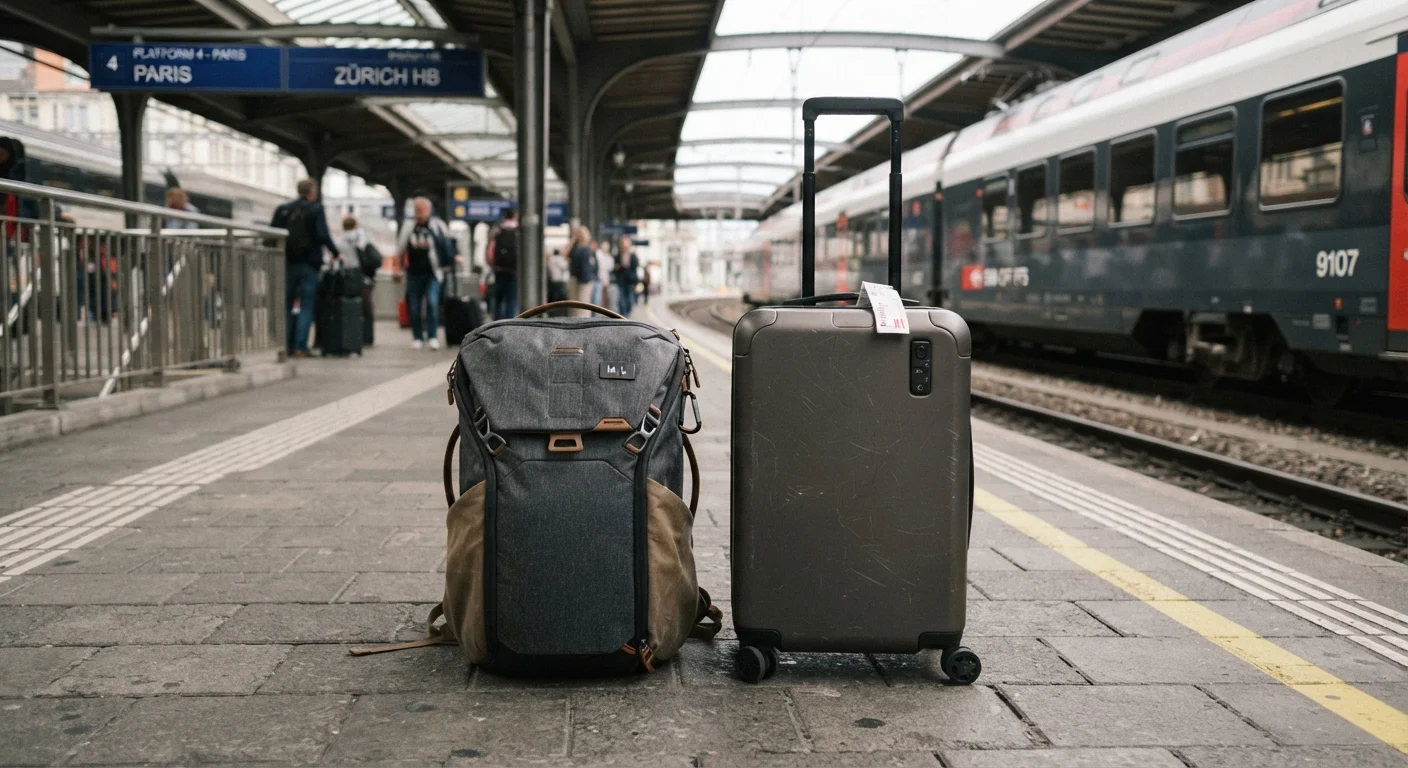
Backpack or suitcase? The right answer depends on your itinerary, mobility needs, and trip style. Here is how to think through the decision.
Our Verdict
A backpack and a rolling suitcase are both capable luggage options; the difference lies in how each one fits a specific kind of trip. Backpacks give you hands-free mobility across varied terrain, while rolling suitcases make organized, longer stays easier on your body. Match the bag to the journey structure, not a general preference.
| Best for | Recommended |
|---|---|
| Multi-stop trips with frequent transit and varied terrain | Travel backpack |
| Extended stays in one destination with smooth surfaces | Rolling suitcase |
| Travelers with back or shoulder injuries | Rolling suitcase |
| Carry-on only travel with tight overhead bin space | Travel backpack |
Key takeaways
- Backpacks work well for multi-city trips, uneven terrain, and travel with frequent transit changes.
- Rolling suitcases suit longer stays in one place, trips with smooth surfaces, and travelers who prefer organized packing.
- Your itinerary structure, not personal style, should drive the decision.
- Neither option is universally better; the right choice depends on how and where you travel.
- Carry-on size restrictions apply to both bag types, so check airline rules before you pack.
What actually separates these two bag types
A travel backpack is carried on your back, distributing weight across your shoulders and hips. Most travel-oriented backpacks range from 30 to 50 liters and are designed to fit airline carry-on dimensions. A rolling suitcase sits on wheels and a retractable handle, pulled behind or alongside you on flat surfaces. Both bag types come in carry-on and checked sizes.
The practical difference is not about capacity; it is about how you move while carrying the bag. A backpack keeps your hands free and goes where you go, including up stairs, over cobblestones, and through crowded markets. A rolling suitcase requires a smooth, hard surface to roll efficiently. On gravel, grass, or broken pavement, wheels become a liability rather than an asset.
For a structured introduction to how these bags fit into the broader landscape of luggage options, see the overview of travel gear categories.
When a backpack fits the trip better
Backpacks are a natural fit when your itinerary involves multiple cities, overnight trains, hostels, or destinations without reliable elevator access. Moving quickly through airports and between platforms is easier when the bag is on your back and both hands are free. You also avoid the "lost bag" window because a carry-on backpack stays with you through the entire journey.
Cobblestone streets in European cities, dirt paths near rural guesthouses, and crowded transit hubs all favor a bag you can carry rather than drag. If your trip involves a lot of walking between accommodation and transit, a backpack reduces friction at each transition.
The trade-off is organization. Most backpacks open from the top or through a single main panel, making it harder to see and reach everything at once. Packing cubes help, but accessing items at the bottom still requires unpacking above them. Travelers who rely on specific outfits for specific occasions may find this frustrating. The carry-on-only packing framework covers strategies for organizing a backpack efficiently.
| Travel backpack | Rolling suitcase | |
|---|---|---|
| Best terrain | Mixed: stairs, cobblestones, trails | Smooth: airports, hotel lobbies, pavement |
| Body load | Distributed across back and hips | Carried by one arm when lifted |
| Organization access | Limited, benefits from packing cubes | Full clamshell view, easier access |
| Transit ease | Hands free, moves with you | Requires flat surface to roll effectively |
| Carry-on fit | Often fits under seat or overhead | Overhead bin only |
| Ideal trip type | Multi-city, frequent transit changes | One or two destinations, longer stay |
When a rolling suitcase fits the trip better
A rolling suitcase works well for trips with one or two destinations, smooth hotel lobbies, airport terminals, and paved city streets. The clamshell opening gives you a full view of your packing, which makes it easier to stay organized across a longer trip. For travelers who need to access specific items without unpacking everything, this layout is more practical.
Weight distribution is another factor. A suitcase carries its own weight on wheels, so your body does not bear the load the way it does with a backpack. For travelers managing a back condition, a shoulder injury, or anyone who finds a loaded backpack uncomfortable, a rolling suitcase reduces physical strain considerably. If you are heading on a cruise, the smooth surfaces throughout the ship and the longer duration of most sailings make a suitcase the more comfortable choice. The cruises hub has more on managing luggage for that type of trip.
The downside appears the moment you leave smooth pavement. Stairs, curbs, escalators, and uneven ground all require you to lift the bag, at which point its weight transfers entirely to one arm. A heavy suitcase becomes a burden in environments that were not designed for wheels.
How to make the decision for your specific trip
Map out your itinerary before choosing a bag. Count how many locations you will sleep in. Identify whether your primary transit is flying, driving, or taking trains. Note whether the destinations have flat, paved surfaces or more varied terrain.
If you will sleep in more than three places, use public transit frequently, or travel to destinations with mixed terrain, a backpack generally reduces daily friction. If your trip is a one- or two-destination stay with smooth surfaces and a preference for clear organization, a rolling suitcase is the more practical tool.
Also consider trip length relative to what you need to pack. A backpack's capacity forces you to pack selectively, which is an advantage if you want to travel light. A suitcase gives you more room, but more room tends to mean more weight to manage. The real trade-offs between packing light and packing everything breaks down what you actually gain and give up with each approach.
For travelers who have not settled on a packing philosophy yet, the common myths about packing light article challenges some assumptions that lead people to overpack regardless of which bag they choose.
The content on this site is for informational purposes only and is not a substitute for professional advice. Always consult a qualified professional for guidance specific to your situation.