
River Cruising vs. Ocean Cruising: Choosing the Right Style for You

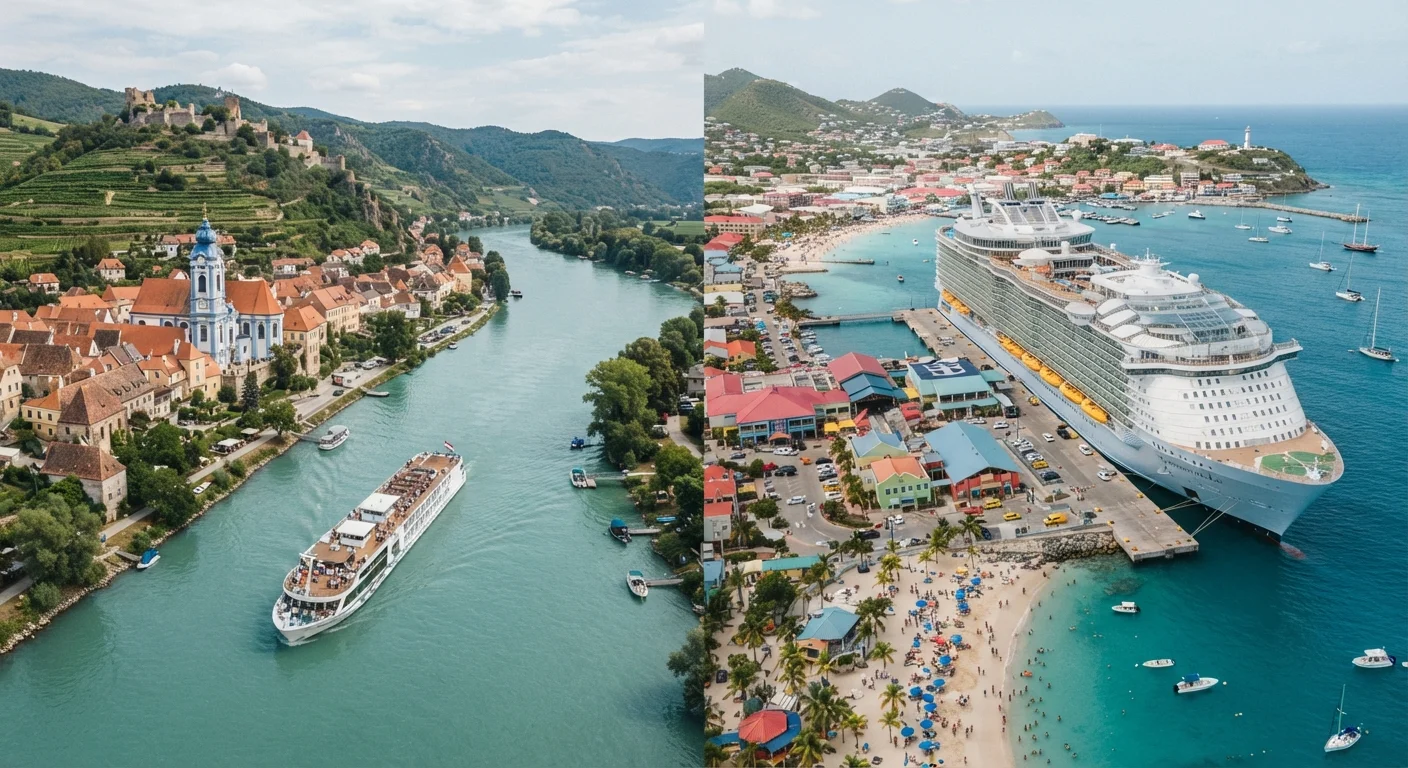
River and ocean cruises differ in cost, pace, port access, and onboard experience. This side-by-side breakdown helps you figure out which suits your travel style.
Option A
River cruising
A slower, port-intensive style for travelers who want depth over distance.
Best for: Travelers who want to spend meaningful time in smaller cities and towns, with guided shore time built into the itinerary.
Option B
Ocean cruising
A broad, flexible style for travelers who want variety and onboard amenities.
Best for: Travelers who want a mix of destinations across longer distances, with a wide range of onboard activities and cabin options.
Key takeaways
- River ships carry far fewer passengers than ocean ships, which affects both pace and pricing.
- River cruise fares often include more meals and excursions upfront; ocean cruise fares often do not.
- Ocean cruises can reach destinations that have no river access, including island and remote coastal ports.
- Motion sickness is less common on rivers, which may matter to travelers with sensitivity to rough seas.
- Neither style is universally more affordable; total cost depends on the itinerary, cabin, and add-ons you choose.
How the two styles differ at a basic level
River cruise ships are small by design. Most carry between 100 and 200 passengers and are built to fit the locks and narrow channels of rivers such as the Rhine, Danube, Mekong, and Mississippi. Ocean cruise ships range from small expedition vessels carrying a few hundred passengers to large resort-style ships carrying several thousand.
That size difference shapes nearly everything: how crowded the common areas feel, how close you dock to city centers, how much motion you experience underway, and what the onboard experience looks like.
River ships dock directly in towns, often within walking distance of the historic center. Ocean ships dock at commercial ports that can be several miles from the main attraction, sometimes requiring a paid shuttle or taxi.
Expedition ocean cruises occupy a middle ground
Small expedition ships carry 100 to 500 passengers and visit remote coastal or polar destinations that larger ocean ships cannot reach. Their onboard experience is closer to a river ship in scale, but their itineraries and price points differ from both mainstream ocean and river products. If a remote itinerary appeals to you, expedition cruising is worth researching as a separate category.
Cost and what the fare typically covers
River cruise fares are generally higher per night than ocean cruise fares, but they tend to include more. Many river itineraries bundle meals, guided excursions, and port charges into the advertised price. Ocean cruise fares, particularly on larger ships, often list a base cabin rate and charge separately for dining upgrades, gratuities, excursions, and beverages.
That gap can close or even reverse once you add those costs. The honest pre-trip budget guide for cruises walks through every common expense category for both styles so you can compare on a realistic total rather than an advertised fare.
Booking during shoulder season can affect price on both types. Shoulder-season sailings may carry lower fares but also involve trade-offs in weather and port access that are worth weighing before you book.
Itinerary pace and port experience
River itineraries move slowly and stop often. A typical week-long European river cruise might visit six or seven towns, spending several hours or a full day in each. The pace suits travelers who want context and time to walk around rather than a quick photo stop.
Ocean itineraries vary more widely. A seven-night Caribbean sailing might call at three or four ports with half-day visits, while a longer voyage might spend more time at sea between destinations. Sea days appeal to passengers who enjoy the ship itself as part of the experience.
If you are weighing cabin type as part of your ocean cruise decision, the guide to cruise cabin categories covers what each tier includes and what trade-offs come with each choice.
Motion, accessibility, and practical considerations
Rivers are calmer than open ocean, and passengers who are prone to motion sickness generally report fewer problems on river ships. Ocean sailings can encounter rough weather, particularly in the North Atlantic or during storm season, and the effect varies by ship size and route.
River ships have fewer decks, no elevators on some smaller vessels, and gangways that vary by water level. Ocean ships have elevators and more consistent infrastructure, but the distance from port to city can add physical demand. Neither format is universally easier to navigate; the right choice depends on the specific itinerary and the individual passenger's needs.
Travelers should verify entry requirements, vaccination recommendations, and any travel advisories with official government sources before sailing on either type of cruise, as requirements change and vary by destination.
The content on this site is for informational purposes only and is not a substitute for professional advice. Always consult a qualified professional for guidance specific to your situation.