
Soft-Sided vs Hard-Shell Luggage: Which Actually Holds Up Better?

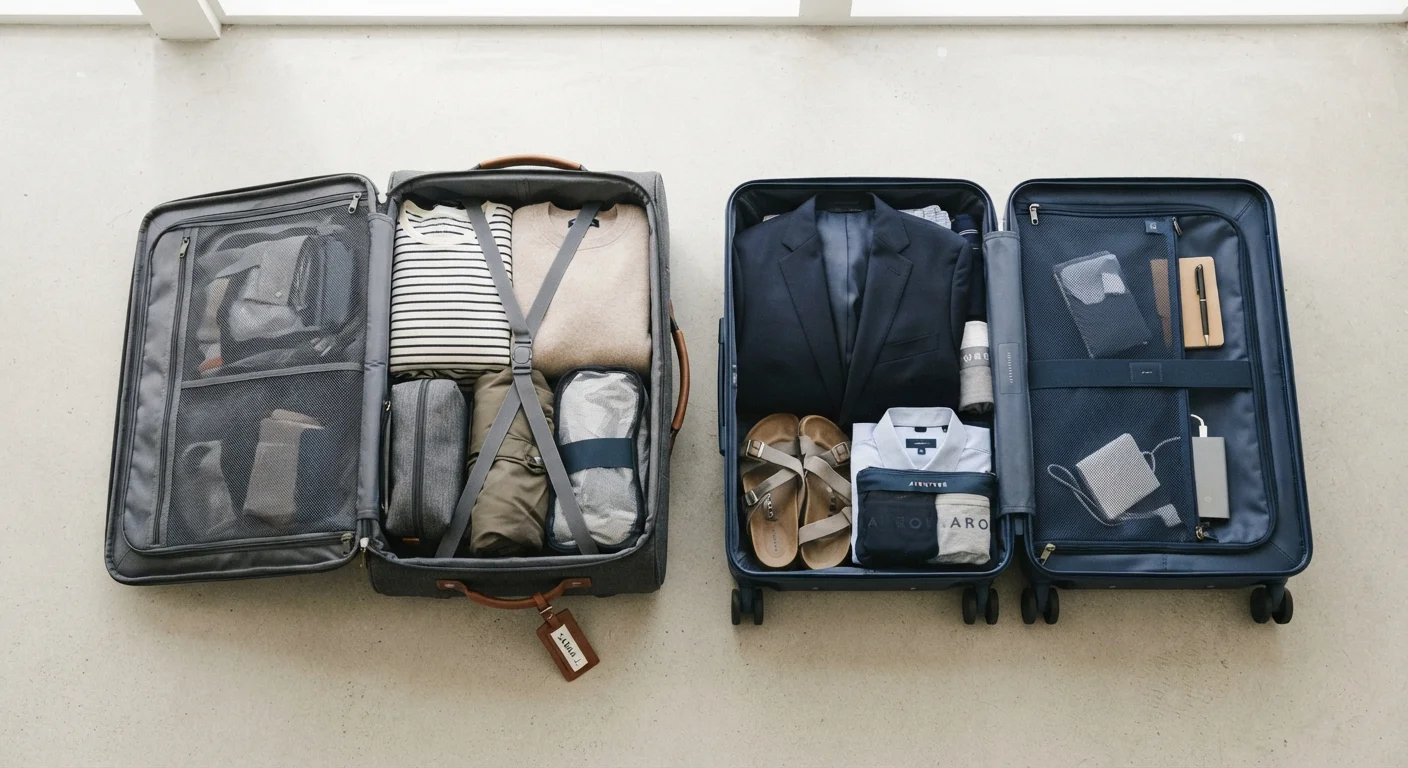
A side-by-side look at soft-sided and hard-shell suitcases across durability, weight, flexibility, and real-world travel use.
Option A
Soft-sided luggage
The flexible, lightweight workhorse for adaptable packers.
Best for: Travelers who need flexibility, lighter carry-on limits, or frequently overstuff their bags.
Option B
Hard-shell luggage
The structured, protective choice for fragile contents and rough handling.
Best for: Travelers who check bags frequently, carry breakables, or want weather-resistant protection.
Key takeaways
- Hard-shell luggage resists impact better; soft-sided bags handle overpacking more forgivingly.
- Soft-sided bags are generally lighter, which matters when airline weight limits are tight.
- Hard shells offer better protection against moisture, but most are not fully waterproof.
- Soft-sided bags often have exterior pockets; hard shells typically do not.
- The right choice depends on trip type, packing habits, and how bags are handled in transit.
What each type is built from
Soft-sided suitcases use woven fabrics, typically nylon or polyester, stretched over an internal frame. The fabric shell gives these bags their defining characteristic: they bend and compress rather than crack. Higher-denier fabrics (600D and above) resist abrasion better than thinner weaves, so material weight matters when comparing models within this category.
Hard-shell cases are molded from rigid materials. Polycarbonate is the most common and generally holds up well because it flexes slightly on impact instead of shattering. ABS plastic is cheaper and more brittle. Aluminum shells are heavy but very durable and are associated with premium, carry-on-focused travel. Each material handles stress differently, so the label "hard-shell" covers a wide performance range.
For a broader look at how bag type affects packing strategy, see Travel Backpack vs Rolling Suitcase.
Durability and real-world damage
Hard shells absorb blunt impact well. If a bag is dropped from a conveyor or stacked under heavy items in a cargo hold, a rigid case distributes that force across its surface rather than concentrating it on contents. The tradeoff is that severe impact can crack a hard shell permanently, while a soft bag may simply deform and recover.
Fabric bags wear differently. Zippers are the most common failure point, and a broken zipper on a soft bag can render it unusable. Fabric can also tear if caught on rough edges. However, minor scuffs and punctures that would crack a hard shell may have no functional effect on a nylon bag.
Spinner wheels and handles are shared vulnerabilities. Both bag types depend on the same wheel and handle hardware, and those components fail at roughly similar rates regardless of shell type. Build quality of the hardware matters more than whether the shell is rigid or fabric.
| Criterion | Soft-sided | Hard-shell |
|---|---|---|
| Impact resistance | Absorbs and deforms; recovers | Distributes force; can crack |
| Typical weight | Lighter by 0.5 to 1.5 lbs | Heavier at equivalent size |
| Exterior pockets | Common on most models | Rarely included |
| Moisture resistance | Limited; fabric absorbs moisture | Better surface repellency |
| Overpacking tolerance | Fabric flexes to fit more | Rigid sides strain zipper |
| Repairability | Zippers replaceable; fabric patchable | Cracks difficult to repair |
| Packing layout | U-opening, flexible | Clamshell, two equal halves |
Weight, packing space, and flexibility
Weight is where soft-sided bags have a consistent advantage. A comparable soft-sided checked bag typically weighs 0.5 to 1.5 pounds less than a hard-shell equivalent at the same size. With most US airlines setting checked bag limits at 50 pounds, that difference can translate directly into more room for clothing or gear.
Packing space is less straightforward. Hard shells with a clamshell opening split into two roughly equal halves, which can make it easier to separate clean and worn items but harder to pack tall or oddly shaped objects. Soft bags with a U-shaped main compartment open wider and conform around irregular items.
Exterior pockets are almost exclusive to soft-sided bags. Quick-access pockets for documents, chargers, or liquids bags are standard on fabric suitcases and absent on most hard shells. If frequent access to specific items matters to you, that difference is practical, not cosmetic.
For help with what goes inside the bag, packing cubes, compression bags, and folder organizers each work differently depending on your bag type and trip length.
Which trips favor which type
Checked-bag trips, especially those involving multiple connections or budget carriers with rough baggage handling, generally go better with hard shells. The protection against impact and moisture is more useful when you have no control over how the bag is treated in transit.
Carry-on-only travel tends to suit soft-sided bags. They weigh less, compress into tight overhead bins, and are easier to carry through crowded terminals. A few extra ounces matter more when you are lifting a bag into an overhead bin repeatedly across a multi-city trip.
If packing volume changes trip to trip, a soft bag handles that variability better. Overstuffing a hard shell strains the zipper closure and can warp the frame. A soft bag stretches to accommodate the extra item without the same structural stress. The trade-offs between packing light and packing everything are worth working through before deciding how much space you actually need.
A note on waterproofing claims
Neither soft-sided nor hard-shell luggage is reliably waterproof unless specifically rated and sealed as such. Hard shells repel surface rain better than most fabrics, but seams, zippers, and wheel housings on both types allow moisture in during sustained exposure. If your checked bag sits on a wet tarmac, contents in both types can get damp. A waterproof packing cube or dry bag inside the suitcase is a more dependable solution than relying on the shell itself.
The content on this site is for informational purposes only and is not a substitute for professional advice. Always consult a qualified professional for guidance specific to your situation.