
Air Filter Myths That Drive Up Maintenance Costs

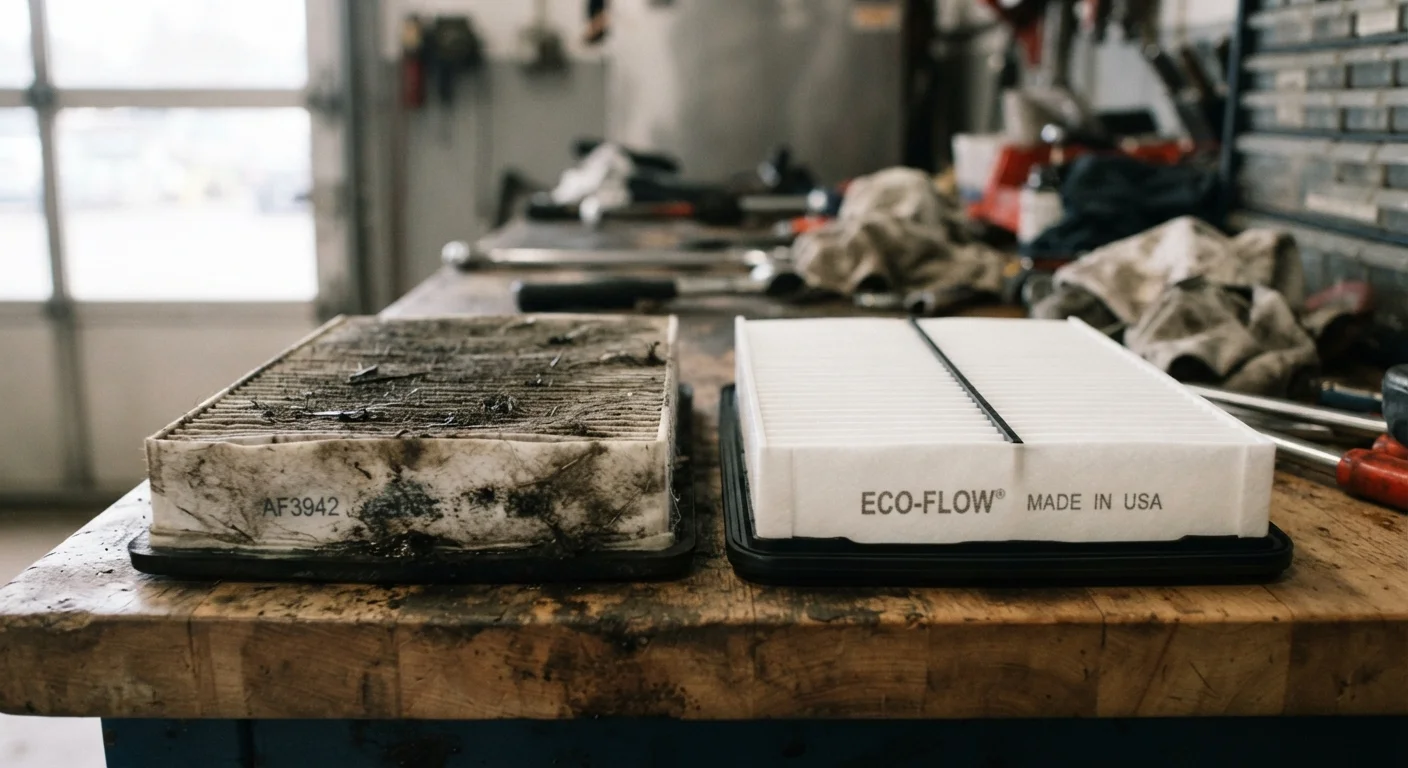
Some common beliefs about engine and cabin air filters lead drivers to replace them too often or ignore them too long. Here is what the evidence actually says.
Key takeaways
- Color alone does not tell you whether an air filter needs replacing; check your owner's manual for intervals.
- Cabin air filters and engine air filters are separate components with different jobs and replacement schedules.
- Aftermarket high-flow filters do not produce noticeable performance gains in standard passenger vehicles.
- Skipping air filter checks entirely can reduce fuel efficiency and strain your engine over time.
- Most drivers replace air filters more often than necessary, adding cost without adding protection.
Why air filter myths cost drivers real money
Air filter maintenance sits in an awkward middle ground: drivers who ignore it too long can cause genuine engine problems, while drivers who follow shop upsells too closely end up replacing filters far ahead of schedule. Both patterns cost money unnecessarily. The advice circulating in online forums, quick-lube waiting rooms, and car-care videos is often oversimplified or commercially motivated, and separating it from what the engineering actually supports is worth the effort.
The year-round maintenance schedule provides a structured framework for tracking both engine and cabin filter checks alongside other routine tasks. What follows addresses the specific beliefs that push drivers toward the wrong decisions.
Myth
If my air filter looks grey or dirty, it needs to be replaced immediately.
Fact
Appearance alone is an unreliable guide. A filter that looks discolored may still be performing well within acceptable airflow limits.
Filter manufacturers and vehicle engineers design air filters to trap particles progressively. Some dust accumulation is part of how the filter works; a completely clean filter is not necessarily more effective than one with moderate use. The relevant measure is airflow restriction, not color. Your owner's manual specifies a mileage or time interval based on your engine's actual airflow requirements, and that interval accounts for real-world dust loading. Replacing a filter early because it looks grey discards usable service life and adds unnecessary cost.
Myth
The cabin air filter and the engine air filter are basically the same thing.
Fact
They are entirely separate components that filter different airstreams for different purposes.
The engine air filter sits in the intake path before the throttle body or carburetor and prevents abrasive particles from entering the combustion chamber. The cabin air filter is located in the HVAC (heating, ventilation, and air conditioning) system and cleans the air that enters the passenger compartment. Each has its own housing, its own replacement interval, and its own failure mode. Neglecting either one has no bearing on the other. Drivers who replace one and assume both are covered may be leaving a clogged cabin filter in place for years, or vice versa.
Myth
A high-performance aftermarket air filter will noticeably improve my car's power and fuel economy.
Fact
For standard passenger vehicles driven under normal conditions, measurable power or economy gains from a drop-in performance filter are minimal at best.
Marketing for high-flow filters often cites dyno results measured under wide-open throttle at high engine speeds. Daily driving rarely approaches those conditions. The factory air intake system on modern vehicles is already engineered to supply adequate airflow for the engine's rated output at typical operating loads. Independent testing by automotive publications has found real-world fuel economy differences within the margin of measurement error for most drivers. A properly maintained stock filter serves the same function without the added expense.
Myth
Air filters only matter for performance vehicles or high-mileage drivers.
Fact
Every internal combustion engine depends on clean, unrestricted airflow regardless of power output or annual mileage.
A restricted engine air filter forces the engine management system to compensate, which can increase fuel consumption and put additional wear on sensors like the mass airflow sensor. Low-mileage drivers in dusty environments may actually need to inspect their filters more frequently than high-mileage drivers in cleaner conditions, because the replacement interval in the owner's manual often assumes typical operating conditions. Check your manual for a separate severe-duty interval if you regularly drive on unpaved roads or in areas with high airborne particulates.
Myth
You should replace your engine air filter every oil change.
Fact
Most engine air filters are designed to last significantly longer than an oil change interval, typically between 15,000 and 30,000 miles depending on the vehicle and conditions.
The myth likely persists because service centers sometimes offer air filter replacement as an add-on during oil changes, and drivers assume the intervals are aligned. They are not. Replacing the filter at every oil change (often every 5,000 to 7,500 miles on modern vehicles) would mean discarding filters at roughly one-third to one-fifth of their intended service life. Consult your owner's manual for the correct interval, and have the filter visually inspected rather than automatically replaced. A year-round maintenance schedule can help you track both filter types alongside other routine tasks so nothing gets missed.
What actually determines when a filter needs replacing
The most reliable guide is your vehicle's owner's manual, which lists both a standard interval and a severe-duty interval. Severe-duty conditions include frequent driving on gravel or dirt roads, operation in areas with high pollen or industrial dust, or stop-and-go traffic in urban areas with poor air quality. If your driving fits those patterns, apply the shorter interval.
Beyond the manual, a visual inspection gives useful information even if appearance alone is not definitive. Hold the filter up to a light source. If light passes through the filter media reasonably well, airflow restriction is probably within acceptable range. If the media is compacted, oily, or completely opaque, replacement is warranted regardless of mileage.
Dirty filter warning signs to take seriously
A significantly clogged engine air filter can restrict airflow enough to cause rough idling, sluggish acceleration, or a noticeable drop in fuel economy. If you observe any of these symptoms, inspect the filter before assuming another component is at fault. A qualified mechanic can assess whether the filter is the cause and confirm the correct replacement interval for your vehicle.
Safe driving practices and vehicle reliability go together more than many drivers realize. Maintaining airflow to the engine is one factor; driving technique in changing conditions is another area where accurate information reduces risk and cost simultaneously.
Getting the most from routine filter maintenance
Treating engine and cabin air filters as separate line items on a maintenance checklist is the most practical approach. Note the mileage and date each time you inspect or replace either one, and track them independently. Many vehicles place the cabin filter behind the glove box or under the dashboard, and accessing it for inspection is often a five-minute job without tools.
If a service advisor recommends an early replacement, ask to see the filter and ask which specific condition warrants replacement. A professional who cannot point to a concrete reason is likely following a revenue-based upsell schedule rather than your vehicle's actual needs. You are entitled to that information before authorizing the work.
This article is for general informational purposes only and does not constitute professional mechanical advice. Consult a qualified mechanic for diagnosis and service recommendations specific to your vehicle.
The content on this site is for informational purposes only and is not a substitute for professional advice. Always consult a qualified professional for guidance specific to your situation.