
A Year-Round Car Maintenance Schedule for Everyday Drivers

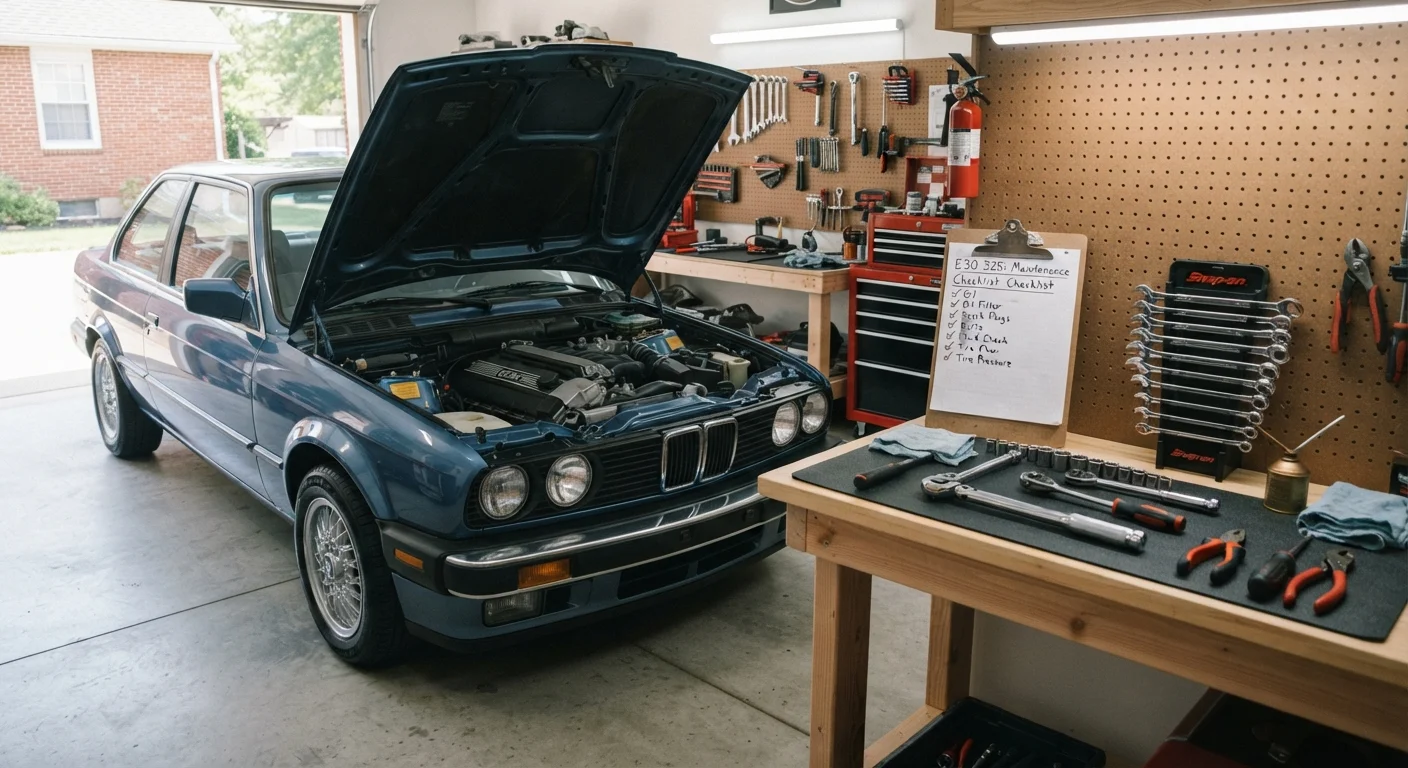
From monthly fluid checks to annual inspections, this comprehensive schedule organises every routine task so nothing slips through the cracks.
Check tyre pressure on the same day each month, before driving, to build a consistent habit and get accurate cold-pressure readings.
Tyre pressure rises as rubber heats up from driving, so readings taken after a trip will not match the placard specification, which is always a cold-tyre figure.
Keep your owner's manual in the car and look up every service interval before booking a shop visit; it prevents unnecessary upsells.
Service advisors sometimes recommend intervals shorter than the manufacturer's specification. Having the manual on hand lets you compare on the spot.
Key takeaways
- Monthly fluid and tyre checks catch the most common causes of breakdowns early.
- Oil change intervals vary by vehicle and oil type; consult your owner's manual rather than a universal rule.
- Seasonal transitions are the best trigger for battery, tyre, and wiper inspections.
- A written service log protects resale value and helps mechanics diagnose problems faster.
- Most annual inspection tasks require a qualified mechanic for safe completion.
Why a schedule beats reactive repairs
Most car repairs that catch drivers off guard were preventable. Tyre blowouts, dead batteries, and overheating are rarely random; they follow a period of gradual wear that a simple inspection would have caught. A structured schedule converts that unpredictability into manageable routine.
The goal is not to turn every driver into a mechanic. Many tasks on this schedule require nothing more than opening a hood and reading a dipstick. Others belong with a qualified mechanic. Knowing which is which is half the value of having a schedule at all.
Before any unfamiliar trip, run through the basics covered in the pre-trip vehicle check guide. That walkthrough complements the calendar-based schedule below.
Monthly checks every driver can do
A monthly inspection takes about 15 minutes and covers the systems most likely to cause roadside trouble. Check tyre pressure when the tyres are cold, before the car has been driven. Use the placard on the driver's door jamb for the correct pressure figure, not the maximum stamped on the tyre sidewall.
Check all five fluid levels: engine oil, coolant, brake fluid, power steering fluid (on vehicles so equipped), and washer fluid. The fluid checks guide walks through each reservoir and what a healthy level looks like. Also walk around the car to confirm all exterior lights work, including brake lights. A burned bulb is a safety and legal issue that takes minutes to spot.
Make a habit of the monthly check
Pick the same date each month, such as the first Saturday, and run through the full list before driving anywhere. Doing it at the same time relative to filling up with fuel can help the habit stick. Keep a pen and notepad nearby to log anything that looks off.
Every 3,000 to 5,000 miles
Oil changes sit at the center of most maintenance schedules, but the old "every 3,000 miles" rule no longer applies universally. Modern full-synthetic oils, combined with updated engine tolerances, push many manufacturer intervals to 5,000, 7,500, or even 10,000 miles. Check the interval specified in your owner's manual; following that figure is more reliable than any general guideline.
At the same service interval, ask the shop to rotate the tyres. Rotation evens out wear patterns that develop because front and rear axles carry different loads and handle differently. Most manufacturers recommend rotation every 5,000 to 7,500 miles, though some now tie it to the oil change interval for simplicity.
Have the air filter inspected at this interval as well. Replacement frequency depends on driving environment; dusty or high-pollen areas wear filters faster than highway-only driving. The air filter myths article separates the facts from the sales pressure around replacement frequency.
Seasonal preparation tasks
Twice a year, at the transitions into summer and winter, certain systems need attention beyond routine checks. Temperature extremes stress the battery, tyres, and fluids in ways that do not show up on a monthly visual check. The guide to temperature effects on vehicle systems explains the underlying mechanics.
Before winter: Have the battery load-tested if it is more than three years old. Cold temperatures reduce battery output significantly, and a battery that performs adequately in summer may fail on a cold morning. Confirm coolant concentration is correct for your climate; a 50/50 mix of coolant and distilled water protects to around -34 degrees Fahrenheit in most formulations, though your vehicle may specify otherwise.
Before summer: Inspect wiper blades for cracking or streaking, since winter use degrades rubber faster than most drivers expect. Check tyre tread depth with a quarter: insert it into the groove with Washington's head facing down; if you can see the top of his head, tread is low. The overlooked checks article covers wiper condition and other items that commonly get skipped.
Annual and high-mileage service
Once a year, or at intervals your owner's manual specifies, several components need professional inspection or replacement. Brake pads and rotors wear at different rates depending on driving style and load; a mechanic should measure pad thickness and check rotor condition annually. Brake fluid absorbs moisture over time, which lowers its boiling point; many manufacturers recommend a flush every two years regardless of appearance.
Spark plugs in most modern vehicles run on extended intervals, often 60,000 to 100,000 miles for platinum or iridium types, but they should still be on the schedule rather than ignored until a misfire appears. Serpentine belts and coolant hoses should be visually inspected annually and replaced on any sign of cracking or fraying. A belt failure while driving is not a minor inconvenience; it can disable power steering, the alternator, and the water pump simultaneously.
Do not delay brake inspections
Brakes are a safety-critical system. If you hear grinding, feel pulsing through the pedal, or notice the car pulling to one side when stopping, have a qualified mechanic inspect the brakes before driving further. Do not wait for a scheduled interval when a symptom is already present.
Keeping records that work for you
Every service performed deserves a written entry: date, mileage, work done, and who did it. A consistent log makes it easier for a mechanic to spot patterns, supports warranty claims, and gives buyers confidence when a vehicle sells. The service log documentation guide covers what to record and how to organize it.
A basic notebook in the glove compartment works. So do smartphone apps designed for vehicle tracking. The format matters less than the habit of updating it after every service visit or home check. Pairing this schedule with a simple maintenance budget helps spread the cost of annual and seasonal services rather than absorbing them as surprises.
The content on this site is for informational purposes only and is not a substitute for professional advice. Always consult a qualified professional for guidance specific to your situation.