
Signs Your Suspension Is Worn and What That Means for Safety

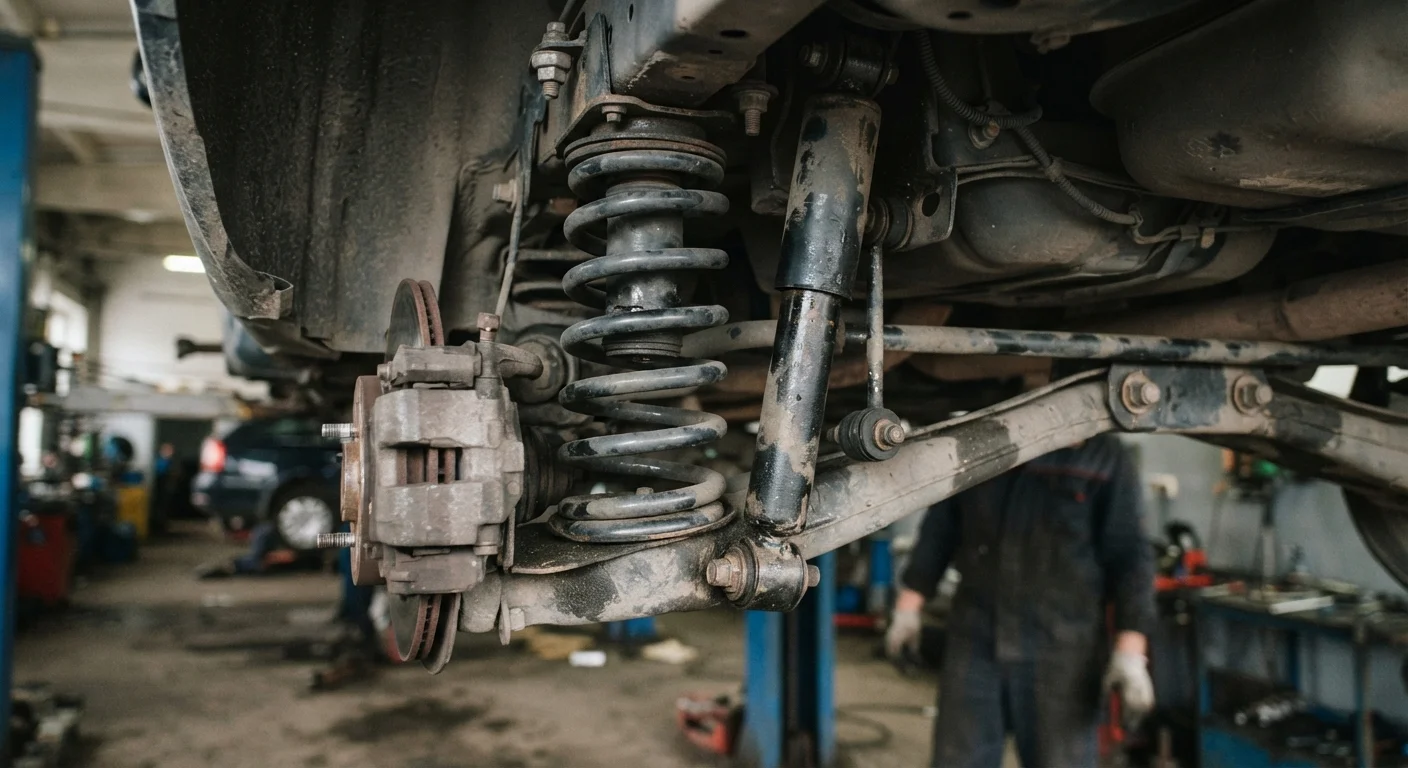
A degraded suspension does not just make for an uncomfortable ride. Understand the warning signs and why they deserve prompt professional attention.
Key takeaways
- Suspension wear often appears gradually, making it easy to dismiss until handling is seriously compromised.
- Warning signs include excessive bouncing, uneven tyre wear, pulling during braking, and unusual noises over bumps.
- A degraded suspension extends stopping distances and reduces your ability to control the vehicle in emergencies.
- Most suspension repairs require a qualified mechanic; visual inspection can help you recognize when to seek one.
- Catching suspension problems early typically costs less than repairing the secondary damage they cause to tyres and steering components.
Why suspension wear is a safety issue, not just a comfort one
Most drivers notice suspension problems as a rougher ride and leave it at that. The discomfort is real, but it is the least important part of the story. Your suspension keeps each tyre in firm, consistent contact with the road. When that system degrades, braking distances increase, cornering becomes less predictable, and the vehicle responds more slowly to steering inputs. These are not abstract concerns: they matter most in the split-second situations where vehicle control determines outcomes.
The components involved include shock absorbers (also called dampers), struts, control arms, ball joints, tie rods, and the bushings that connect them. Each part wears at its own rate depending on road conditions, driving style, and vehicle load. Because wear is gradual, many drivers adapt without realizing how far performance has slipped from where it should be.
The signs below are practical indicators that something in the suspension needs a professional assessment. They are not a diagnostic checklist you can act on yourself; suspension work involves vehicle safety systems and generally requires a lift, specialized tools, and trained judgment. What you can do is recognize these signals early and act on them. See also the pre-trip vehicle check guide for habits that help you spot developing problems before they worsen.
Suspension wear rate varies by vehicle and road conditions
Vehicles driven frequently on rough roads, unpaved surfaces, or with heavy loads experience faster suspension wear than those driven mainly on smooth highways. Manufacturer service intervals provide general guidance, but real-world conditions often mean components need assessment sooner. A mechanic can inspect suspension components during routine oil changes or tyre rotations at little or no additional cost.
Warning signs to watch for
The car bounces excessively after hitting a bump
Shock absorbers control how quickly the suspension compresses and rebounds. A healthy damper settles the vehicle within one or two oscillations after a bump. If the car continues to bounce or rock for several seconds, the damper is no longer doing its job. You can do a rough check by pressing down firmly on each corner of the vehicle and releasing: more than one or two rebounds is a sign worth mentioning to a mechanic. Worn dampers reduce tyre contact with the road during each rebound cycle, which directly affects braking grip.
Worn dampers reduce tyre contact with the road during each rebound cycle, affecting braking grip.
Steering feels vague or the car drifts in a straight line
A car in good mechanical condition tracks straight on a flat, level road with minimal steering input. If you find yourself making constant small corrections, or if the vehicle drifts to one side, the cause could be worn tie rods, deteriorated control arm bushings, or alignment that has shifted because of suspension wear. Vague steering, where inputs feel disconnected or imprecise, often points to worn ball joints or loose steering components. Both situations reduce your ability to place the vehicle accurately, which matters most in lane changes and emergency maneuvers.
Vague steering often points to worn ball joints or loose steering components that reduce vehicle control.
The car pulls or dives sharply during braking
Some nose-dive under hard braking is normal. What is not normal is the vehicle pulling strongly to one side when you apply the brakes, or the front dropping so far that handling feels unstable. Pulling during braking can indicate uneven suspension wear between the left and right sides, worn strut mounts, or problems that also involve the brake system itself. If you notice this, the brakes deserve attention at the same appointment, since the two systems interact under deceleration loads.
Pulling to one side during braking can indicate uneven suspension wear between left and right sides.
Clunking, knocking, or squeaking over bumps
Worn or cracked rubber bushings, loose sway bar end links, and ball joints with reduced grease all produce noise when the suspension moves through its range of motion. A clunk over speed bumps or potholes is common with failing ball joints or worn strut mounts. A persistent squeak on smooth roads often points to dry bushings. These noises are not just annoying: they indicate mechanical play or friction that will accelerate wear on adjacent components if left unaddressed. The location and character of the noise, front or rear, constant or intermittent, helps a mechanic narrow the source.
Clunking over bumps often indicates failing ball joints or worn strut mounts that need prompt inspection.
Uneven or accelerated tyre wear
Suspension components control how the tyre sits against the road. When those components wear, tyre contact angles change, and wear becomes uneven. Cupping (scalloped dips around the tread circumference) is particularly associated with worn shock absorbers, because the tyre bounces rather than maintaining smooth contact. Inner or outer edge wear can reflect alignment problems caused by worn control arm bushings. Because tyres are your only contact with the road, wear patterns that indicate suspension issues carry direct safety implications. The relationship between tyre condition and stopping distance makes this worth taking seriously beyond just tyre longevity.
Cupped or scalloped tyre wear is a strong indicator that shock absorbers are no longer controlling rebound properly.
The vehicle sits visibly lower on one corner
If one corner of the vehicle sits noticeably lower than the others when parked on level ground, a coil spring may have weakened or broken. Springs support the vehicle's weight and maintain ride height; a failed spring also affects suspension geometry, which changes how the tyre meets the road. This is generally visible without tools. A broken coil spring can sometimes make contact with the tyre or brake components under load, which makes it a prompt repair rather than something to monitor over time.
A broken coil spring can contact the tyre or brake components under load, requiring prompt repair.
What to do when you notice these signs
None of these signs call for roadside action, but most do call for a mechanic appointment within days rather than weeks. Suspension problems interact with other systems: worn shocks stress tyres unevenly, misalignment strains ball joints, and loose components can amplify brake pull. Tyre wear patterns are often the first visible clue that something in the suspension or alignment is off, and wheel alignment issues frequently accompany suspension wear.
When you take the vehicle in, describe what you have noticed specifically: when the noise occurs, which direction the car pulls, how long the symptom has been present. That information helps a mechanic prioritize what to inspect. Suspension components are generally inspected visually and by feel on a lift; a qualified technician can identify worn bushings, leaking dampers, or play in joints that are not apparent from the driver's seat. Acting on these signs early tends to keep repair scope narrower and cost lower than waiting until secondary damage accumulates.
The content on this site is for informational purposes only and is not a substitute for professional advice. Always consult a qualified professional for guidance specific to your situation.