
What Tyre Wear Patterns Reveal About Your Car's Condition

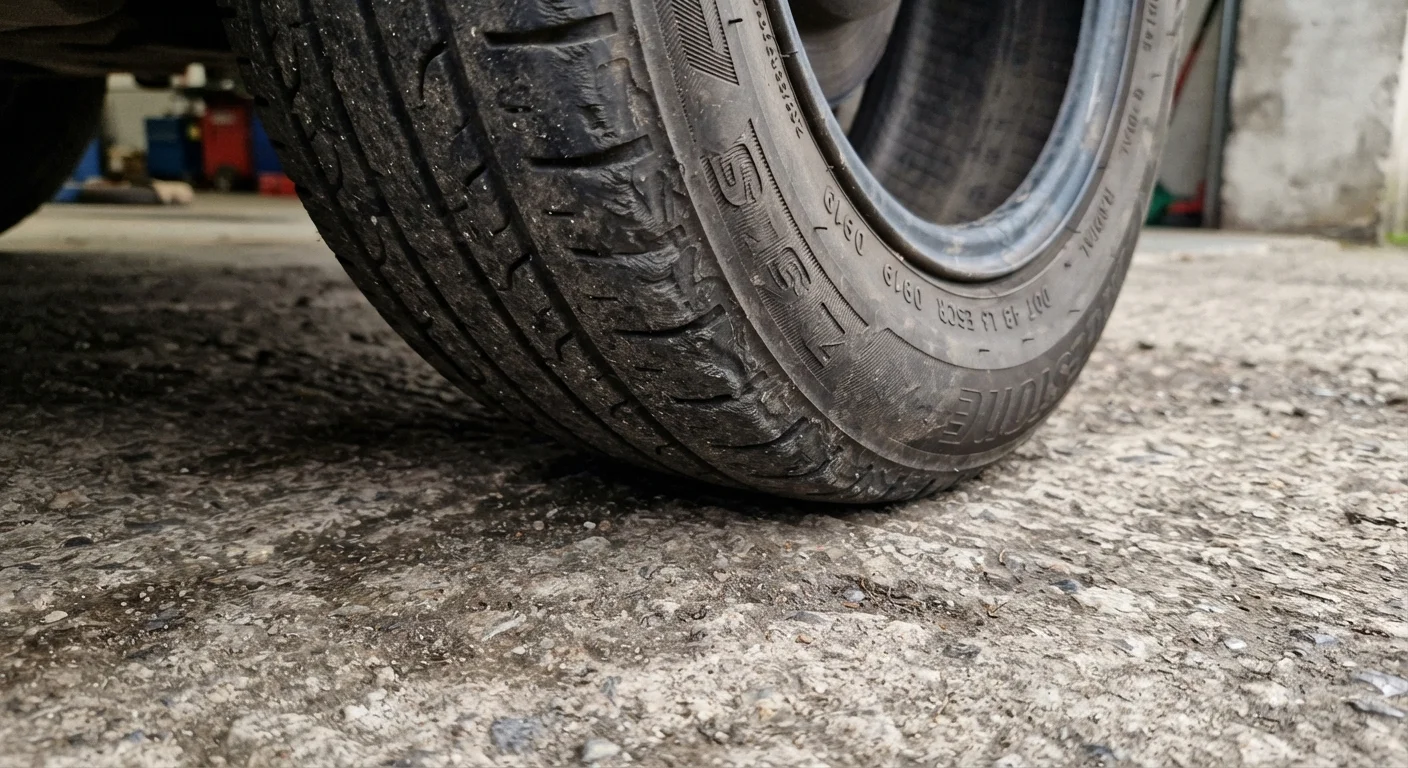
Uneven or unusual tyre wear is rarely just about the tyres. Discover what different wear patterns indicate about alignment, pressure, and suspension.
Why tyre wear is worth reading
Most drivers notice tyre wear only when a tyre goes flat or a mechanic flags it during a service. That delay is a missed opportunity. Tread surfaces record mechanical stress over thousands of miles, and the pattern of that wear points directly at specific problems: incorrect pressure, misaligned wheels, or failing suspension components.
Reading wear correctly means you address the underlying problem rather than just replacing rubber that will wear out again for the same reason. The tyre pressure and tread depth inspection routine is a practical starting point for building this habit.
| Centre wear cause | Over-inflation |
| Both-edge wear cause | Under-inflation |
| Single-edge wear cause | Camber or toe misalignment |
| Cupping or scalloping cause | Worn shock absorbers or struts |
| Feathered tread cause | Toe alignment error |
| Correct pressure source | Driver's door jamb placard (not tyre sidewall) |
Common wear patterns and what they indicate
Centre wear
When tread wears faster across the middle strip than along the outer edges, the tyre has been consistently over-inflated. Excess pressure causes the tyre to bulge at its centre, concentrating contact with the road in a narrow band. The fix is straightforward: adjust to the vehicle manufacturer's recommended pressure, found on the placard inside the driver's door jamb, not on the tyre sidewall.
Edge wear (both shoulders)
Wear concentrated on both outer edges, with the centre relatively preserved, points to chronic under-inflation. A soft tyre flattens and spreads under load, putting the shoulders in disproportionate contact with the road. Beyond wear, under-inflation generates excess heat, which weakens tyre structure over time. See what tread depth and pressure actually mean for road safety for context on how this affects stopping distance.
Single-edge wear
Tread worn on only one shoulder, inner or outer, almost always signals a wheel alignment problem. Camber misalignment tilts a wheel so that one edge carries more load than the other. Toe misalignment causes a tyre to scrub sideways as the vehicle moves forward, stripping tread from one edge. Both conditions stress steering and suspension geometry. Understanding wheel alignment and its effects covers what alignment adjustment involves and when it requires professional correction.
Patchy or cupping wear
Irregular scalloped or cupped patches around the tread circumference are associated with suspension wear. A shock absorber or strut that no longer controls wheel movement effectively allows the tyre to bounce and skip rather than maintain consistent road contact. Each skip grinds away a small patch of tread. This pattern warrants prompt attention; worn suspension affects vehicle control, not just tyre life. Signs of worn suspension and their safety implications explains what else to watch for.
Diagonal or feathered wear
A feathered appearance, where tread blocks look sharp on one side and rounded on the other, typically indicates a toe alignment error. Running with incorrect toe angles causes constant lateral scrubbing, and feathering develops faster than most drivers expect. A wheel alignment check resolves this, but it should be done before new tyres are fitted to avoid repeating the damage.
Camber
The inward or outward tilt of a wheel when viewed from the front of the vehicle. Excessive camber causes one shoulder of the tyre to carry more load, producing single-edge wear.
Toe alignment
The angle at which tyres point relative to the vehicle's centreline when viewed from above. Incorrect toe causes lateral scrubbing of the tread as the car moves forward.
Shock absorber (damper)
A suspension component that controls the rate at which a wheel moves up and down over road irregularities. A worn damper allows excessive wheel bounce, which produces cupped tyre wear.
Tread wear indicator
Raised bars moulded into tyre grooves at a specific depth, typically 2/32 of an inch in the US. When the tread surface is level with these bars, the tyre has reached its legal wear limit.
Feathering
A wear pattern where individual tread blocks are sharp on one lateral edge and rounded on the other, caused by lateral scrubbing from a toe alignment error.
Using wear patterns in routine inspections
A quick visual check of all four tyres takes under two minutes and fits naturally into a pre-trip vehicle inspection. Crouch level with each tyre and look across the full tread width. Differences between tyres on the same axle are as informative as the pattern on any single tyre.
Front tyres generally show alignment and pressure problems first because they carry steering loads. Rear tyres on non-driven axles wear more slowly, so patterns there tend to reflect pressure and suspension issues rather than alignment. On vehicles with all-wheel drive, rotation intervals matter more because all four tyres share both driving and steering forces.
When a pattern suggests a mechanical problem, have that problem diagnosed before purchasing replacement tyres. Fitting new tyres without correcting a pressure habit, alignment error, or failing shock absorber means the wear will recur on the new set.
The content on this site is for informational purposes only and is not a substitute for professional advice. Always consult a qualified professional for guidance specific to your situation.