
Tyre Condition and Road Safety: What Tread Depth and Pressure Actually Mean

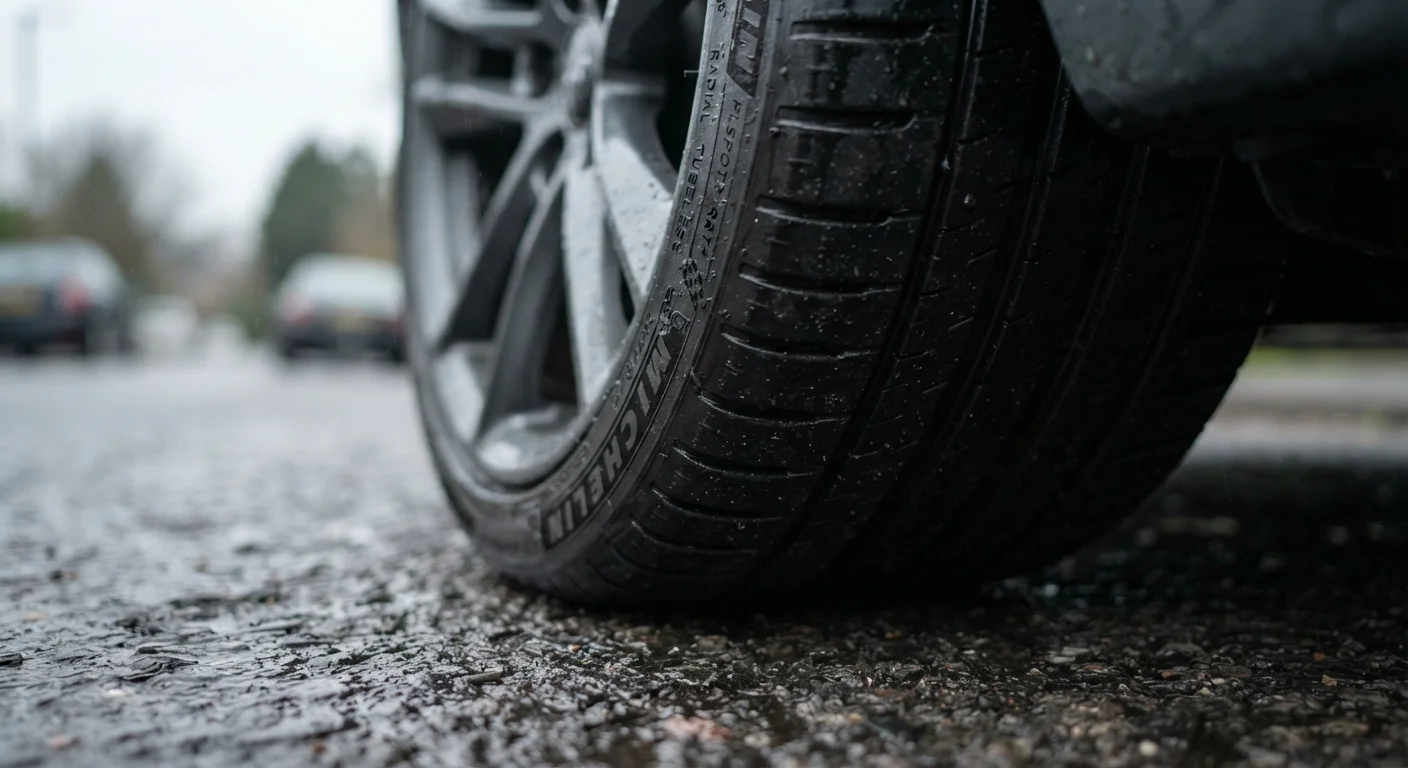
Worn or under-inflated tyres change stopping distances and handling in ways that are not always obvious. Here is what the numbers on your tyres actually tell you.
Key takeaways
- The legal minimum tread depth in the US is 2/32 inch, but handling degrades well before that threshold.
- Tyre pressure should match the vehicle manufacturer's specification on the door jamb sticker, not the maximum printed on the tyre sidewall.
- Under-inflation and over-inflation both increase stopping distances and uneven tread wear.
- Tread depth and pressure interact: a correctly inflated tyre with worn tread still loses wet-weather grip.
- Inspect both tread depth and pressure at least once a month and before any long trip.
What tread depth actually does
Tyre grooves are not decorative. Their job is to evacuate water from the contact patch fast enough that the rubber maintains grip on the road surface beneath. A tyre with deep tread can shift several gallons of water per minute at highway speed. As the grooves wear down, that capacity shrinks, and a thin film of water can lift the tyre off the road entirely, a condition known as hydroplaning.
The legal minimum of 2/32 inch is the point at which a tyre is considered worn out, not the point at which performance starts declining. At 4/32 inch, wet stopping distances are measurably longer than at 8/32 inch (new tyre depth for most passenger tyres). Drivers who wait for the wear indicators to appear before replacing tyres are already operating with reduced wet-weather grip.
Tread wear patterns also carry diagnostic information. Wear concentrated at the tyre shoulders points to chronic under-inflation; wear down the center suggests over-inflation. Uneven wear across one side of the tyre often indicates an alignment problem. See what wheel alignment involves for a fuller explanation of how that connects.
What tyre pressure actually does
Air pressure holds the tyre carcass in its intended shape. At the correct pressure, the contact patch is uniform and the tyre flexes at the rate the manufacturer designed it to flex. Alter the pressure in either direction and the contact patch changes shape, the flexing rate changes, and the tyre generates heat differently.
Under-inflation flattens the contact patch and causes the tyre shoulders to carry more load than the center. The extra flexing generates heat, which degrades the rubber compound and can lead to structural failure at speed. Braking distance increases because the contact patch is no longer optimal, and the vehicle feels sluggish in steering response. Over-inflation produces the opposite shape: the center of the tyre bears too much load, the contact patch shrinks, and grip drops. The ride also becomes harsher because the tyre has less ability to absorb road irregularities.
Check pressure when tyres are cold
Check pressure when the tyres are cold, meaning the vehicle has not been driven for at least three hours or has traveled less than one mile. Driving heats the air inside the tyre and raises the pressure reading, which will give a false impression of where the tyre actually sits relative to specification.
Check pressure when the tyres are cold, meaning the vehicle has not been driven for at least three hours or has traveled less than one mile. Driving heats the air inside the tyre and raises the pressure reading, which will give a false impression of where the tyre actually sits relative to specification.
How the two factors interact
Tread depth and pressure are independent variables, but they compound each other when both are off. A tyre that is correctly inflated but worn struggles in wet conditions because the grooves cannot move enough water. A tyre with adequate tread but low pressure has a distorted contact patch that limits the grip those grooves can provide. Neither problem compensates for the other.
Vehicles with a tire pressure monitoring system (TPMS) display a warning when pressure drops significantly below specification, but TPMS does not monitor tread depth. Relying on dashboard warnings alone leaves half the picture unmonitored. The tyre pressure and tread depth inspection routine explains how to check both in a single walk-around that takes under five minutes.
Worn tyres also respond poorly to suspension irregularities. If the suspension is already degraded, the tyre contact patch bounces more, reducing grip further. Worn suspension warning signs are worth knowing because the effects on tyre wear and handling are direct.
Before any extended drive, both factors deserve a quick check. The pre-trip vehicle inspection checklist covers tyre pressure alongside other items that are easy to overlook until they become problems on the road.
Frequently Asked Questions
The content on this site is for informational purposes only and is not a substitute for professional advice. Always consult a qualified professional for guidance specific to your situation.