
Tyre Pressure and Tread Depth: A Practical Inspection Routine

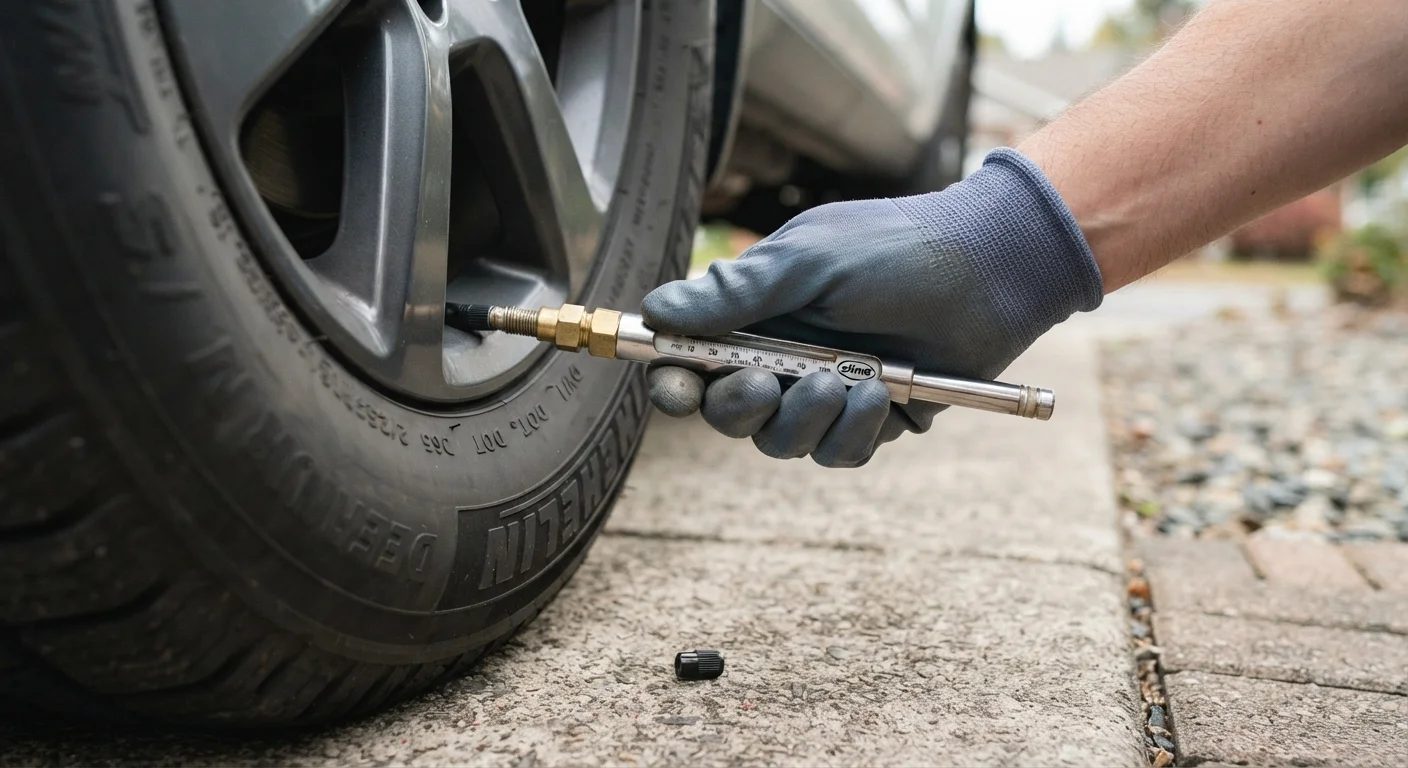
Under-inflated tyres and worn tread are leading causes of road incidents. Follow this straightforward routine to stay on top of both.
Summary
18 items · 10 to 20 minutes
Key takeaways
- Tyre pressure should be checked when tyres are cold, before the vehicle has been driven.
- The correct pressure is listed on the driver's door jamb sticker, not on the tyre sidewall.
- Tread depth below 2/32 of an inch is the legal minimum in most US states; replacing earlier is safer.
- Uneven tread wear often points to alignment or suspension issues, not just tyre age.
- Inspecting both pressure and tread together takes under 20 minutes and can be done monthly.
Why these two checks matter most
Tyre pressure and tread depth are two of the most straightforward things a driver can monitor, yet both are chronically under-checked. Under-inflated tyres generate excess heat, wear unevenly, and reduce a vehicle's ability to stop quickly. Worn tread reduces grip, especially on wet pavement, where the grooves channel water away from the contact patch. Together, these two conditions account for a significant share of preventable tyre failures and loss-of-control incidents on US roads.
This routine covers both checks in a single pass. It works for any passenger car, SUV, or light truck. No special mechanical skills are required, but a few inexpensive tools are needed. See what to gather in the tools section below.
For a broader view of how tyre care fits into your overall maintenance schedule, see the year-round car maintenance schedule that covers every recurring task from monthly checks to annual inspections.
Digital or dial tyre pressure gauge
Measures tyre inflation accurately; more reliable than the gauges built into petrol station air hoses.
Tread depth gauge
Gives a precise measurement of remaining tread depth across each tyre.
Portable tyre inflator or access to a service station air pump
Used to add air to any tyre found to be below the recommended pressure.
Penny and quarter
Quick visual tread depth reference if a dedicated gauge is not available.
Vehicle owner's manual or door jamb sticker
Provides the manufacturer's recommended tyre pressure for your specific vehicle.
Flashlight or work light
Helps inspect tyre sidewalls and tread in low-light conditions.
How to check tyre pressure correctly
Pressure readings are only accurate when tyres are cold, meaning the vehicle has been parked for at least three hours or driven fewer than one mile at low speed. Driving warms the air inside the tyre, which raises pressure temporarily and gives a false reading.
Find the correct pressure for your vehicle on the sticker inside the driver's door jamb, or in the owner's manual. Do not use the maximum pressure printed on the tyre sidewall; that number is the tyre's structural limit, not the recommended operating pressure for your car.
Do not rely on the TPMS light alone
The tyre pressure monitoring system in most vehicles triggers a warning only when pressure is already about 25 percent below the recommended level. At that point, handling and fuel economy are already affected. Manual pressure checks with a gauge catch developing problems earlier and give an exact reading rather than a binary alert.
After checking all four tyres, replace each valve cap firmly. A missing cap allows moisture and debris into the valve core, which can cause slow leaks over time. Check the spare tyre as well if your vehicle carries one; a flat spare is useless in an emergency.
If your vehicle has a tyre pressure monitoring system (TPMS), note that most TPMS sensors alert only when pressure drops roughly 25 percent below the recommended level. That threshold is already low enough to affect handling, so manual checks remain worthwhile even when the dashboard warning light is off.
Preparation
Tyre pressure checks
Tread depth assessment
Visual sidewall inspection
How to assess tread depth
Tread depth determines how effectively a tyre moves water, snow, and debris out of the contact zone between rubber and road. The legal minimum in most US states is 2/32 of an inch, but many tyre professionals recommend replacing tyres at 4/32 of an inch for better wet-weather performance.
A tread depth gauge gives the most accurate reading and costs only a few dollars. The penny test (inserting a penny into the tread groove with Lincoln's head facing down; if the top of his head is visible, tread is at or below 2/32 of an inch) gives a rough pass/fail check. A quarter used the same way indicates roughly 4/32 of an inch.
Measure depth at multiple points across each tyre: the center, the inner shoulder, and the outer shoulder. Uneven readings across those three positions indicate wear that may be linked to alignment or suspension problems rather than normal use. The article what tyre wear patterns reveal about your car's condition explains what different wear signatures mean and when to seek a professional inspection.
Alignment problems that cause uneven tread wear are covered in detail in understanding wheel alignment and why it affects more than your steering.
Fitting this routine into regular maintenance
Monthly checks are a practical target for most drivers. Pressure drops naturally over time, roughly one PSI per month under normal conditions, and faster in cold weather as air contracts. A brief check at a fuel stop is enough to catch developing issues before they become problems.
This inspection pairs well with the small checks covered in wiper blades, lights, and seals, which takes a similar amount of time and covers items most drivers skip. Both routines together address the majority of safety-related maintenance that does not require a lift or professional tools.
For anything connected to braking performance, the condition of your brake fluid is worth reviewing alongside tyre health. See brake fluid: the overlooked hydraulic link between your foot and your wheels for how that fluid degrades and when to have it changed. All of these checks fit within the safe driving practices that help drivers stay in control across a range of road conditions.
This article is for general informational purposes only. Always consult your vehicle's owner's manual and, where appropriate, a qualified mechanic for guidance specific to your vehicle.
The content on this site is for informational purposes only and is not a substitute for professional advice. Always consult a qualified professional for guidance specific to your situation.