
Brake Fluid: The Overlooked Hydraulic Link Between Your Foot and Your Wheels

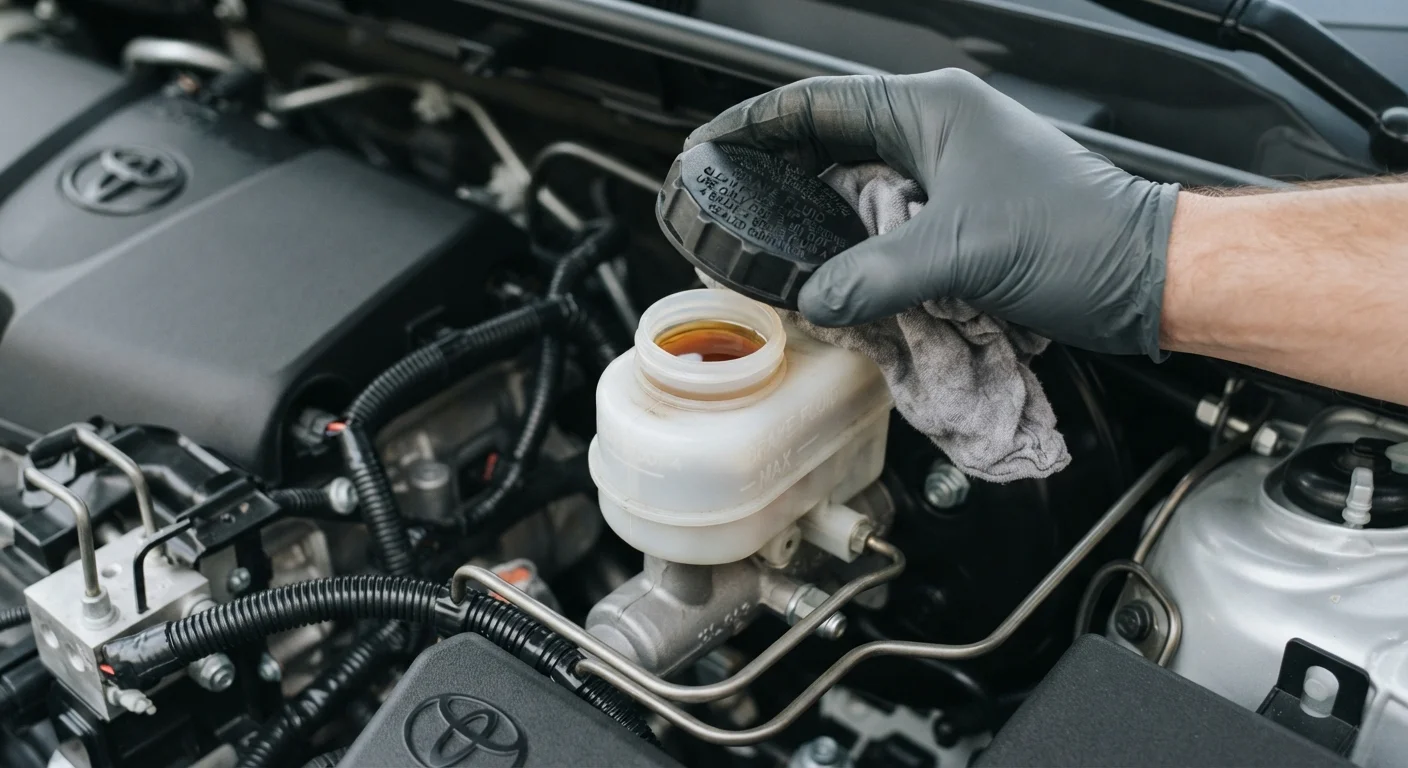
Brake fluid absorbs moisture over time and loses effectiveness quietly. Learn how it works, how to check it, and when it needs changing.
Key takeaways
- Brake fluid absorbs moisture from the air over time, which lowers its boiling point and reduces braking reliability.
- A spongy or soft brake pedal can indicate moisture contamination or air in the hydraulic line.
- Most vehicle manufacturers recommend changing brake fluid every two years or per the interval in your owner's manual.
- Checking the fluid level and color takes under five minutes and requires no tools.
- Never mix DOT fluid types without confirming compatibility in your owner's manual, as this can damage seals.
How the hydraulic brake system works
When you press the brake pedal, a component called the master cylinder converts that mechanical force into hydraulic pressure. Brake fluid carries that pressure through metal lines and flexible hoses to wheel cylinders or brake calipers at each corner of the vehicle. The caliper then squeezes brake pads against a rotor, slowing the wheel.
The fluid must be incompressible to work correctly. If air enters the lines, it compresses instead of transmitting force, which is why a pedal that travels unusually far before the brakes engage is a warning sign worth acting on quickly. For a broader view of brake-related symptoms, understanding brake noise and what it signals is a useful companion read.
Why brake fluid degrades over time
Glycol-based brake fluid is hygroscopic, meaning it absorbs moisture from the surrounding air. This happens gradually through microscopic permeation in rubber hoses and at reservoir seals. As water content rises, the fluid's boiling point drops.
This matters most during hard or prolonged braking, when temperatures inside the system climb sharply. Fluid with a high moisture content can vaporize before fully contaminated fluid would, creating vapor bubbles in the lines. Vapor compresses, so pedal pressure produces less stopping force. This is commonly called brake fade, and it can occur with no prior warning.
Check your owner's manual before buying fluid
DOT ratings are not interchangeable. Your owner's manual specifies the correct grade for your vehicle's seals and components. Buying the wrong type is an easy mistake that can have serious consequences for the braking system.
Manufacturers publish two boiling point figures for each DOT rating: a dry boiling point (fresh fluid) and a wet boiling point (fluid with 3.7% absorbed water). The wet figure reflects real-world performance after time in service and is the more practical number to know.
How to check your brake fluid
The brake fluid reservoir is a small translucent plastic container near the firewall on the driver's side of the engine bay. Most vehicles have minimum and maximum lines molded into the side of the reservoir, so you can read the level without removing the cap.
Check the color through the reservoir wall. Pale yellow or clear fluid is in reasonable condition. Dark brown fluid has absorbed significant contamination. If the level is near or below the minimum line, top it up with the fluid grade specified in your owner's manual, but also have a mechanic check for worn pads or a leak, since those are the more likely causes of a drop.
This check fits naturally into a broader under-hood routine. A consolidated guide to all essential fluid checks covers the other reservoirs worth inspecting at the same time.
When and how brake fluid is replaced
Replacing brake fluid is a process called bleeding the brakes. A mechanic flushes old fluid through the system and refills with fresh fluid, ensuring no air enters during the process. This is not a task suited to inexperienced hands because an air bubble introduced during the procedure can compromise braking immediately. Leave this work to a qualified technician.
The standard recommendation is replacement every two years. Some manufacturers specify mileage-based intervals instead, and a few use sensor-based reminders on newer models. Your owner's manual is the authoritative source for your specific vehicle.
Keeping up with brake fluid is one part of a broader maintenance picture. Checking tyre pressure and tread depth and inspecting wipers, lights, and seals round out the routine checks that most drivers can do themselves between professional service visits.
Frequently Asked Questions
The content on this site is for informational purposes only and is not a substitute for professional advice. Always consult a qualified professional for guidance specific to your situation.