
Driver Fatigue: The Invisible Impairment

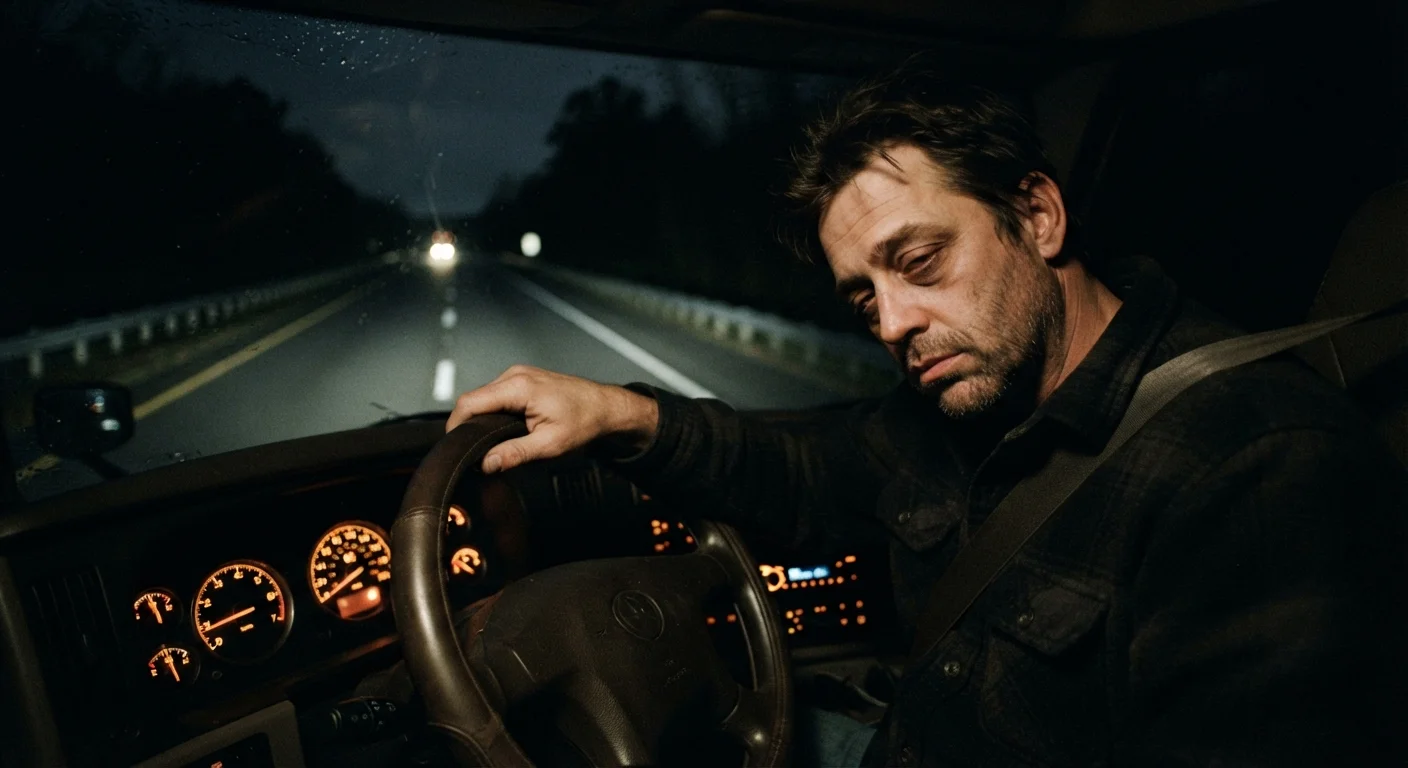
Tiredness slows reaction time and narrows attention in ways that rival alcohol impairment. Learn to recognise the signs and manage long-distance fatigue safely.
Key takeaways
- Driving after 20 or more hours without sleep produces impairment comparable to a blood alcohol concentration of 0.08%.
- Microsleeps last between two and thirty seconds and can occur without the driver noticing.
- The highest-risk windows for fatigue-related crashes are between midnight and 6 a.m. and between 2 p.m. and 4 p.m.
- Caffeine and brief naps can temporarily restore alertness, but neither replaces adequate sleep.
- Lane drifting, repeated yawning, and difficulty recalling the last few miles are warning signs that driving should stop.
Why fatigue is different from other impairments
Alcohol, distraction, and speed are visible contributors to crash risk. Fatigue is harder to pin down because it builds gradually, and the people experiencing it are often the least equipped to judge how impaired they have become. A driver who feels "a little tired" may already be operating with reaction times and decision-making ability that are meaningfully degraded.
The AAA Foundation for Traffic Safety has documented that missing two to three hours of sleep in a 24-hour period roughly doubles crash risk. Going without sleep for 20 or more hours produces impairment that the foundation's research compared to a 0.08% blood alcohol concentration. That figure is the legal limit in every U.S. state.
What makes this impairment invisible is that the brain's ability to self-assess deteriorates alongside its ability to drive. A fatigued driver typically feels more confident than the situation warrants. That gap between perceived and actual ability is where serious crashes happen.
2x
Increased crash risk from losing 2-3 hours of sleep
According to the AAA Foundation for Traffic Safety, missing two to three hours of sleep in a 24-hour period roughly doubles crash risk.
175 ft
Distance covered in a 2-second microsleep at 60 mph
At highway speed, a vehicle travels more than 175 feet in just two seconds with no driver input possible during a microsleep.
0.08%
Equivalent BAC impairment after 20+ sleepless hours
AAA Foundation for Traffic Safety research found that 20 or more hours without sleep produces impairment comparable to the legal alcohol limit in all U.S. states.
The biology behind the danger
The human body runs on a circadian rhythm, a roughly 24-hour internal clock that controls alertness, body temperature, and hormone cycles. Two periods each day push alertness to its lowest point: the stretch between midnight and 6 a.m., and a secondary dip between approximately 2 p.m. and 4 p.m. Crash data from the National Highway Traffic Safety Administration (NHTSA) consistently shows fatigue-related incidents clustered around these windows, regardless of whether the driver had been awake for an unusually long time.
Microsleeps complicate matters further. These are involuntary sleep episodes lasting between two and thirty seconds. They can occur without the driver registering any loss of consciousness, yet a vehicle traveling at 60 mph covers more than 175 feet in just two seconds. During a microsleep, no steering correction, braking, or hazard response is possible.
Fatigue also narrows the field of vision and reduces the brain's ability to anticipate hazards. A well-rested driver scanning the road ahead processes context and prepares responses before a threat is immediate. A fatigued driver tends to fixate on a narrower slice of the visual field, which is one reason why following distance judgment deteriorates when tired.
Recognizing the warning signs
The body does send signals before a microsleep occurs. Frequent yawning is an early indicator. Heavy or burning eyelids, involuntary head nodding, difficulty maintaining a consistent lane position, and missing exits or failing to recall the last several miles are all signs that alertness has already dropped to a dangerous level.
These signs matter more on certain trips. Night driving compounds fatigue risk significantly, because low light reduces the visual stimulation that helps keep the brain alert. The article night driving: why darkness demands a different mindset covers additional factors that make after-dark driving a distinct challenge.
Long highway stretches are also higher risk than urban driving. Monotonous road environments provide little sensory variation, which accelerates the onset of drowsiness even in drivers who felt alert when they started.
Managing fatigue on long trips
The only reliable fix for driver fatigue is sleep. That said, practical strategies can help drivers manage alertness across long distances without putting themselves or others at risk.
Planning rest stops every two hours or 100 miles gives the body a chance to reset before fatigue accumulates to a dangerous level. A 15 to 20-minute nap at a rest area can restore short-term alertness without the grogginess that follows longer sleep. Allow a few minutes after waking before resuming driving.
Caffeine can delay the onset of severe impairment for 30 to 45 minutes, which is enough time to reach a safe stopping point. It does not eliminate sleep debt, and relying on it to push through several more hours of driving is not safe. Opening windows, turning up the radio, and similar tactics have limited and short-lived effects on actual alertness levels.
Sharing driving duties with a passenger who is genuinely rested is one of the most effective tools available on a long trip. If no co-driver is available, building scheduled breaks into the route before departure is more reliable than deciding on the road when to stop, because fatigue impairs that judgment too. For a related perspective on how cognitive strain accumulates and degrades performance, see mental overload: why your brain feels full.
Frequently Asked Questions
The content on this site is for informational purposes only and is not a substitute for professional advice. Always consult a qualified professional for guidance specific to your situation.