
Night Driving: Why Darkness Demands a Different Mindset

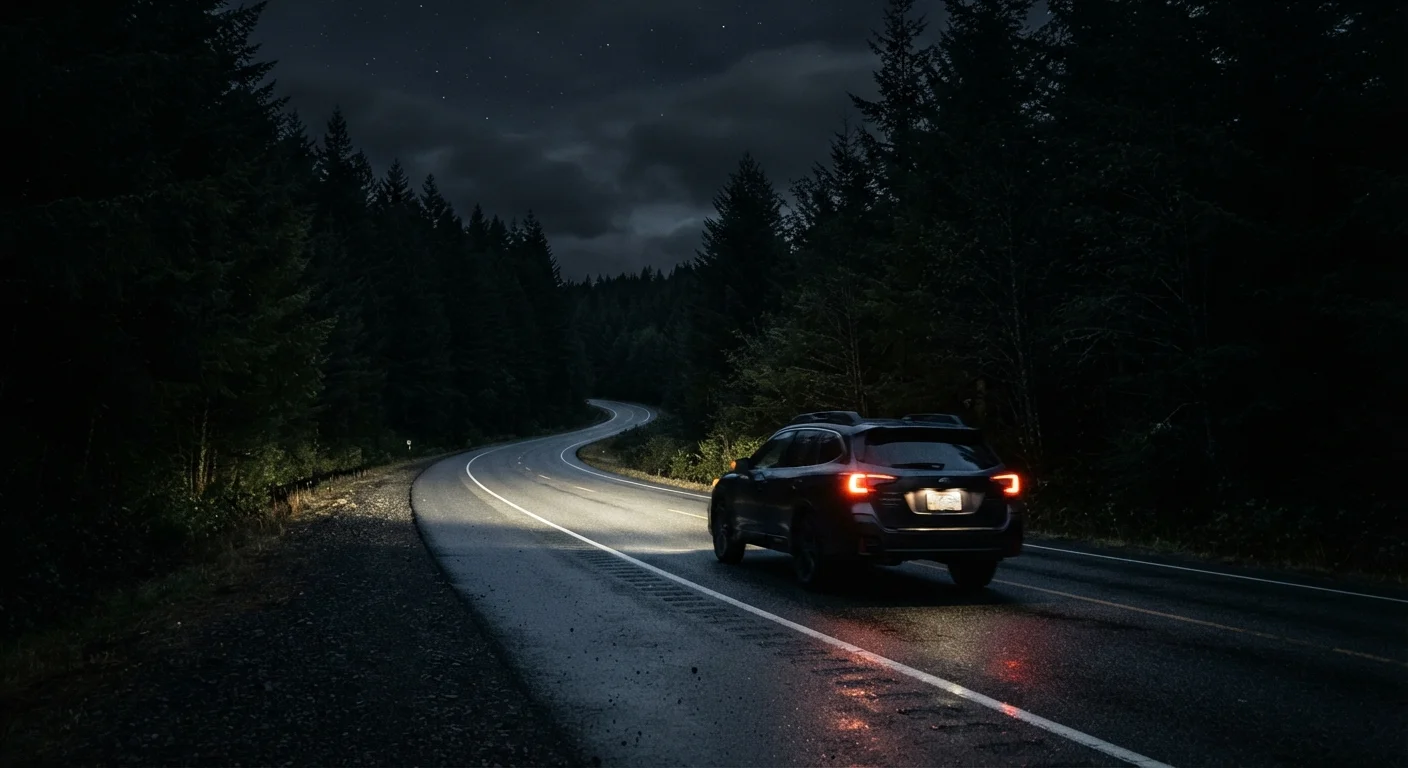
Reduced visibility, impaired depth perception, and driver fatigue make night driving uniquely risky. Learn what changes after dark and how to adapt.
Key takeaways
- Depth perception and peripheral vision both degrade significantly in low-light conditions.
- Fatigue and night driving compound each other; recognizing drowsiness early is a safety skill.
- Headlight aim, cleanliness, and beam selection directly affect how much road you can see.
- Overdriving your headlights, going faster than your stopping distance allows, is a common and dangerous habit.
- Animals, pedestrians, and debris appear with far less warning at night than during the day.
What changes when the sun goes down
Darkness does more than reduce brightness. The human eye shifts from cone-based color vision to rod-based low-light vision, and rods provide poor detail and almost no color information. Depth perception suffers, making it harder to judge how fast a gap is closing. Peripheral vision narrows, which means threats at the edge of your view register later than they would in daylight.
The National Safety Council has reported that while roughly 60 percent of miles driven in the U.S. occur during daylight, a disproportionate share of fatal crashes happen at night. The reasons are cumulative: reduced visibility, higher rates of impaired driving after dark, and fatigue that builds through the evening hours.
Understanding these physical realities is the first step. The second is changing your behavior to match them, not simply driving the same way you would at noon.
Vision changes vary by age
Older drivers experience more pronounced night vision loss than younger drivers. The pupil's ability to dilate in low light decreases with age, and sensitivity to glare from oncoming headlights increases. Drivers over 60 may benefit from more frequent eye exams that specifically assess low-light vision. Consult an eye care professional with any concerns about night vision.
Headlights: your primary tool, used poorly by most drivers
Most drivers treat headlights as an afterthought, switching them on at dusk and forgetting them. A few habits change that.
Clean lenses matter more than most people realize. Oxidized or fogged plastic headlight covers scatter light rather than projecting it, cutting effective range substantially. A mechanic or detailer can restore lenses, or replacement may be the better call on older vehicles.
Aim matters too. Headlights that have been knocked slightly out of alignment, after a curb strike or minor collision, may project low or to one side without you noticing. Many service shops will check and adjust aim during routine inspections; ask for it by name.
High beams are underused on rural roads and overused near other traffic. Switch to high beams when the road ahead is clear and unlit. Drop back to low beams when an oncoming vehicle appears, or when you are following another car closely. On a highway, leaving high beams on behind another driver temporarily blinds them through their mirrors.
Overdriving your headlights is the most common and least discussed night-driving error. It means traveling at a speed where your stopping distance exceeds the distance your headlights illuminate. At 60 mph on low beams, a typical car needs around 200 feet to stop, yet standard low beams may only light 160 feet ahead. Slowing down closes that gap. See how similar logic applies in weather conditions for more on adjusting speed to visibility.
Speed, space, and stopping distance
Following distance should increase at night. The standard three-second gap works in ideal daytime conditions. After dark, four seconds is a more defensible baseline, because your ability to read the road surface, spot debris, or anticipate a sudden brake is slower.
On unfamiliar roads, slow down more than feels necessary. Road curves, elevation changes, and unmarked intersections are harder to read at night. Rural two-lane roads are particularly unforgiving because there is no median, oncoming headlights can momentarily blind you, and animals frequently cross without warning.
For new drivers building highway confidence at night, foundational highway skills are worth reviewing before tackling long after-dark stretches alone.
Fatigue and the compounding risk
Driving tired at any hour is dangerous. Driving tired at night is worse, because dim light accelerates the drowsiness response. The body's circadian rhythm is geared toward sleep after dark, and even drivers who feel alert at 10 p.m. can find their reactions slowing by midnight.
Warning signs include difficulty keeping eyes focused, drifting within the lane, missing exits or signs, and the experience of not remembering the last few miles. Any of these signals warrant stopping, not pushing through. Caffeine can delay the worst effects briefly, but it does not substitute for sleep.
Driver fatigue impairs judgment in ways that resemble alcohol impairment, including reduced hazard recognition and slower braking response. Combining night conditions with fatigue compounds both risks.
Hazards that appear with less warning at night
Pedestrians, cyclists, and animals are harder to detect at night, and they appear closer to your stopping threshold. Pedestrians in dark clothing on unlit roads may only enter your headlight range 50 to 100 feet away, which is marginal stopping distance at highway speeds. Slow down near residential areas, school zones, and any road with no lighting infrastructure.
Deer and other large animals are most active at dawn and dusk but remain a hazard throughout the night. If you see one deer, assume others are nearby. Brake, do not swerve; swerving causes loss of control more often than it avoids a collision.
Road debris, including blown tires, fallen branches, and unsecured cargo, is invisible until your headlights hit it. Maintaining more following distance gives you more reaction time when something appears in your lane. Blind spot awareness becomes more important at night when lane-change errors are harder to catch early.
This article is for general information only. For vehicle-specific maintenance, consult a qualified mechanic. Driving conditions vary; adapt to local laws and road conditions at all times.
The content on this site is for informational purposes only and is not a substitute for professional advice. Always consult a qualified professional for guidance specific to your situation.