
Highway Driving for New Licence Holders

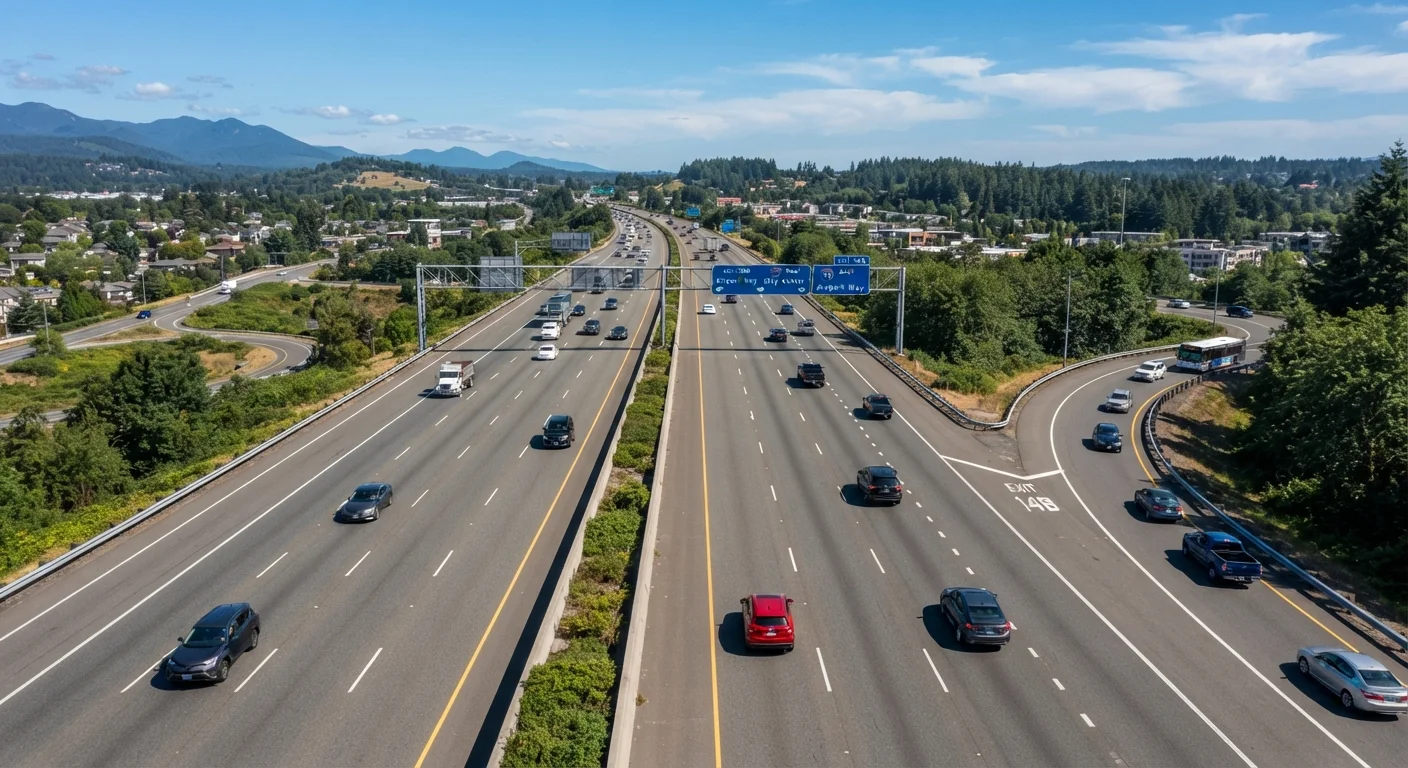
Merging, lane discipline, and motorway speeds feel overwhelming at first. This guide builds the foundational knowledge new drivers need to feel confident.
Start here
Why highways feel different
Next
Merging onto the highway
Then
Lane discipline and positioning
Then
Following distance and speed management
When you're ready
Exiting safely
Finish
Building confidence over time
Key takeaways
- Match highway traffic speed on the on-ramp before merging, not after.
- The right lane is for general travel; the left lane is for passing only.
- A three-second following gap is the minimum in dry conditions; increase it in poor weather.
- Signal, check mirrors, check your blind spot, then move; never skip the blind-spot glance.
- Plan your exit early so you are already in the correct lane well before the off-ramp.
Why highways feel different
City driving is slow and interrupted. Highways are continuous and fast. That shift changes what demands your attention. On a city street, a mistake at 25 mph gives everyone involved more time to react. At 65 mph, the same mistake closes distance in a fraction of a second.
New drivers often find the speed itself less stressful than the transitions: entering, changing lanes, and exiting. Those moments require a specific sequence of actions, and knowing that sequence in advance takes most of the anxiety out of them. See how driving demands shift between highway and urban roads for a broader comparison of the two environments.
On-ramp
The acceleration lane that connects a surface road to a highway, giving you space to reach highway speeds before merging into traffic.
Blind spot
The area beside and slightly behind your vehicle that neither your mirrors nor your forward view covers. You must physically turn your head to check it.
Following distance
The gap between the front of your vehicle and the rear of the vehicle ahead, measured in time (seconds) rather than car lengths.
Lane discipline
The practice of staying in the correct lane for your speed and purpose, and moving only when necessary and safe.
Off-ramp
The deceleration lane that separates from the highway and leads you back to a surface road or interchange.
Merging onto the highway
The on-ramp is an acceleration lane. Its purpose is to let you reach the speed of highway traffic before you join it. Drivers who reach the end of the ramp still going 45 mph in a 65 mph traffic flow create a hazard because every vehicle behind them has to brake or dodge.
Check your mirrors as you accelerate down the ramp. Identify a gap in the right lane that will be large enough when you arrive at the merge point. Signal early. When the gap is there and your speed matches the flow, move smoothly into the lane. If no gap opens, adjust your speed on the ramp to create one, but avoid coming to a full stop unless the ramp has a yield line and traffic is genuinely gridlocked.
Practice with a licensed driver first
Before driving a highway alone, make several trips with an experienced, licensed adult in the passenger seat. Choose low-traffic times such as weekend mornings. Familiarity with one specific route builds the pattern recognition that makes merging and exiting feel automatic.
Lane discipline and positioning
On a multi-lane US highway, the right lane is for general travel. The left lane is for passing. Once you have completed an overtake, return to the right lane. Camping in the left lane at or below the flow of traffic forces other drivers to pass on the right, which is more dangerous and illegal in many states.
Stay centered in your lane. A common new-driver error is drifting toward lane markings, especially when a large truck passes in the adjacent lane. Trust your mirrors, focus on a point ahead rather than the truck itself, and maintain your lane position with small steering corrections.
Every lane change follows the same sequence: signal, check both mirrors, turn your head to check the blind spot, then move. Skipping the blind-spot check is the step most likely to cause a sideswipe collision because mirrors do not cover the full area beside your vehicle.
Following distance and speed management
A three-second following gap gives you enough distance to react and brake in dry conditions at highway speeds. To measure it, watch the vehicle ahead pass a fixed roadside marker and count three full seconds before you reach the same marker. If you get there sooner, back off.
In rain, fog, or heavy traffic, increase that gap. Wet pavement roughly doubles stopping distances. Adapting to rain, snow, and fog covers those adjustments in detail.
Speed management also means matching the flow of traffic, not just the posted limit. Driving significantly slower than surrounding traffic is as hazardous as speeding because it creates unpredictable speed differentials. Stay at or close to the posted limit and the pace of the vehicles around you.
Never stop on the travel lanes
If your vehicle breaks down or you miss an exit, do not stop in a travel lane. Move as far right as possible onto the shoulder, turn on your hazard lights, and stay inside the vehicle with your seatbelt fastened if it is safer than standing outside. Call for roadside assistance and wait.
Exiting safely
Most exits are clearly signed with advance notice: one mile, then half a mile. Use that distance to move into the right lane gradually, not in one rushed scramble at the last sign. Once you are in the right lane and the off-ramp opens, signal and move onto it smoothly.
Decelerate after you are on the off-ramp, not before. Braking while still in the travel lane slows traffic unnecessarily and can cause rear-end collisions. The off-ramp is the place to reduce speed before you reach the surface-road intersection at its end.
If you miss your exit, continue to the next one. A missed exit adds minutes; a last-second diagonal cut across two lanes at highway speed can cause a serious crash. Defensive driving principles address exactly this kind of decision: accept the small inconvenience rather than force a high-risk maneuver.
Highway rules vary by state
Speed limits, minimum speed requirements, and lane-use laws differ across US states. Always check the posted signs and your state's driver handbook for the specific rules that apply where you drive. The principles in this article reflect general safe-driving practice, not any single state's code.
Building confidence over time
Confidence on a highway comes from repetition in controlled conditions. Start with shorter trips on less-congested routes, ideally in daylight and dry weather. As those feel routine, add complexity: busier traffic, night trips, or adverse weather. Night driving demands a distinct set of adjustments that are worth understanding before you tackle a highway after dark.
Managing stress while driving is also worth attention. Understanding the triggers behind aggressive driving helps new drivers recognize when pressure from other road users is affecting their decisions. A well-maintained vehicle also matters: routine car maintenance keeps your brakes, tires, and lights in the condition highway speeds demand.
Frequently Asked Questions
The content on this site is for informational purposes only and is not a substitute for professional advice. Always consult a qualified professional for guidance specific to your situation.