
Motorway vs Urban Roads: How Driving Demands Differ

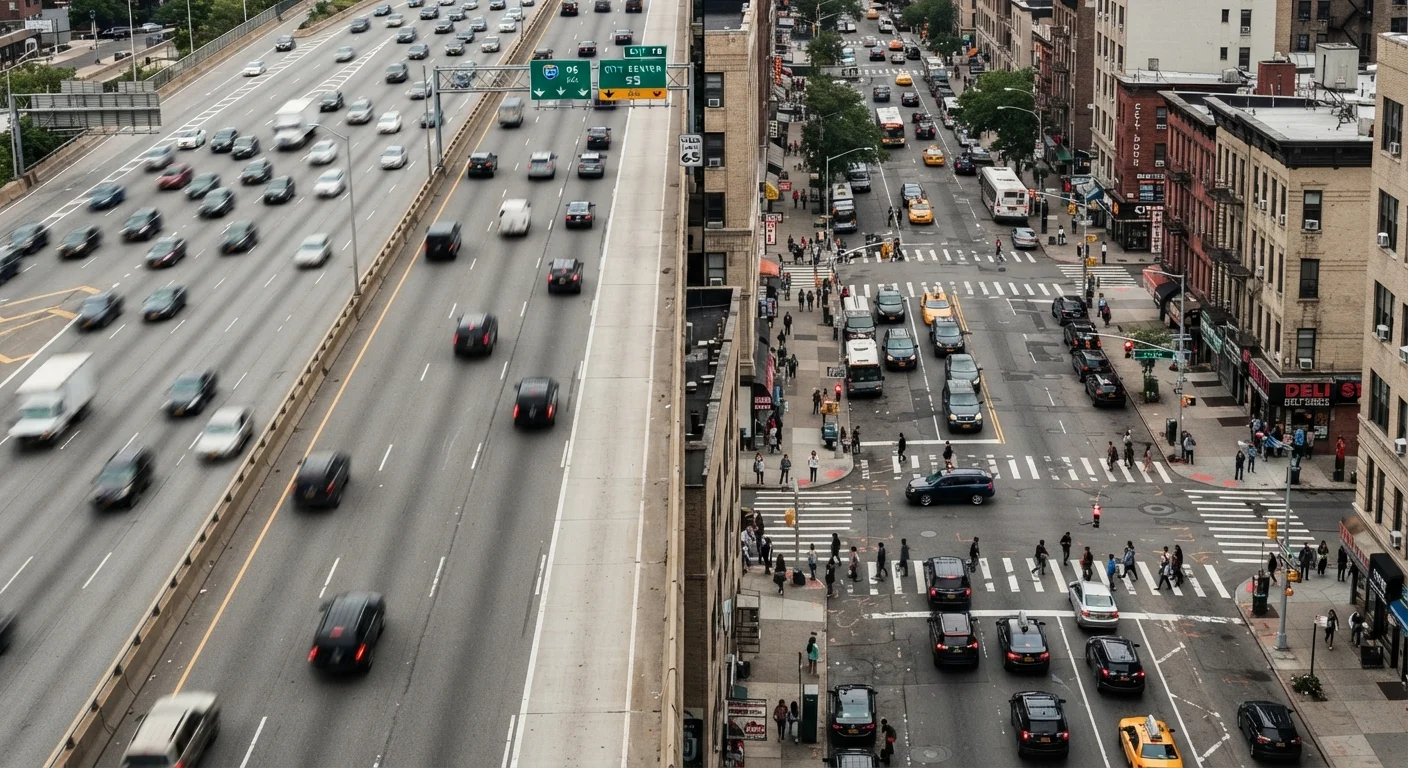
High-speed consistency versus constant low-speed decisions represent two very different cognitive challenges. Here is how safe-driving priorities shift between them.
Option A
Motorway driving
The sustained, high-speed consistency challenge.
Best for: Drivers covering long distances who need to manage fatigue, spacing, and speed discipline over extended periods.
Option B
Urban road driving
The rapid, low-speed decision environment.
Best for: Drivers navigating frequent stops, pedestrians, cyclists, and unpredictable intersections at close range.
Key takeaways
- Motorway driving demands sustained attention and safe following distance at speed, not constant steering input.
- Urban driving requires rapid, frequent decisions at lower speeds, where most collisions actually occur.
- Fatigue is a greater risk on motorways; distraction and failure to yield are greater risks in cities.
- Transition moments, entering or leaving a motorway, carry elevated risk from speed mismatches.
- Neither environment is safer by default; each requires a distinct mental approach.
What actually differs between the two environments
Most drivers think of motorways as dangerous because of speed. Urban roads feel safer because everything moves slowly. Neither assumption holds up when you look at collision data. The real difference is the type of cognitive work each environment demands from the driver.
On a motorway, the road geometry changes slowly. Lane markings are consistent, intersections are absent, and pedestrians do not appear. The challenge is sustaining accurate attention over long stretches with very little stimulus variation. At 70 mph, a vehicle covers about 103 feet per second, so spacing and reaction time carry enormous weight. Speed limits are not speed targets: conditions, traffic density, and visibility all affect how much distance you genuinely need.
Urban roads invert this entirely. Speeds stay low, but the decision rate is high. Traffic signals, parked cars obscuring sightlines, cyclists filtering between lanes, pedestrians stepping out, and vehicles turning across your path all compete for attention within seconds of each other. The cognitive load is concentrated and rapid rather than sustained and diffuse.
| Criterion | Motorway driving | Urban road driving |
|---|---|---|
| Speed range | 55 to 70+ mph | 15 to 45 mph typically |
| Decision frequency | Low; changes are gradual | High; constant rapid input |
| Primary cognitive demand | Sustained attention, spacing | Rapid hazard perception, yielding |
| Top collision causes | Tailgating, fatigue, lane changes | Failure to yield, turning errors, pedestrian conflict |
| Stopping distance at typical speed | Approx. 315 ft at 70 mph (dry) | Approx. 75 ft at 30 mph (dry) |
| Pedestrian and cyclist risk | Absent (controlled access) | Constant and close-range |
| Fatigue risk | High; monotony accelerates it | Lower; frequent stimulus variation |
The dominant hazards in each setting
On motorways, the three hazards that cause the most serious outcomes are tailgating, fatigue, and lane-change errors. Tailgating reduces your reaction window to near zero at highway speeds. Fatigue accumulates gradually, and drivers frequently underestimate how impaired they have become before they act on it. The National Highway Traffic Safety Administration has documented drowsy driving as a contributing factor in thousands of annual crashes. Night driving compounds fatigue risk further, particularly on long motorway runs after dark.
Urban roads produce a different hazard profile. Failure to yield at intersections, rolling through stop signs, and inadequate checks before turning left across oncoming traffic account for a large share of urban collisions. Pedestrians and cyclists are the most vulnerable road users in this environment, and their unpredictability means a driver's scanning pattern must cover sidewalks, parked-car door zones, and blind corners simultaneously. Roundabouts, when used correctly, reduce serious collision rates, but they also concentrate the exact hazards, yield decisions and lane selection, that urban drivers find most stressful.
Weather amplifies both environments differently. Rain, snow, and fog each change the risk calculation in distinct ways: wet motorway surfaces extend stopping distances dramatically, while fog in urban areas hides pedestrians and cyclists until they are very close.
Transition zones: the overlooked risk
The moment a driver leaves a motorway and enters urban traffic, or accelerates onto a motorway from a slip road, is statistically more hazardous than either environment alone. Speed mismatches are the core problem. After 40 minutes at 70 mph, 30 mph feels unnaturally slow, and drivers frequently exceed urban limits without realising it. The opposite is true when merging: urban-conditioned drivers sometimes enter a slip road at speeds too low to merge safely with 70 mph traffic.
New drivers approaching motorway entry for the first time often underestimate how quickly they need to match traffic speed before the merge point. The lane of traffic already on the motorway is not required to slow for a merging vehicle; the merging driver must accelerate to match flow.
Deliberate awareness of these transitions, checking the speedometer when leaving a motorway and building speed actively when joining one, reduces the risk that the environment shift creates.
Building habits that work across both
A few practices transfer effectively regardless of road type. Scanning further ahead than feels necessary is one. On a motorway, looking 12 to 15 seconds ahead gives enough warning to react to braking traffic. In a city, scanning that same distance ahead catches a pedestrian about to step off a kerb or a vehicle reversing from a space.
Following distance is the other transferable habit. The two-second rule (the minimum gap recommended under dry conditions) should extend to four or more seconds on wet or icy roads, and to at least three seconds at motorway speeds even in dry conditions, because the stopping distance at 70 mph is roughly 315 feet according to the UK Highway Code's published figures.
Distraction is equally damaging in both environments, but the consequences arrive faster on a motorway. A two-second glance at a phone at 70 mph means travelling approximately 205 feet without looking at the road. In a city, two seconds at 25 mph covers about 73 feet, enough to miss a child stepping from between parked cars.
Neither environment rewards complacency. The driver who treats urban roads as low-risk because of low speed, or motorways as manageable because of predictable geometry, has misread both.
The content on this site is for informational purposes only and is not a substitute for professional advice. Always consult a qualified professional for guidance specific to your situation.