
Small Pet Care: Key Differences Between Rabbits, Guinea Pigs, and Hamsters

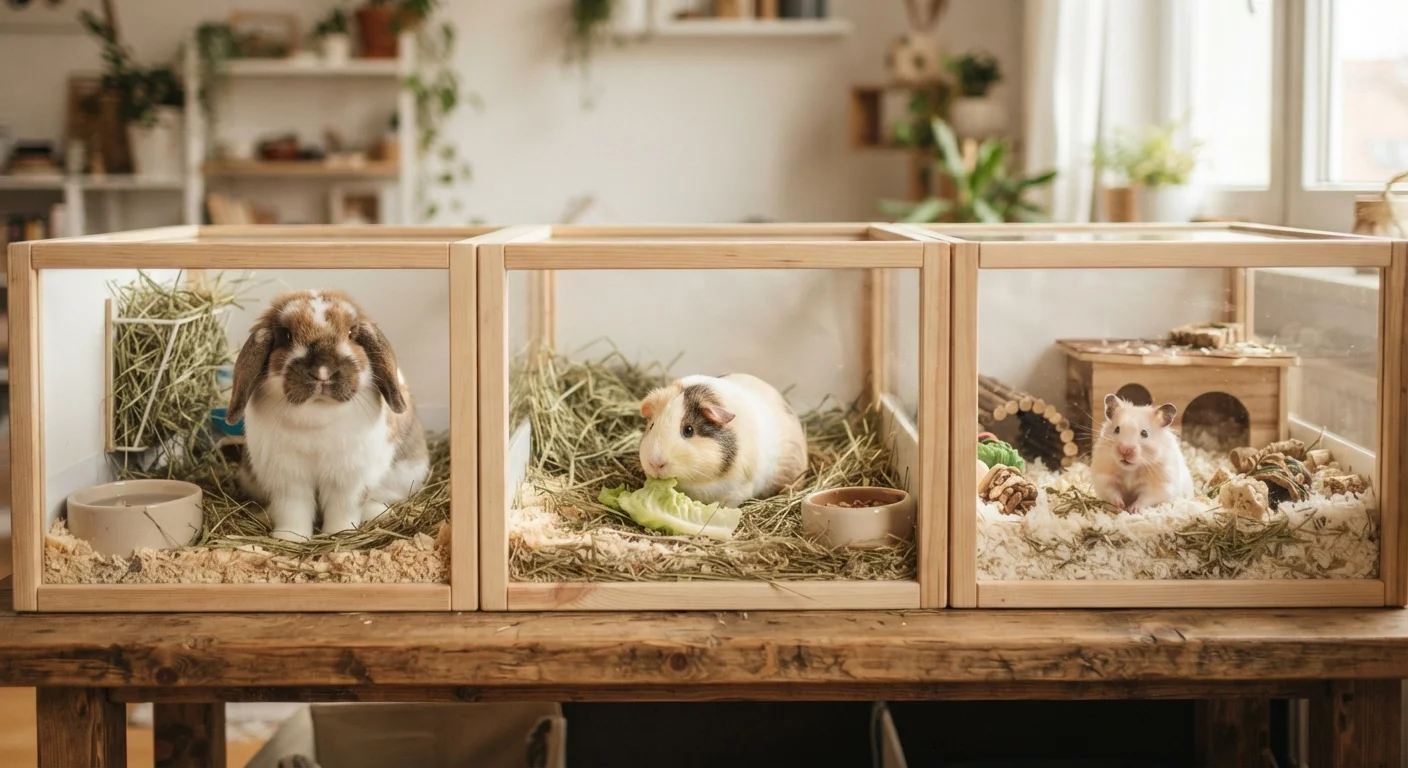
Compare the feeding, housing, handling, and social needs of three popular small pets to find out which suits your lifestyle and space.
Our Verdict
Rabbits, guinea pigs, and hamsters overlap in physical size but diverge sharply in diet, social structure, activity timing, and lifespan. No single animal is objectively the best choice; the right fit depends on the owner's schedule, household space, and capacity for daily interaction.
| Best for | Recommended |
|---|---|
| Owners with space and time for a long-term, interactive companion | Rabbit |
| Families or owners who want a sociable, vocal small animal | Guinea pig |
| Adults or older teens active in the evenings with limited space | Hamster |
Key takeaways
- Rabbits need the largest space and a hay-based diet; they can live 8 to 12 years with proper care.
- Guinea pigs are social animals that do poorly alone and require daily vitamin C from fresh food.
- Hamsters are nocturnal, prefer solitary housing, and suit owners with evening-only availability.
- All three species require species-specific veterinary care, ideally from an exotic-animal vet.
- Housing, handling tolerance, and social needs differ enough that lifestyle fit matters more than size alone.
Diet and feeding requirements
Hay is the foundation of a rabbit's diet. Timothy hay or orchard grass should be available at all times, making up roughly 80 percent of daily intake. Fresh leafy greens and a small measured amount of high-fiber pellets round out the rest. Rabbits' digestive systems are sensitive; sugary treats, including most commercial "rabbit treats," can disrupt gut motility and cause serious illness.
Guinea pigs share the hay requirement but have one critical difference: they cannot produce vitamin C internally. Without a daily dietary source, they develop scurvy. Fresh bell peppers, leafy greens, and small amounts of citrus provide this nutrient. Pellets formulated for guinea pigs (not rabbits or other rodents) contain added vitamin C, though the nutrient degrades quickly once a bag is opened.
Hamsters are omnivores. A commercial hamster mix or pelleted diet covers the base, supplemented with small amounts of fresh vegetables and occasional protein such as a piece of plain cooked chicken or a mealworm. Unlike rabbits and guinea pigs, hamsters store food in cheek pouches and cache it in their bedding, so food bowls may appear empty even when the animal has eaten.
| Rabbit | Guinea pig | Hamster | |
|---|---|---|---|
| Typical lifespan | 8-12 years | 4-7 years | 2-3 years |
| Primary diet | Timothy hay, leafy greens, pellets | Hay, fresh vegs with vitamin C, pellets | Pellet mix, vegs, occasional protein |
| Social housing | Can live alone or bonded pair | Requires companions | Solitary (Syrians); some dwarfs in pairs |
| Minimum space | 12 sq ft enclosure + free roam | 7.5 sq ft per pair minimum | 360 sq in floor + deep substrate |
| Activity timing | Dawn and dusk | Daytime and evening | Nocturnal |
| Handling tolerance | Low; floor-level preferred | Moderate; vocalizes clearly | Low when tired; prone to biting if disturbed |
| Veterinary complexity | High; spay/neuter recommended | Moderate; weight monitoring needed | Moderate; fast decline when ill |
This article is for general informational purposes only and does not constitute veterinary advice. Consult a qualified exotic-animal veterinarian for guidance specific to your pet's health and diet.
Housing and space
Rabbits need substantially more space than their compact bodies suggest. A rabbit kept primarily in a cage is at risk of muscle atrophy and behavioral problems. Most rabbit welfare organizations recommend a minimum enclosure of at least 12 square feet, combined with several hours of supervised free-roaming time daily in a rabbit-proofed area. Rabbits can be litter trained, which makes indoor keeping practical.
Guinea pigs do well in large, open enclosures such as C&C (cubes and coroplast) grid cages, which allow airflow and space. Because they are social animals, they should be housed in same-sex pairs or compatible groups. A single guinea pig without regular social interaction shows signs of stress. The minimum recommended floor space for a pair is around 7.5 square feet, with more always preferable.
Hamsters are often housed in cages marketed as suitable that are, by current animal welfare standards, far too small. A 40-gallon tank or equivalent footprint (around 360 square inches of floor space) gives a hamster room for burrowing substrate 6 to 8 inches deep, which is a behavioral need, not a luxury. Syrian hamsters must be housed alone; two adults in the same enclosure will fight.
Handling and temperament
Rabbits are prey animals and rarely enjoy being picked up. Many will tolerate calm handling at floor level but can injure themselves or a handler if they panic while elevated. A rabbit that thumps, freezes, or bites is communicating fear. Bonding with a rabbit happens on its terms: sitting on the floor and allowing the animal to approach builds trust far more effectively than forced restraint.
Guinea pigs are generally calmer during handling than rabbits or hamsters. They vocalize clearly, using a range of sounds (purring when content, chattering when annoyed, and a loud "wheeking" when anticipating food or attention). This expressiveness makes them easier for children to read, provided an adult supervises interactions and teaches correct support of the animal's full body weight.
Hamsters are most active at dusk and through the night. Waking a hamster during the day to handle it causes stress and increases the chance of a bite. Even a well-socialized hamster benefits from slow, patient taming and is better suited to older children and adults who can read subtle body language cues. Their speed and small size also make them easy to drop accidentally.
For practical guidance on the first days of ownership, see the new pet care checklist for settling-in routines that apply to small animals as well as cats and dogs.
Health, lifespan, and veterinary care
Rabbits live 8 to 12 years when kept indoors and cared for well. Common health concerns include dental disease (their teeth grow continuously), gastrointestinal stasis, and respiratory infections. Spaying or neutering is strongly recommended to reduce the risk of uterine cancer in females and territorial aggression in males.
Guinea pigs typically live 4 to 7 years. Beyond vitamin C deficiency, they are prone to dental problems, respiratory illness, and skin conditions including fungal infections and mites. Regular weight monitoring at home, using a kitchen scale, is one of the simplest ways to catch illness early since weight loss often precedes visible symptoms.
Hamsters have a shorter lifespan of 2 to 3 years. They are prone to wet tail (a stress- and bacteria-related intestinal condition most common in Syrian hamsters under 12 weeks), dental issues, and in dwarf species, diabetes. Any hamster that becomes lethargic, stops eating, or has loose stools needs veterinary attention quickly given how fast small animals decline.
All three species require an exotic-animal veterinarian rather than a general small-animal practice. Finding one before you bring an animal home is part of responsible ownership. The first 90 days health checklist outlines what to arrange with your vet early on. As these animals age, needs shift considerably; the senior pet health guide covers what changes to expect.
If you are managing more than one species at home, building a consistent multi-pet routine can help structure feeding and care without constant overlap.
The content on this site is for informational purposes only and is not a substitute for professional advice. Always consult a qualified professional for guidance specific to your situation.