
Why Your Dog Ignores You (And What to Do About It)

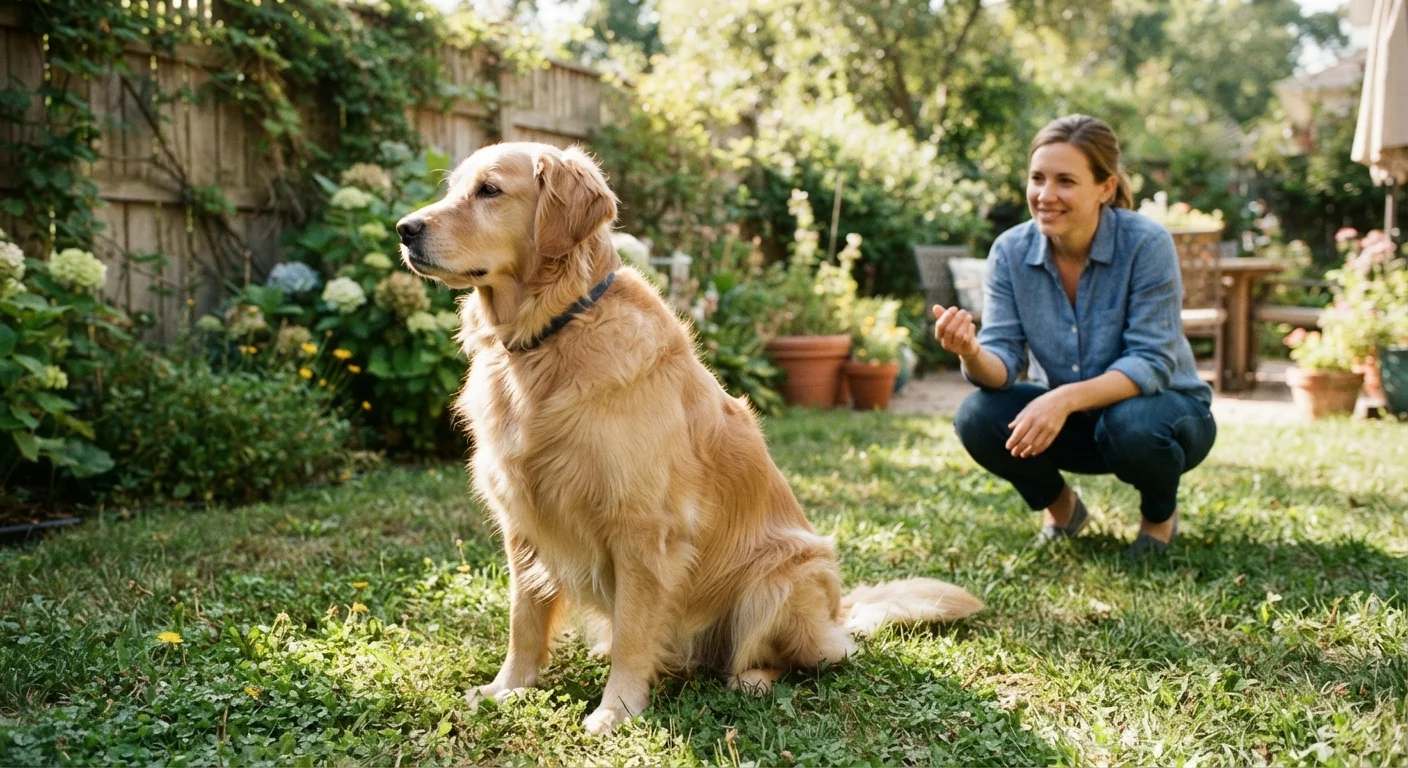
Selective hearing in dogs is rarely defiance. Understand the real reasons behind unresponsiveness and how to rebuild reliable attention.
Key takeaways
- Dogs rarely ignore commands out of stubbornness; environment, training gaps, and stress are the usual causes.
- Inconsistent cues and over-repeated commands are among the most common owner mistakes that erode responsiveness.
- Rebuilding attention starts with managing the environment, not simply repeating commands more loudly.
- Pain and anxiety can both suppress a dog's ability to respond, so rule out health issues early.
- Short, frequent training sessions with high-value reinforcement outperform long, infrequent ones.
What 'ignoring' usually means
When a dog does not respond to its name or a known command, the default assumption is often that the dog is being stubborn or dominant. Neither framing is particularly useful, and neither points toward a practical fix.
In most cases, unresponsiveness comes down to one of four things: the dog was never fully trained in that context, the cue has lost meaning through misuse, something in the environment is more salient than the owner's voice, or the dog is experiencing stress or discomfort. Understanding which factor is at work shapes the response entirely.
Dogs do not generalize well. A behavior practiced only at home is a home behavior. A cue used inconsistently becomes background noise. Recognizing these mechanisms is the starting point for any meaningful change. For a broader look at what your dog's posture and movements communicate, see this guide to reading pet body language.
Common mistakes that cause unresponsiveness
Most attention problems are built gradually through everyday habits rather than a single training failure. The mistakes below are the ones owners encounter most often, and each one has a straightforward correction.
Repeating a command multiple times before the dog complies.
Why it happens: Owners repeat cues because they want a response, but the dog learns that the first cue means nothing and only the fifth or sixth repetition signals that something real is expected.
Asking for commands in environments the dog was never trained in.
Why it happens: Dogs learn behaviors in context. A dog that sits reliably in the kitchen may genuinely not know how to apply that behavior at a busy park, because the two environments feel completely different to the animal.
Using a cue word that has been paired with unpleasant experiences.
Why it happens: If 'come' is consistently followed by a bath, nail trim, or the end of playtime, the dog begins to avoid the word rather than respond to it.
Rewarding compliance inconsistently, or not at all once basic training is done.
Why it happens: Once a behavior seems 'learned,' owners often stop reinforcing it, assuming the dog will simply maintain it. Behavior that stops producing good outcomes tends to fade.
Misreading stress or fear as stubbornness.
Why it happens: A dog that shuts down, sniffs the ground, or looks away during training is often showing displacement behaviors linked to anxiety, not defiance. Owners who do not recognize these signals push harder, which increases stress and further reduces responsiveness.
If your dog's unresponsiveness shows up alongside other behavioral changes, such as increased reactivity on walks, leash reactivity may be worth addressing separately as a related issue.
Rebuilding reliable attention
Sudden unresponsiveness may signal a health problem
If a dog that previously responded reliably stops doing so without an obvious change in training, a veterinary check is worth scheduling. Hearing loss, pain, and neurological changes can all reduce responsiveness. This article covers general training information only; a veterinarian is the appropriate resource for any health concern.
Once the source of the problem is identified, rebuilding attention follows a predictable pattern. Start in the lowest-distraction environment available, re-establish a clean response to the cue, and gradually raise difficulty.
Keep training sessions short, ideally two to five minutes, and run several across the day rather than one long block. A dog that is mentally fresh learns faster and makes fewer errors. End every session before the dog loses interest, not after.
High-value reinforcement matters most when raising difficulty. What counts as high value depends on the individual dog. Food, play, and access to sniffing are all legitimate reinforcers. The dog's enthusiasm for the reward tells you whether it is working.
Watch your dog's body language during practice. Subtle signals of stress, such as a tucked tail, pinned ears, or repeated lip-licking, mean the environment is too challenging right now. Signs of discomfort in pets are easy to miss when you are focused on training outcomes, so building awareness of them is part of the process.
This article provides general pet training information only and is not a substitute for guidance from a qualified veterinary or animal behavior professional.
The content on this site is for informational purposes only and is not a substitute for professional advice. Always consult a qualified professional for guidance specific to your situation.