
Keeping Tabs on Your Pet's Weight: What Healthy Actually Looks Like

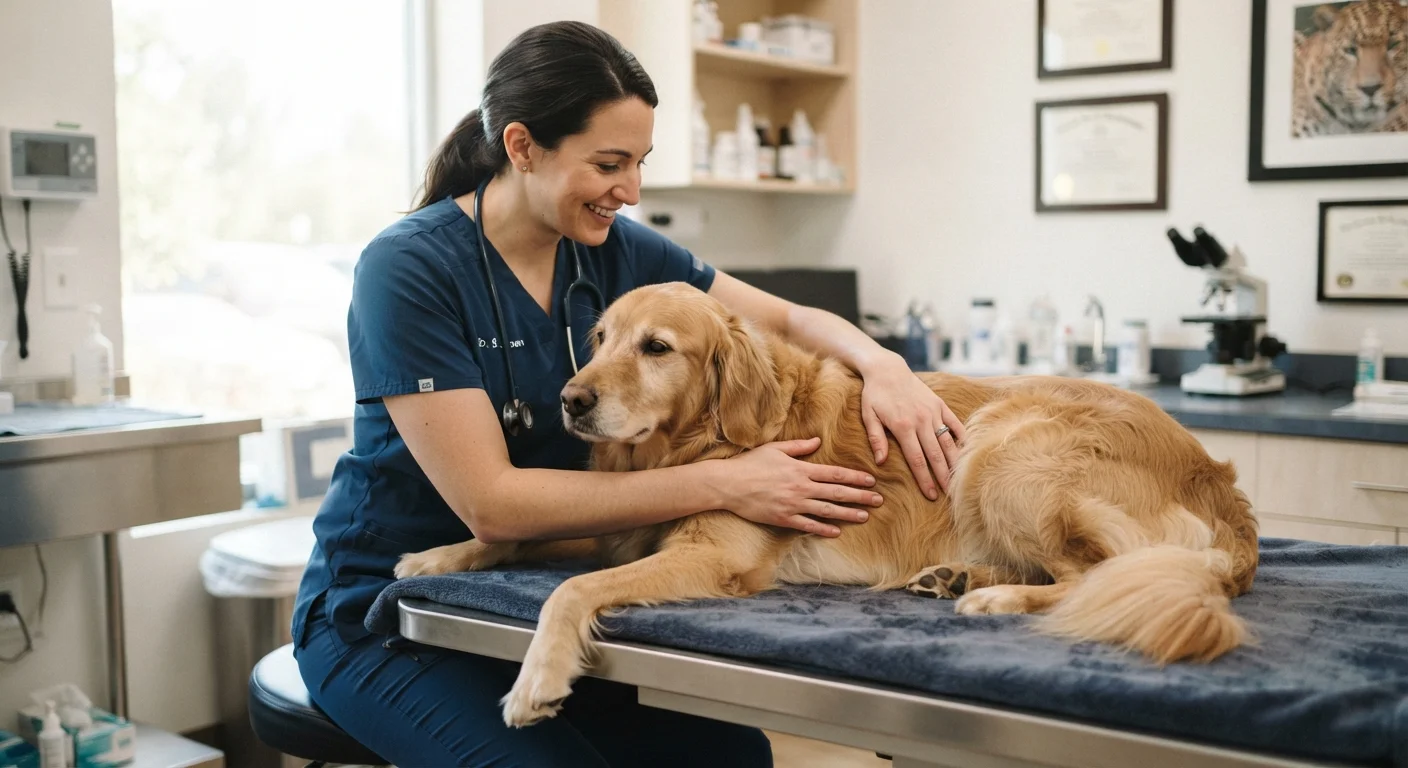
A number on a scale tells only part of the story. Learn how vets assess body condition and what owners can do to support a healthy weight.
Key takeaways
- Scale weight alone does not tell you whether a pet is at a healthy weight.
- Veterinarians use a body condition score system to assess fat coverage and muscle mass.
- Owners can learn to do a basic hands-on check between vet visits.
- Breed, age, and reproductive status all affect what a healthy weight looks like.
- Consistent monitoring matters more than any single measurement.
Why the number on the scale is only part of the picture
A 12-pound cat and a 12-pound cat can look completely different. One may be lean and muscular; the other may be carrying excess fat while appearing compact. Weight in pounds or kilograms gives a baseline, but it cannot distinguish fat mass from muscle, account for frame size, or tell you whether your pet is trending in the right direction. That gap is where body condition scoring comes in.
Veterinarians use a standardized body condition score (BCS) system, most commonly a 9-point scale, to rate a pet's fat coverage and overall body composition. A score of 4 or 5 out of 9 is generally considered ideal. Scores of 1 to 3 indicate underweight, and scores of 6 to 9 suggest overweight to obese. Some clinics use a 5-point scale; the underlying principle is the same. For a broader look at how external physical signs connect to internal health, see how coat and skin condition reflect overall health.
Muscle condition score is a second, related assessment that vets sometimes record alongside BCS, particularly in older pets. A dog or cat can score in a healthy fat range while losing muscle, which matters for mobility and immune function. The two measures together give a more complete picture than either alone.
How to do a basic at-home body check
Between vet visits, a hands-on check takes about two minutes and can catch early changes before they become significant. The steps below apply to both dogs and cats, though interpretation varies by species and breed.
Check rib coverage with your hands
Place both thumbs on your pet's spine and spread your fingers across the rib cage. Press gently. You should be able to feel individual ribs without pressing hard, but they should not be immediately obvious through the skin with no pressure at all. Think of the feel of the back of your hand: the knuckles represent ribs that are too prominent, while a thick layer of fat over them means you cannot distinguish individual bones.
Look at the waist from above
Stand directly above your pet and look down. Most healthy dogs and cats show a visible narrowing behind the rib cage when viewed from this angle. If the body is the same width from the shoulders to the hips, or wider at the abdomen, that suggests excess weight. If the waist is sharply tucked and the spine is visible from above, the pet may be underweight.
Assess the abdominal tuck from the side
Step back and view your pet from the side. The abdomen should rise upward from the chest toward the hind legs, forming a mild tuck. A straight or sagging belly line often indicates fat accumulation. An extremely sharp upward tuck can indicate underweight or, in some cases, a medical condition unrelated to nutrition.
Note the base of the tail
Run your hand along the spine toward the base of the tail. In a pet at a healthy weight, the vertebrae and hip bones are palpable with gentle pressure but not sharp or protruding. Excess fat deposits in this area are a reliable sign of overweight status in both dogs and cats.
If you are unsure how to interpret what you feel, photograph your pet from above and from the side in good lighting and bring those images to your next appointment. Your vet can compare them against previous records. This approach is especially useful for pets with thick or long coats, where visual assessment is unreliable on its own.
Weigh your pet consistently for useful data
Use the same scale each time, ideally at your vet clinic or a pet supply store with a walk-on scale. Weigh at roughly the same time of day and before a meal when possible. A single weight measurement means little on its own; a series of measurements over weeks or months shows whether the trend is stable, rising, or falling.
Common errors in this process, including misreading a BCS or underestimating portion sizes, are worth knowing about. The article on weight management mistakes owners often make covers these in detail.
What healthy looks like across different pets
Breed standards, age, and reproductive status all shift the target. A Greyhound or Whippet normally shows two to three pairs of ribs at a glance; the same visibility in a Labrador would be cause for concern. Deep-chested breeds such as Great Danes can appear underweight to an untrained eye even when their BCS is ideal.
Cats often accumulate a pendulous fold of skin called the primordial pouch along the lower belly. That fold is normal anatomy and does not indicate excess weight on its own. Fat deposits above the tail base and around the neck are more reliable indicators of true overweight status in cats.
Age changes the picture too. Senior pets commonly lose muscle mass even when caloric intake stays the same, so their scale weight may hold steady while their body composition worsens. Puppies and kittens have different norms at each growth stage, and pregnant or nursing animals have different requirements entirely. Consulting a veterinarian for any of these populations is important rather than applying adult general guidelines directly.
Diet composition affects weight assessment as well. A pet eating a diet that is misaligned with its life stage or activity level may be over- or underfueled without obvious signs. Understanding what goes into the food helps owners make better decisions. The guide to reading a pet food label walks through ingredient lists and guaranteed analysis sections in plain terms.
For routine monitoring, weighing your pet on the same scale, at the same time of day, every four to eight weeks gives usable trend data. A change of more than five to ten percent of body weight over that window is worth discussing with a vet. The pet care and feeding hub has additional guidance on daily routines that support long-term health.
This article is for general informational purposes only and is not a substitute for veterinary advice. Consult a licensed veterinarian for any concerns about your pet's health or weight.
The content on this site is for informational purposes only and is not a substitute for professional advice. Always consult a qualified professional for guidance specific to your situation.