
Weight Management in Pets: What Owners Often Get Wrong

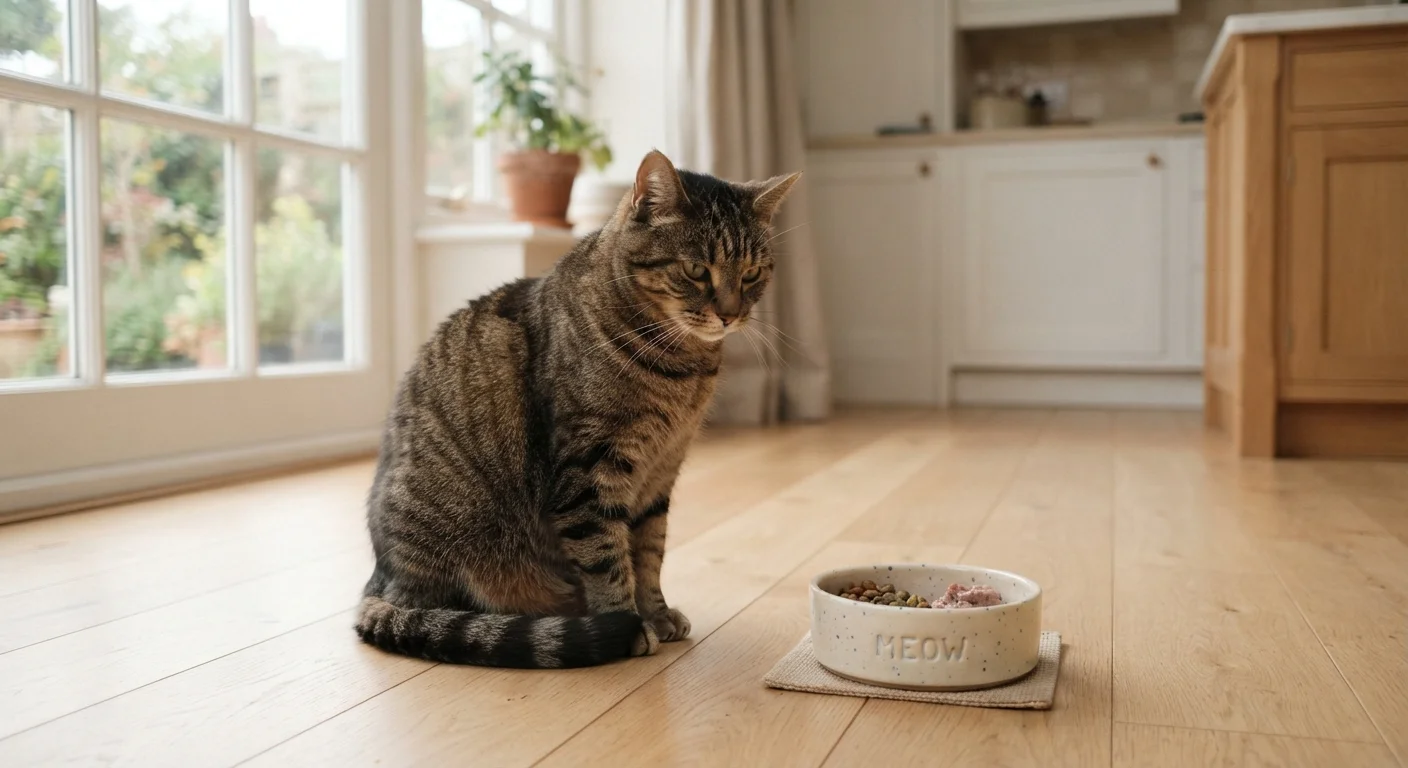
Explore the most frequent errors in assessing and managing a pet's weight, from misreading body condition scores to calorie miscalculation.
Key takeaways
- Body weight alone does not reliably indicate whether a pet is overweight; body condition scoring is more accurate.
- Calorie counts on pet food labels often apply to an average adult animal, not your specific pet's size or activity level.
- Treats and table scraps can add a substantial share of daily calories that owners rarely track.
- Gradual weight loss under veterinary guidance is safer than rapid calorie restriction for most pets.
Why managing a pet's weight is harder than it looks
Most pet owners know that obesity raises a dog's or cat's risk of joint disease, diabetes, and heart problems. Fewer realize how often their own well-intentioned habits drive the problem. The errors are usually small individually: a slightly generous scoop here, an extra biscuit there. Combined over weeks and months, they shift a healthy animal into a weight range that strains its health.
This article covers the mistakes owners make most often, why each one happens, and what to do instead. For a broader picture of how vets think about healthy weight, see how vets assess body condition.
Relying on a scale number without assessing body condition.
Why it happens: Pet owners are familiar with weight as the primary health metric for humans, so they apply the same logic to animals. A number on a scale does not reveal how much of that weight is fat versus lean muscle.
Using the feeding guide on the bag as a precise prescription.
Why it happens: Package guidelines appear official and specific, so owners treat them as an exact daily target rather than a starting estimate.
Forgetting to count calories from treats, toppers, and table scraps.
Why it happens: Each extra item feels too small to matter, and there is no single moment where the total becomes obvious.
Cutting food intake sharply without veterinary guidance.
Why it happens: Owners who are motivated to help their pet lose weight often assume faster reduction is better, mirroring diet culture advice intended for humans.
Assuming a pet's weight needs do not change with age.
Why it happens: Owners establish a feeding routine when a pet is young and active, then maintain that routine for years without reassessment.
The calorie math most owners skip
Feeding guidelines printed on pet food bags are calculated for an average, unaltered adult animal of a given weight. A spayed or neutered pet typically needs 20 to 30 percent fewer calories than those guidelines suggest, according to general veterinary nutrition principles. An older or less active animal needs even less.
Owners who follow package directions to the letter without adjusting for their individual pet's metabolism, age, and activity level often feed more than the animal burns. The gap is rarely obvious day to day, but it accumulates. Understanding portion control explains why environment and feeding routines also shape how much a pet actually consumes.
59%
U.S. dogs classified as overweight or obese
The Association for Pet Obesity Prevention has reported in its annual clinical surveys that a majority of dogs seen in veterinary practices fall above their ideal body weight.
~10%
Recommended daily calorie limit for treats
Veterinary nutrition guidelines broadly recommend that treats, chews, and food toppers account for no more than 10 percent of a pet's total daily calorie intake.
Reading a food label correctly is a prerequisite for accurate calorie budgeting. Decoding a pet food label walks through what the guaranteed analysis section actually tells you and where owners commonly misread it.
Treats, toppers, and table scraps
A single dental chew, a spoonful of wet food added to dry kibble, and a few bites of chicken from dinner can easily account for 15 to 25 percent of a small dog's daily calorie target. Owners rarely add these extras to a running tally because each item feels insignificant on its own.
Veterinary nutritionists generally recommend keeping treats and extras to no more than 10 percent of total daily calories, a guideline sometimes called the 10-percent rule. Applying it requires knowing the calorie density of every item the pet receives, including chews and flavored medications. If that sounds tedious, a simpler approach is to weigh out the day's full kibble allowance in the morning and remove a proportional amount whenever a treat is given.
Flavored medications count toward daily calories
Chewable tablets, flavored liquid medications, and pill pockets can each contain 20 to 50 calories. If your pet takes daily medications in a flavored form, ask your veterinarian to factor those calories into the daily feeding plan. Ignoring them can quietly offset careful portioning.
Persistent myths about pet feeding further complicate decisions. Common misconceptions about pet nutrition covers what the evidence actually supports on topics like grain-free diets and raw feeding.
Skipping the veterinary partnership
Many owners attempt weight reduction on their own by simply cutting their pet's food by a large fraction. Severe calorie restriction without veterinary oversight can cause hepatic lipidosis (a dangerous liver condition) in cats, muscle loss in both cats and dogs, and nutritional deficiencies if the reduced volume no longer delivers adequate vitamins and minerals.
A safer path is a structured weight-loss plan set by a veterinarian, which typically targets a loss of 0.5 to 2 percent of body weight per week depending on species and baseline condition. Regular weigh-ins track progress and allow adjustments before a pet stalls or loses weight too quickly.
Weight problems often share ground with other preventable health issues. Preventable health problems owners frequently overlook covers where early intervention makes the largest difference.
Rapid calorie cuts can harm cats
In cats, abrupt or severe food restriction can trigger hepatic lipidosis, a life-threatening liver condition that develops when fat mobilizes faster than the liver can process it. Never reduce a cat's food intake drastically without direct veterinary supervision, even if the cat is significantly overweight.
This article is for general informational purposes only and is not veterinary medical advice. Consult a licensed veterinarian before making significant changes to your pet's diet or starting a weight-loss program.
The content on this site is for informational purposes only and is not a substitute for professional advice. Always consult a qualified professional for guidance specific to your situation.