
Enrichment vs. Training: Two Different Tools for a Balanced Pet

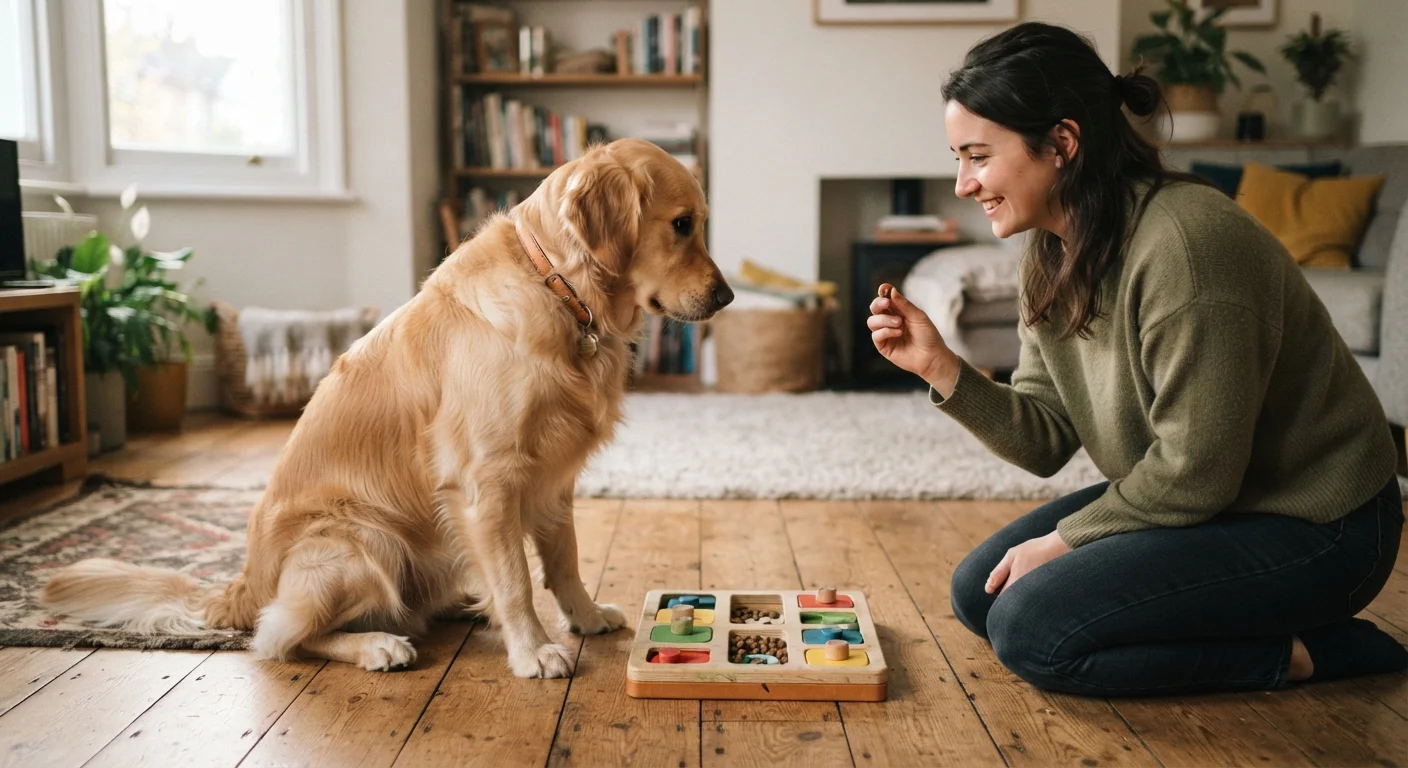
Enrichment and training both support good behavior, but they serve different purposes. Understand the distinction and how to use both effectively.
Our Verdict
Enrichment and training solve different problems and work best in combination. Enrichment reduces boredom-driven behavior and supports emotional wellbeing, while training gives owners a shared language with their pets and builds reliable responses to cues. Most behavior problems improve when owners address both.
| Best for | Recommended |
|---|---|
| Pets showing boredom-driven behaviors like chewing, digging, or repetitive pacing | Enrichment |
| Teaching specific responses such as sit, stay, recall, or leash manners | Training |
| Owners building a long-term behavior foundation for a new or young pet | Both, used together on a consistent daily schedule |
Key takeaways
- Enrichment addresses a pet's instinctive needs; training builds specific, cued behaviors through repetition and reinforcement.
- Neither tool replaces the other. A pet that is mentally stimulated is generally easier to train, and a trained pet can access enrichment more safely.
- Enrichment works passively and continuously; training requires short, structured sessions with a clear goal.
- Problem behaviors often signal a deficit in one or both areas, not simply stubbornness or bad temperament.
- Combining both approaches produces more stable, well-adjusted behavior than relying on either alone.
What each term actually means
The words "enrichment" and "training" get used interchangeably in many pet care conversations, but they describe distinct processes with different goals.
Enrichment is any activity or environmental modification that lets a pet express species-typical behaviors: sniffing, foraging, chewing, climbing, social play, or problem-solving. A puzzle feeder, a sniff walk, a window perch with a view, or a cardboard box filled with crinkle paper all count. Enrichment does not require the pet to respond to a human cue. It works on the pet's terms, at their own pace.
Training is the deliberate use of reinforcement (and sometimes other learning principles) to build a specific behavior that happens reliably when the owner asks for it. Sit, stay, recall, leave it, and crate entry are trained behaviors. They require the pet to attend to a cue from you, and they require you to respond consistently with a consequence that makes the behavior more or less likely in the future.
The clearest way to separate them: enrichment fills the pet's behavioral and emotional "tank"; training gives you a way to communicate with that pet once the tank has enough in it to focus.
How enrichment reduces problem behavior
Many behaviors owners describe as problems, including destructive chewing, excessive barking, digging, and repetitive pacing, are often normal behaviors expressed in the wrong context. They tend to increase when a pet has no appropriate outlet for instinctive drives.
Applied animal behavior research has consistently linked under-stimulated environments to elevated stress markers and increased problem behavior in domestic dogs, cats, and other companion animals. Giving a dog an opportunity to sniff freely on a walk, for example, produces measurable reductions in post-walk stress indicators compared to walks where sniffing is restricted.
Enrichment does not teach the pet what to do instead of the problem behavior. That is where training takes over. But a pet that has had adequate sensory and cognitive stimulation is less likely to invent its own outlet, and more likely to have enough mental reserve to engage in a training session.
Start with enrichment before a training session
A short sniff walk or 10 minutes with a puzzle feeder before you begin training can lower your pet's arousal level and improve focus. This does not need to be elaborate. Even scattering kibble in grass for a few minutes gives a dog's brain a low-stakes workout that settles them before structured learning begins. The goal is a calm, engaged pet, not an exhausted one.
See how to schedule enrichment across a multi-pet household for practical timing ideas that work with different species and energy levels.
What training can and cannot do
Training is the most direct way to build reliable, cued behaviors. A well-trained recall can prevent a dog from running into traffic. A cat trained to accept handling makes veterinary visits significantly less stressful. These outcomes come from consistent, reinforcement-based sessions, not from general activity or play.
However, training alone cannot compensate for chronic under-enrichment. A dog that spends 10 hours in a bare room will not sit reliably simply because it learned "sit" last Tuesday. The arousal, frustration, or anxiety produced by an unstimulating environment interferes directly with the learning and retrieval processes that make trained behaviors work.
Training sessions also have natural limits. Most adult dogs and cats learn best in short windows of 5 to 15 minutes, with the pet's focus as the guide rather than a fixed timer. Pushing past that window produces diminishing returns. Enrichment, by contrast, can run continuously throughout the day without fatiguing the pet in the same way.
For a closer look at how session structure affects outcomes, see this readiness checklist to use before each training session.
| Enrichment | Training | |
|---|---|---|
| Primary goal | Meet instinctive behavioral needs | Build specific cued behaviors |
| Requires human cue | No | Yes |
| Session structure | Continuous or passive | Short, structured, goal-directed |
| Best for | Reducing boredom and stress | Teaching reliable responses |
| Replaces the other? | No | No |
| Works best when | Provided daily and varied | Pet is calm, not under-stimulated |
Combining both in a daily routine
A practical starting point is to treat enrichment as the baseline layer of the day and training as a focused layer added on top. Enrichment happens in the background: meals delivered via puzzle feeder, outdoor time that includes free sniffing, appropriate chew items always available. Training slots in as short, intentional sessions when the pet is calm and not over-tired.
The order matters. A dog that has had a 20-minute sniff walk is typically more settled and better able to focus than one brought straight from a crate to a training session. Many behavior consultants recommend a brief enrichment activity before training, not as a warm-up ritual, but because it reliably lowers arousal to a level where learning is most efficient.
Building a training routine that fits your schedule covers how to structure sessions without overloading your pet or yourself. And for guidance on how reward timing affects what your pet actually learns, reinforcement timing and fading strategies are worth reviewing alongside your enrichment plan.
This article provides general educational information about pet behavior and is not a substitute for guidance from a qualified veterinary behaviorist or certified applied animal behaviorist for pets with significant behavior concerns.
The content on this site is for informational purposes only and is not a substitute for professional advice. Always consult a qualified professional for guidance specific to your situation.