
Reward Timing, Frequency, and Fading: The Variables That Shape Behavior

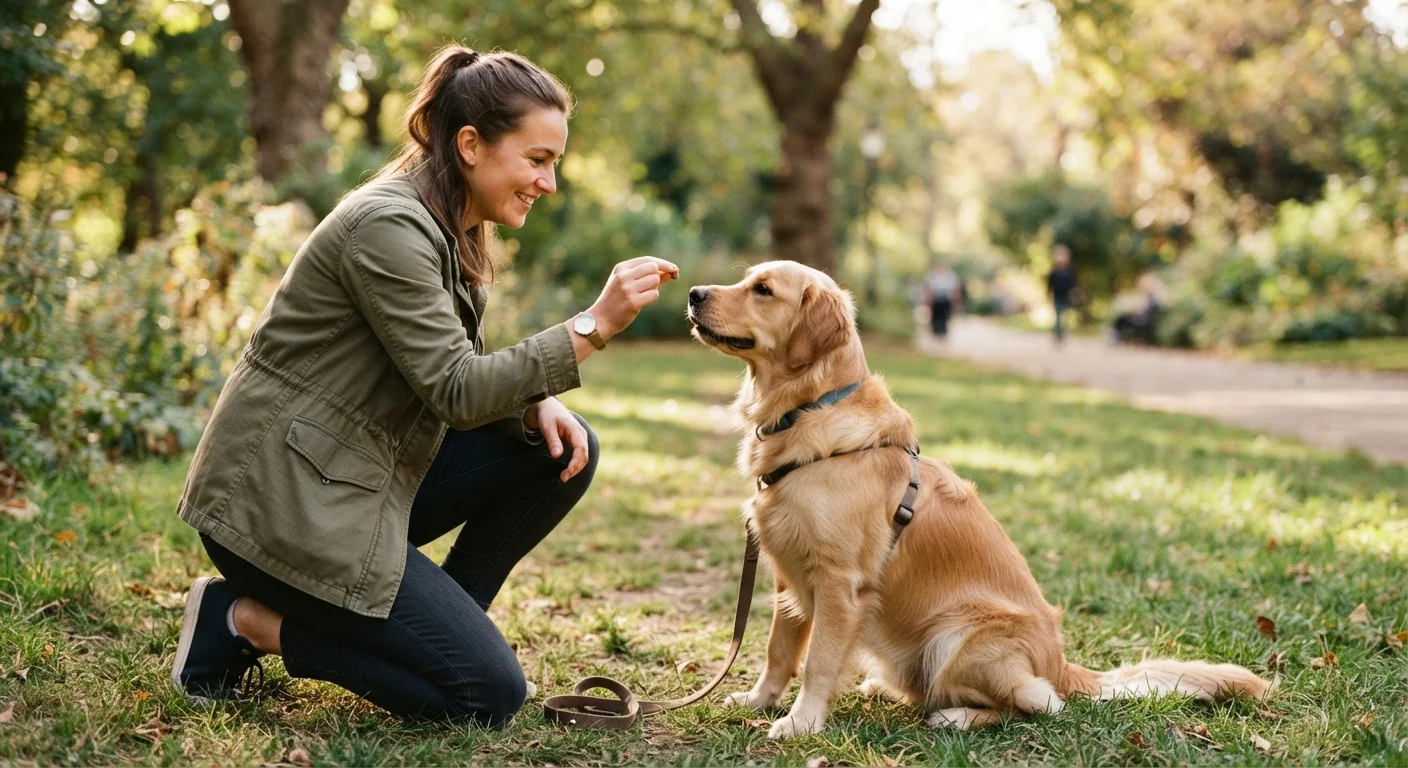
When and how often you reward matters as much as what the reward is. Explore reinforcement schedules and how to phase treats out without losing progress.
Key takeaways
- Rewarding within one to two seconds of a behavior is critical for the animal to connect action with consequence.
- Continuous reinforcement builds new behaviors fastest; variable schedules maintain them most durably.
- Fading treats too early or too fast is the most common reason trained behaviors fall apart.
- A bridge signal such as a clicker or verbal marker buys time between the behavior and the treat delivery.
- Behavior that no longer produces any reward will eventually extinguish, so reinforcement must continue in some form.
Why timing is the most non-negotiable variable
Animals learn by association. When a reward follows a behavior, the brain links the two, but only if the gap between them is short enough. For most dogs, cats, and small animals, that window is roughly one to two seconds. Beyond that, the reward lands on whatever the animal is doing at the moment of delivery, not the behavior you intended to reinforce.
This is why a treat handed over five seconds after a sit can accidentally reward the dog for getting back up. The behavior you wanted has already passed. The fix is a bridge signal: a clicker or a short verbal marker like "yes" delivered the instant the correct behavior happens, with the treat following at whatever pace is practical. The bridge signal carries the timing precision so the treat delivery does not have to.
Precision matters most during the acquisition phase, when an animal is learning what a behavior is in the first place. Once the behavior is fluent, timing can relax slightly, but the habit of marking early is worth building from the start.
Reinforcement schedules: how often to reward
The frequency of reward is not a fixed setting. Trainers use different schedules depending on whether they are teaching a new behavior or maintaining an established one.
Continuous reinforcement means rewarding every correct repetition. This is the fastest way to build a new behavior because the animal receives consistent information: this action produces this outcome. Use it whenever you introduce a new cue or a harder version of a known behavior.
Intermittent reinforcement means rewarding some repetitions but not all. Once a behavior is reliable, shifting to an intermittent schedule makes that behavior more resistant to extinction. The animal has learned that a reward may come at any time, so it keeps trying. A fixed-ratio schedule (every third correct response, for example) is predictable and easy to apply. A variable-ratio schedule (rewarding after an unpredictable number of correct responses) produces the most durable behavior but takes more skill to run consistently.
Mark the behavior first, then deliver the treat
The marker (clicker or verbal cue) travels faster than your hand and preserves timing accuracy. Without it, the treat almost always arrives late, reinforcing whatever the animal does next.
Stay on continuous reinforcement until behavior is fluent
Switching to intermittent schedules too early slows learning and confuses the animal about what the cue means. Fluency means consistent, prompt responses with minimal errors.
Reduce reward frequency in small steps, not all at once
Large drops in reinforcement cause extinction bursts or complete behavior breakdown. Gradual reduction keeps the animal engaged while building tolerance for delayed rewards.
Use life rewards to maintain behavior long-term
Real-world reinforcers are always available and cannot run out. They also teach the animal that good behavior pays off in everyday contexts, not just during formal sessions.
Keep a training log to track schedule changes
Without records, it is easy to tighten schedules faster than the animal can adapt, or to lose track of where you left off between sessions.
The practical takeaway: do not rush to intermittent schedules. Move there only after the animal performs the behavior correctly at least eight or nine times out of ten in a low-distraction setting. See how to structure sessions around these stages.
Fading food rewards without losing the behavior
"Fading" means gradually reducing reliance on a food lure or frequent treat delivery while keeping the behavior intact. Done poorly, it erases weeks of progress. Done well, it moves the animal toward responding to the cue itself.
The most reliable approach is to fade the lure before fading the reward. A lure is a treat used to physically guide the animal into position. Once the animal understands what the behavior is, remove the food from your hand first, then give the treat from your other hand or a pouch after the behavior is complete. The gesture that replaced the lure becomes the cue.
After the lure is gone, move from continuous reinforcement to intermittent on a gradual slope: reward nine out of ten correct responses, then seven, then five. At each step, check that accuracy stays high. If it drops, reward more frequently for a session or two before reducing again.
Non-food rewards can carry a lot of weight at this stage. Praise, a brief play session, or access to something the animal wants (a door opening, a toy thrown) all function as reinforcers for animals that value them. Rotating reward types also prevents the animal from learning to work only when food is visible. For more on setting conditions that support this process, see the training session readiness checklist.
This article is for general educational purposes only. For concerns about your pet's health or behavior, consult a licensed veterinarian or certified animal behaviorist.
The content on this site is for informational purposes only and is not a substitute for professional advice. Always consult a qualified professional for guidance specific to your situation.