
Clicker Training vs. Verbal Markers: Choosing the Right Bridge Signal

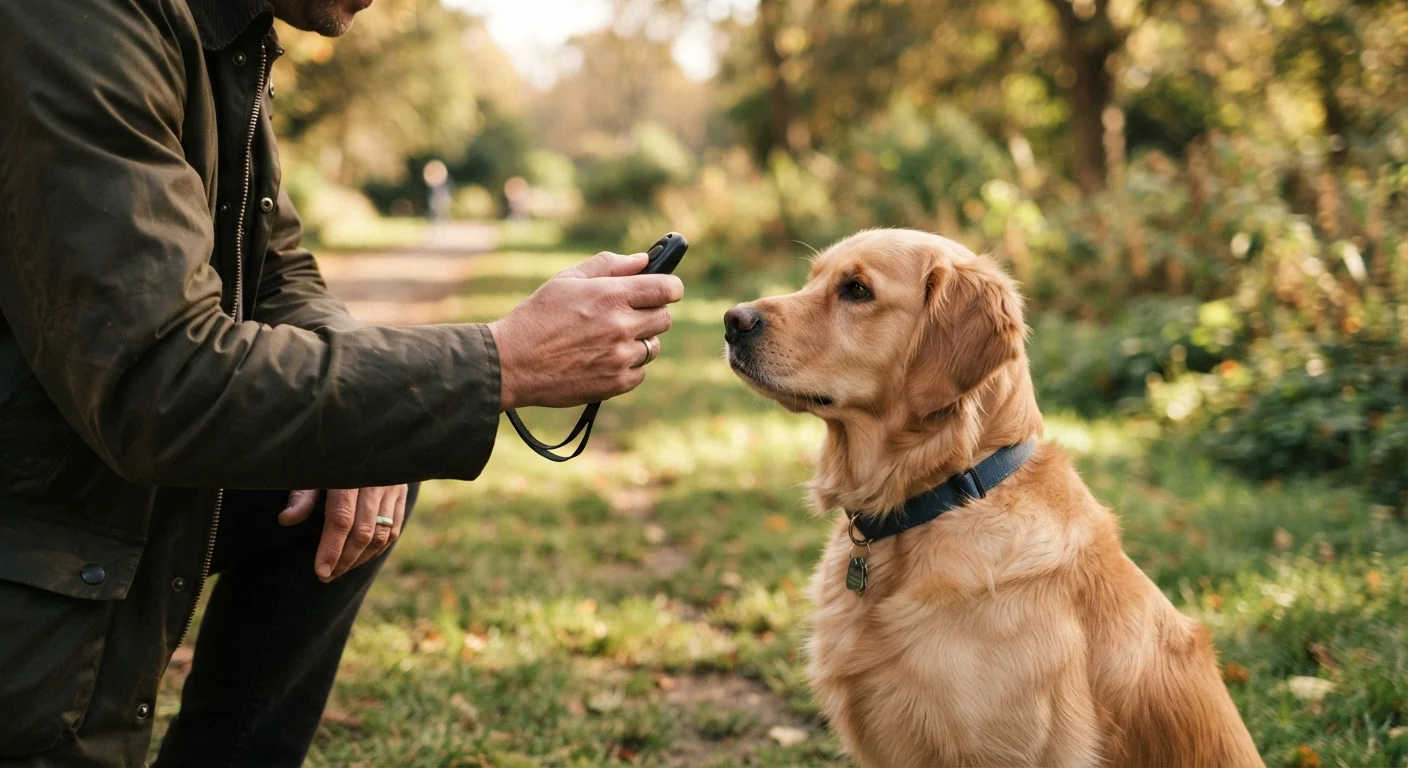
Both clicker and verbal markers can effectively signal reward to your pet. Compare how each works and which might suit your training style.
Option A
Clicker training
A consistent, device-based signal with a sharp, distinct sound.
Best for: Trainers who want maximum precision and work with animals sensitive to vocal tone variation.
Option B
Verbal markers
A hands-free, always-available word-based signal.
Best for: Trainers who prefer not to carry equipment or need one hand free during sessions.
Key takeaways
- Both clickers and verbal markers work as bridge signals because pets learn to associate them with an incoming reward.
- A clicker produces a consistent sound; a verbal marker can vary in pitch and emotion, which affects reliability early in training.
- Verbal markers have a practical advantage: you always have your voice with you.
- Either method requires the same foundational step: pairing the signal with a treat many times before adding cues.
- Your consistency with timing matters more than which signal you choose.
What a bridge signal actually does
A bridge signal, sometimes called a marker, is a short, precise sound that tells your pet: the behavior you just performed is correct and a reward is coming. The signal does not replace the reward; it bridges the gap between the moment the behavior happens and the moment you deliver the treat. Without a marker, a half-second delay in reaching into your treat pouch can leave your pet guessing which part of its movement earned the food.
Both clickers and verbal markers work on the same principle. Through repeated pairing (signal, then treat, many times over), the sound becomes meaningful on its own. Animal learning research consistently supports this conditioning process as the foundation of effective marker training. Reward timing and frequency shape how quickly that association forms.
How clicker training works
A clicker is a small handheld device that produces a sharp, mechanical click. Because the sound is always identical, your pet hears the same signal whether you are tired, excited, or distracted. That consistency is the main argument for using one.
The setup requires a brief conditioning phase called "loading the clicker." You click once, then immediately deliver a treat, with no behavior required. After 10 to 20 repetitions across a session or two, most dogs and many other animals begin to orient toward you at the sound of the click. At that point, you can start marking specific behaviors.
The main limitation is physical: you need a free hand and you need to remember to carry the device. Handlers working on off-leash recall, agility, or tasks that require both hands sometimes find the clicker awkward to manage.
Clicker use with multiple pets
If you train more than one pet in the same household, each animal needs its own conditioning history with the clicker. A click that one pet has learned to associate with rewards will also alert the other, which can disrupt sessions. Training pets separately, at least during the loading phase, prevents this overlap.
How verbal markers work
A verbal marker is a short, distinct word, typically "yes" or "good," spoken the instant the target behavior occurs. The loading process is the same: say the word, deliver the treat, repeat until the association is solid.
The convenience is real. Your voice goes with you everywhere, which matters during walks, in a veterinary office, or in any situation where a clicker would get lost or forgotten. Verbal markers also allow you to stay connected to your pet across distance without fumbling for equipment.
The challenge is consistency. Human voices shift with mood, energy, and context. A flat, tired "yes" and an enthusiastic "YES" are not acoustically identical, and early in training that variation can slow the association-building process. Practicing a calm, even tone, the same pitch and volume each time, reduces this problem significantly. Cats in particular tend to respond better to a quiet, predictable vocal marker than to a clicker's sharp report.
Comparing the two signals directly
| Criterion | Clicker | Verbal marker |
|---|---|---|
| Sound consistency | Always identical | Varies with voice and mood |
| Availability | Requires carrying a device | Always present |
| Hands required | One hand occupied | Hands-free |
| Distance use | Less practical | Works well at a distance |
| Learning curve | Timing practice needed | Tone consistency practice needed |
| Noise sensitivity | May startle some animals | Easier to soften |
Neither signal is universally superior. The clicker has a precision edge during early shaping work. The verbal marker wins on availability and flexibility. Many experienced trainers use both: a clicker during formal shaping sessions and a verbal marker during daily life or distance work.
See how to build a consistent training routine for guidance on structuring sessions around whichever marker you choose.
Making your choice and staying consistent
Before your first session, pick one primary marker and use it throughout that training goal. Switching between signals mid-session confuses the animal and slows progress. Check this readiness checklist before you begin so that environment, treat value, and your own focus are all in order.
Whichever signal you use, the timing rule is the same: mark within one second of the behavior. A late marker rewards whatever the animal happened to be doing when you clicked or spoke, not the behavior you intended. Practice clicking or saying your word while watching a timer or a training video before working with your pet. That habit alone improves results faster than switching tools.
Enrichment and training serve different purposes, but both depend on the animal being motivated and engaged. If your pet loses interest mid-session regardless of which marker you use, the issue is usually session length, treat value, or energy level, not the signal itself.
This article is for general informational and educational purposes only. For concerns about your pet's health or behavior, consult a licensed veterinarian or a certified animal behavior professional.
The content on this site is for informational purposes only and is not a substitute for professional advice. Always consult a qualified professional for guidance specific to your situation.